Making a Tailor’s Ham and Sausage

How to make a tailor's ham by thisblogisnotforyou.com

Hope you all enjoyed the long weekend (if you had one)! Did you use the long weekend for something crafty? Well, I did. Nothing too crazy, but I got a few projects done that had waited to be finished for a while.

I was sewing up a cute summer blouse and while desperately trying to press the darts into a nice shape, I thought I finally needed to tackle the tailor’s ham project I planned weeks ago.

I found a brilliant tutorial by Kristiann (the Victory Patterns lady!) who did a great guest post over at Tilly and the Buttons. Check out her site for the instructions and the patterns.

I did it a bit differently though, since I neither had sawdust nor thick cotton canvas lying around.

I basically used an old cheap Primark pillow and fabric scraps for the stuffing. Since I did not have cotton canvas, I used plain (muslin) cotton in two layers I basted together before sewing the darts. Using two layers creates the right thickness and makes the cotton sturdy enough.

How to make a tailor's ham by thisblogisnotforyou.com

I basically cut out each piece four times. I lengthened the pattern a bit at the fold to make the shape more oval for the ham, I personally felt it was a bit too round and was afraid it might be a bit wobbly when pressing. I added about an inch to the pattern at the fold line.

How to make a tailor's ham by thisblogisnotforyou.com

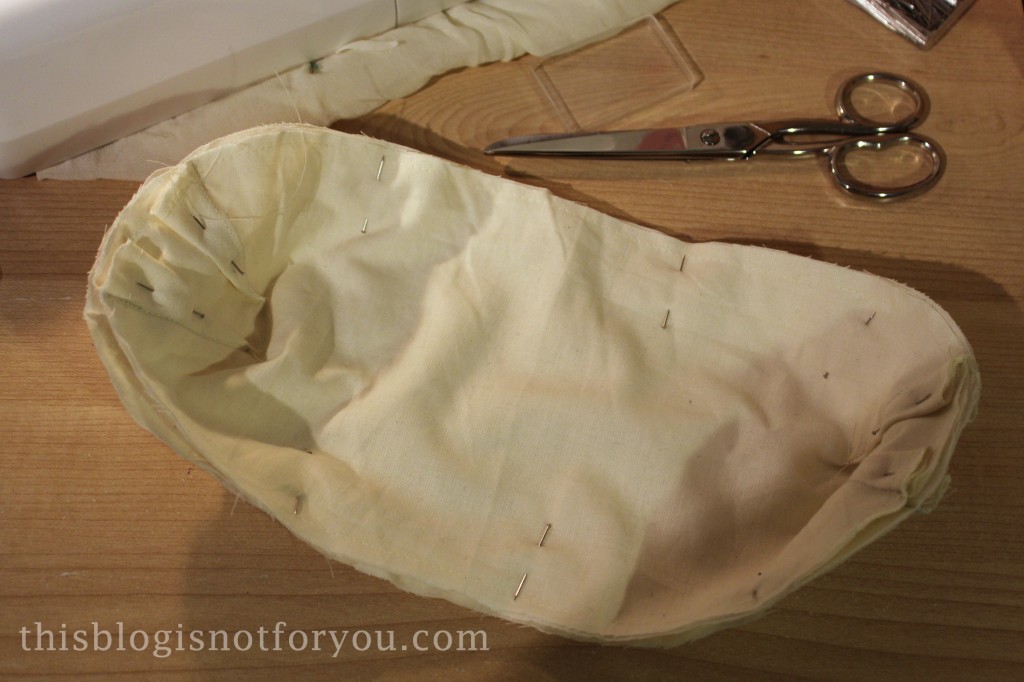
Here you can see that I basted the two layers of cotton together in the seam allowance (about 2/8” or 7mm from the edge). I then sewed the darts and basted them onto the seam allowance so they lay nice and flat and didn’t shift while I stitched all four layers together.

Make sure you leave at least 3”/10cm of the seam open on one side where the stuffing goes in.

Turn what now looks like a slightly unshapely bag inside out.

How to make a tailor's ham by thisblogisnotforyou.com

Yep, that’s how it’s supposed to look. Looks nothing like ham and sausage, right? 😉

How to make a tailor's ham by thisblogisnotforyou.com

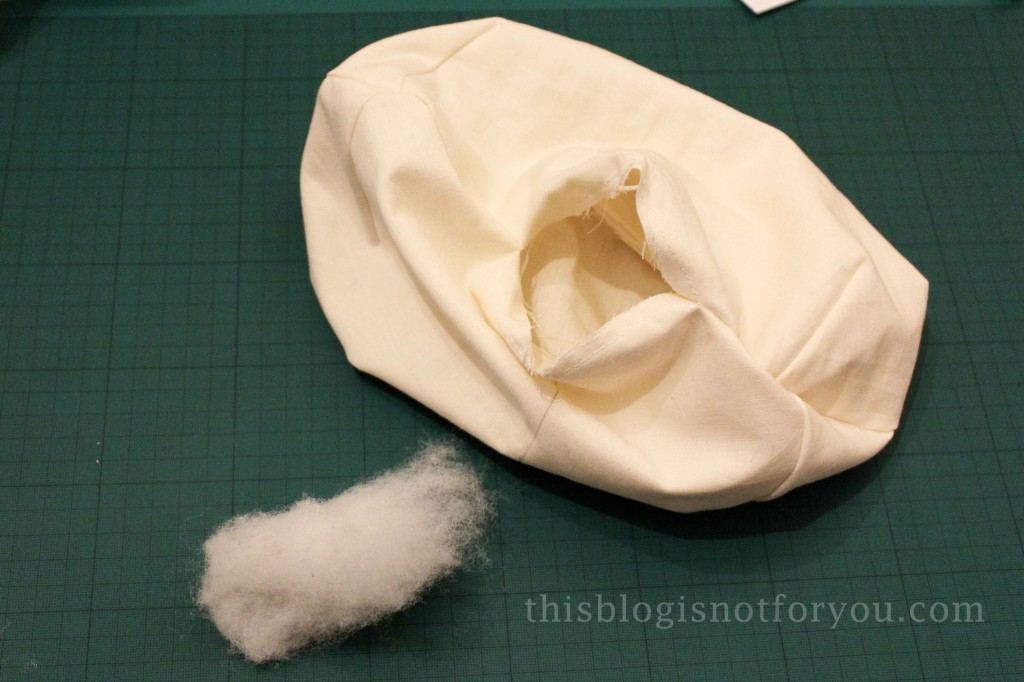
Now comes the fun part. For the ham I basically cut apart and old Primark pillow (they are quite cheap and the whole pillow fits exactly into the tailor’s ham.
I have no idea what these cheap pillows are made of really, the stuffing was quite itchy. In case you make this as a fun weekend project with your kids, I suggest wearing household gloves.

Now, stuff it. (For the tailor’s sausage I used old fabric scraps. I always keep those useless way too tiny bits and pieces, but for this project they came in very handy!)

how to make a tailor's ham by thisblogisnotforyou.com

How to make a tailor's ham by thisblogisnotforyou.com

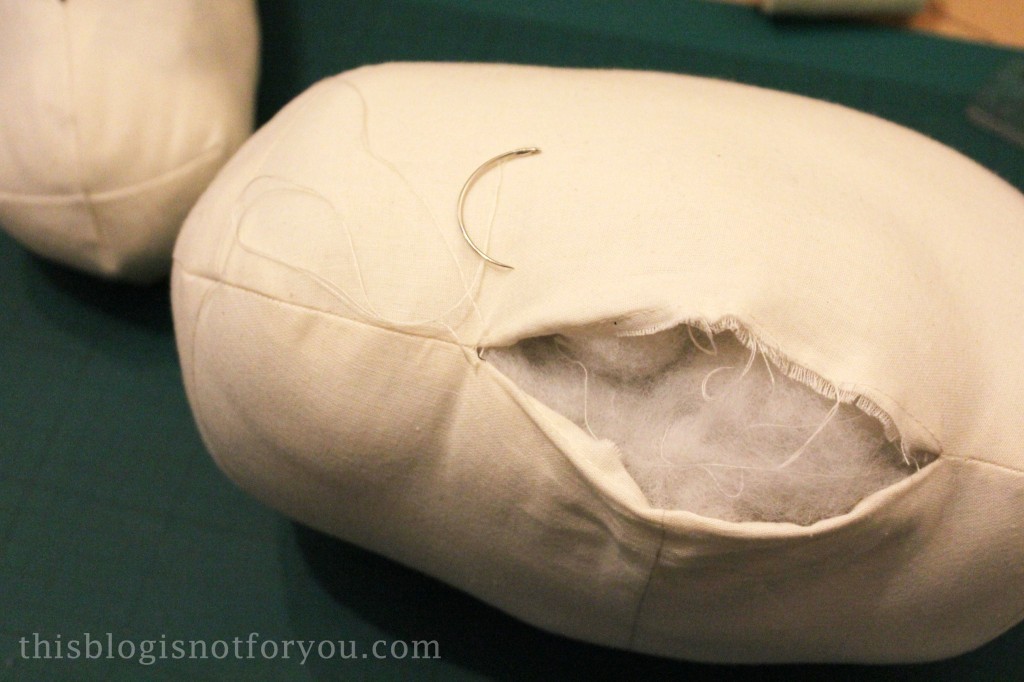
To sew up the open side I used a curved needle and double thread (I had no upholstery thread at home, doubling the thread worked just fine). A single thread will tear quickly. Just pull normal thread through the eye and double it up. Knot the two tail ends together and then sew with the doubled up thread.

How to make a tailor's ham by thisblogisnotforyou.com

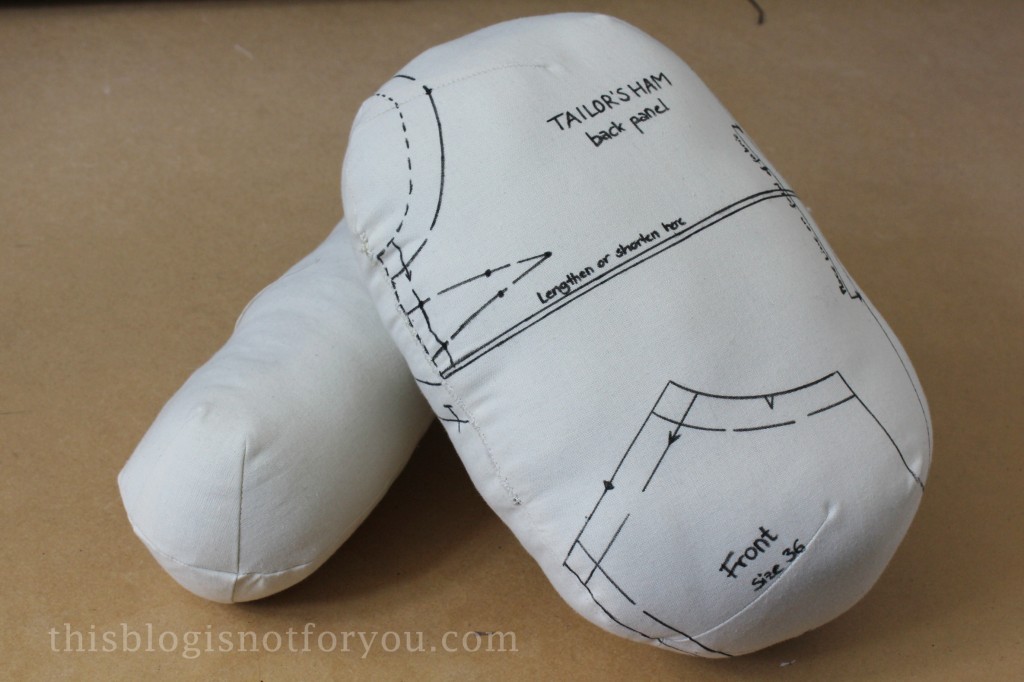
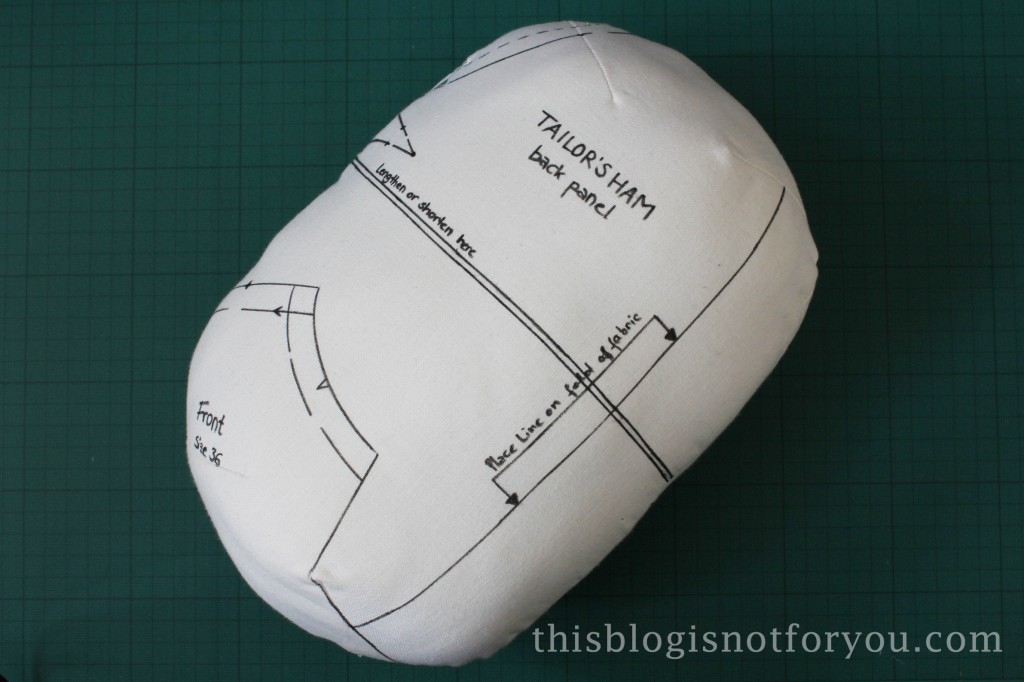
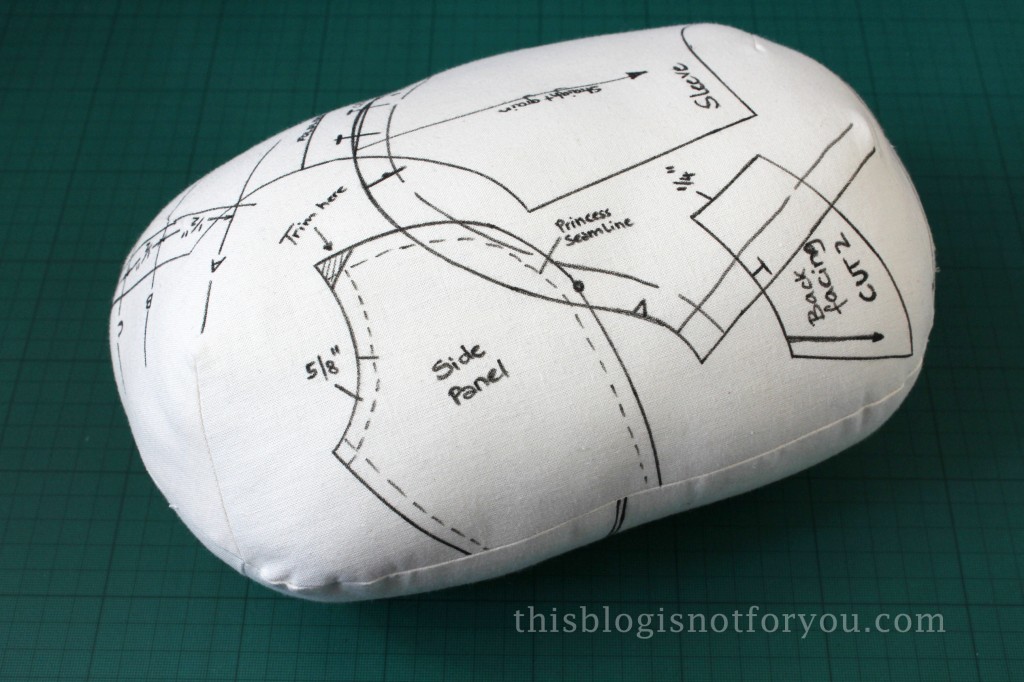
Not the prettiest seam, I know. But, voilá! Now I have my very own tailor’s ham and tailor’s sausage!

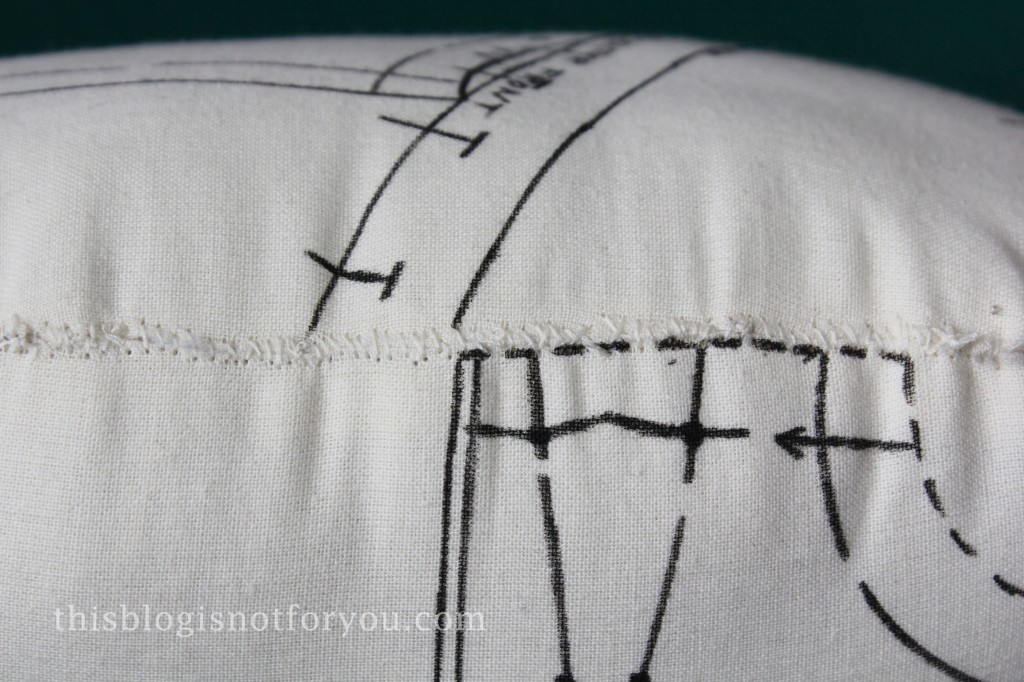
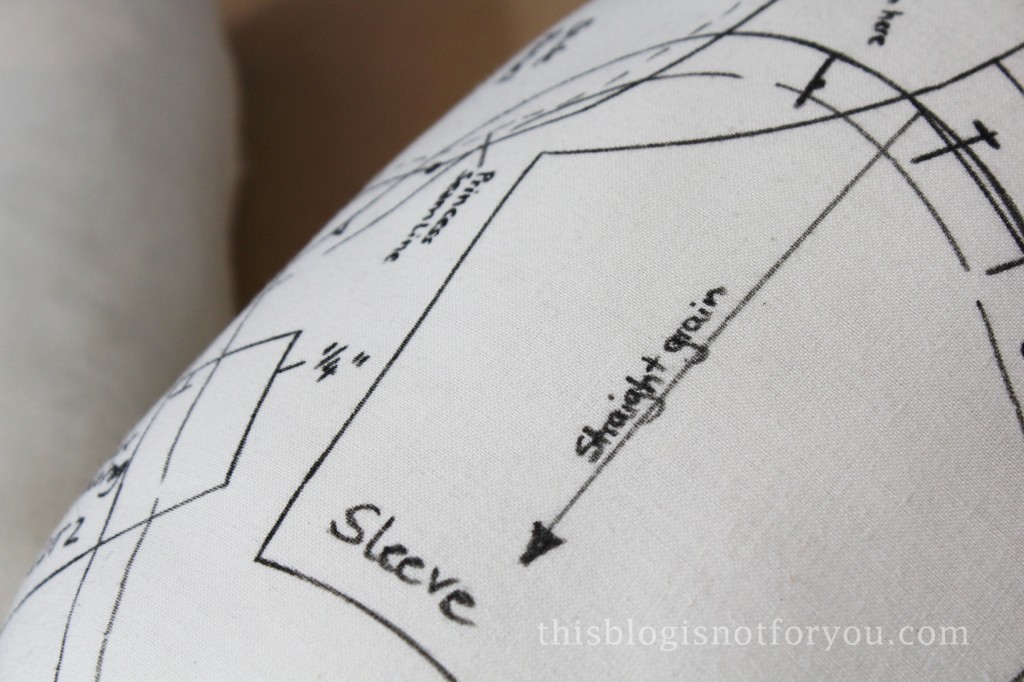
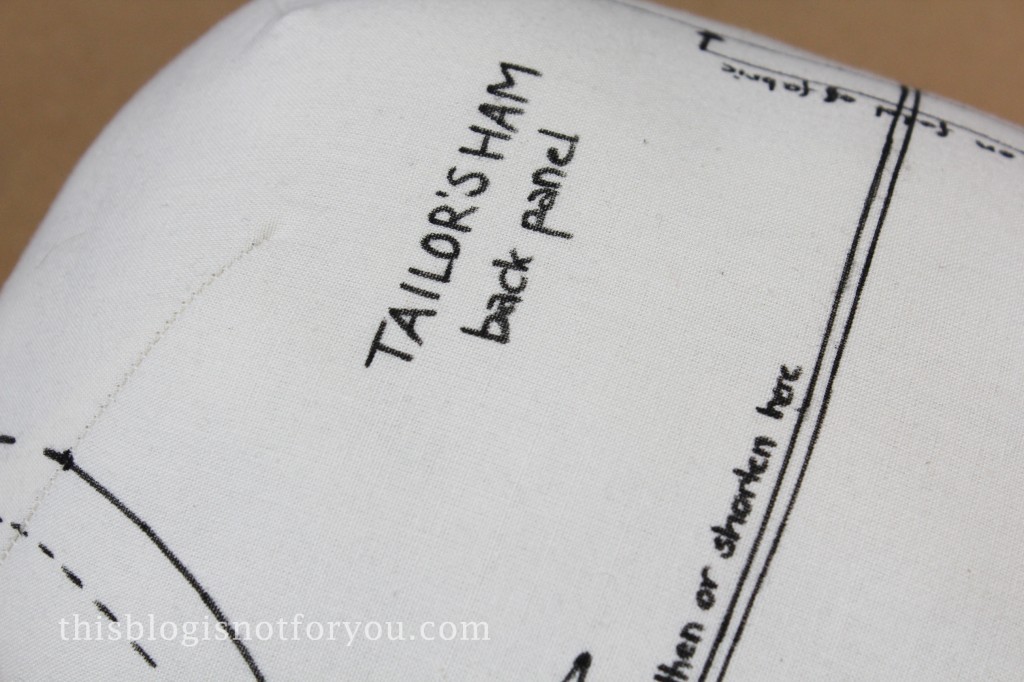
I chose to decorate the ham with a fabric marker. You could also use a cute colourful fabric instead of a second layer of cotton.

How to make a tailor's ham by thisblogisnotforyou.comHow to make a tailor's ham by thisblogisnotforyou.comHow to make a tailor's ham by thisblogisnotforyou.comHow to make a tailor's ham by thisblogisnotforyou.com

Super easy, super fun and super useful!

My man became quite alert when hearing I was making something with ham and sausage, not so excited anymore when he saw me ripping pillows on the carpet. Now he thinks the tailor’s ham makes quite a nice neck support pillow… 🙂

dress with a twist {Burda 2/2013 #115}

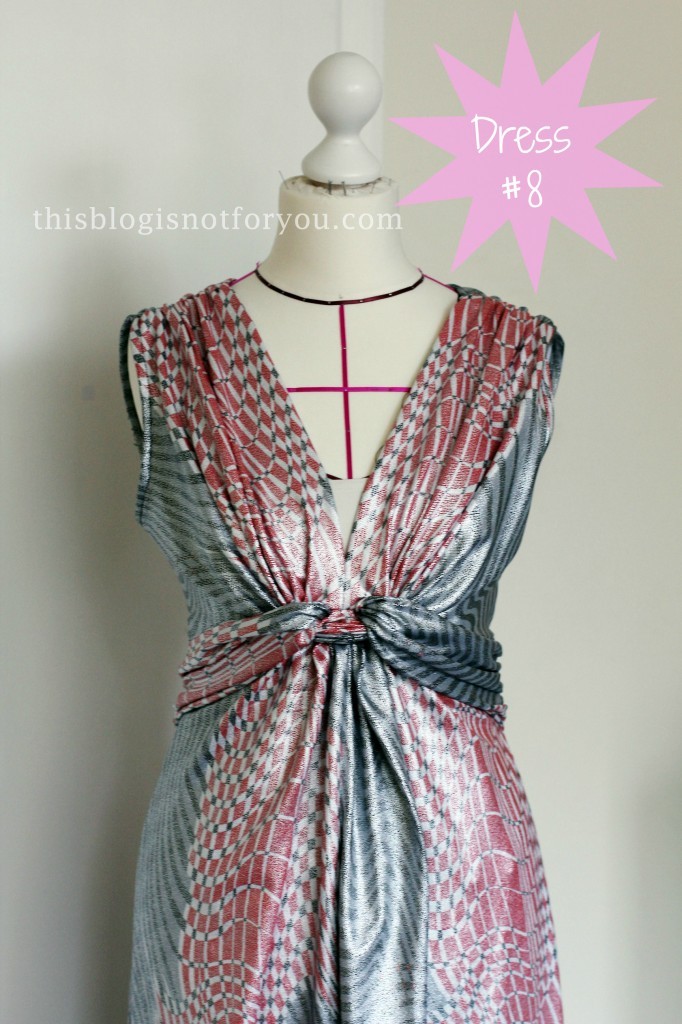
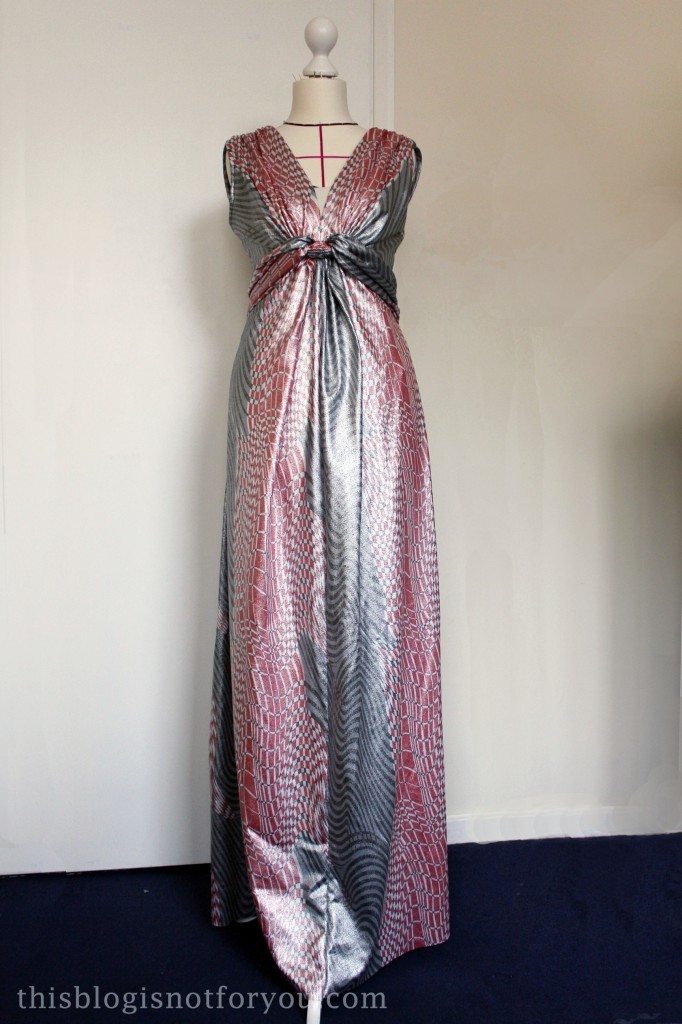
Dress with a Twist -  Burda 2/2013 #155 by thisblogisnotforyou.com

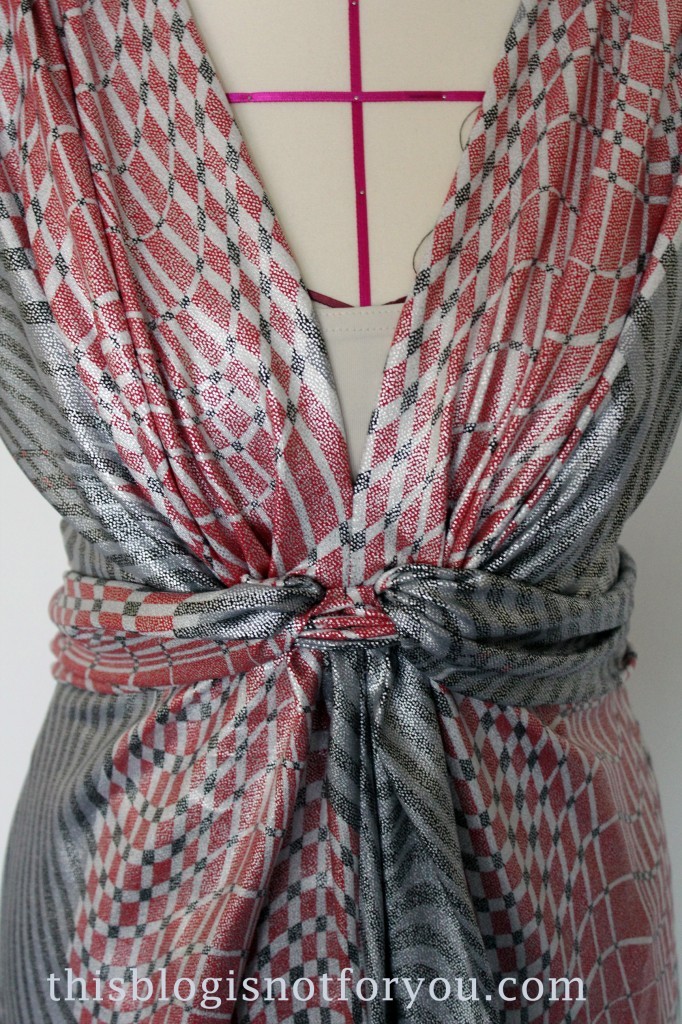
May I present…Her Ugliness! Dress #8 of the 27 Dresses Challenge is all sewn up, but I’m not too happy about it. I actually considered NOT to post a picture of this tragedy, but  this blog is not only about making progress in dressmaking, it’s also about making mistakes and learning from them. And this definitely was a mistake (and I’m pretty sure I learnt from making it…).

The pattern is actually pretty awesome (Burda issue 2/2013, #115) and since it was labeled “masterpiece” I had to try it (of course). It wasn’t too complicated and I love how this pattern is constructed.

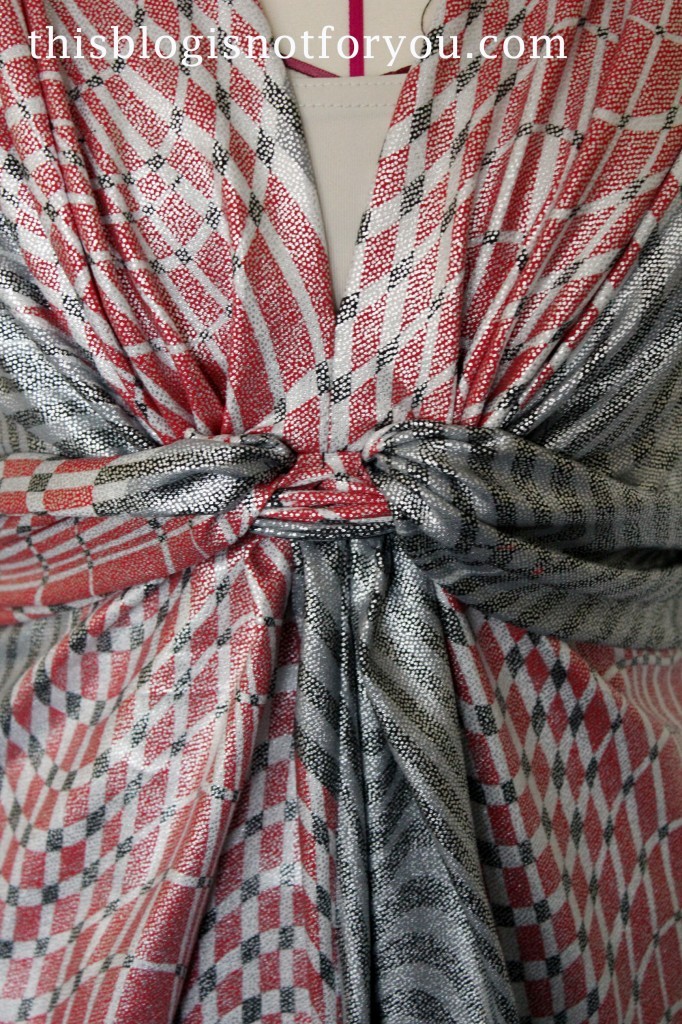
Dress with a Twist -  Burda 2/2013 #155 by thisblogisnotforyou.comBut ewww, the fabric! I know! I have no idea how I even ended up buying this crappy fabric. The original dress in the magazine was made from a jersey fabric with some kind of snake skin print and I guess this “inspired” my choice of fabric (I hate snake skin prints and this was probably the fabric that was most similar).

As I already let you know on Facebook, the moment I started cutting out the pattern I started hating it. (Which is why it took me two month until I decided to sew it up anyway). Believe me, hating the fabric already before you start to sew, is so not motivating. And honestly, I should’ve stopped at that point.

But I really wanted to try out this pattern and since it required quite a large amount of fabric I wanted to try it on the crappy fabric at first.Dress with a Twist -  Burda 2/2013 #155 by thisblogisnotforyou.com

Seriously, what is this? A slightly trippy space dress? Tablecloth? Some sort of weird circus clown thing?

Dress with a Twist -  Burda 2/2013 #155 by thisblogisnotforyou.com

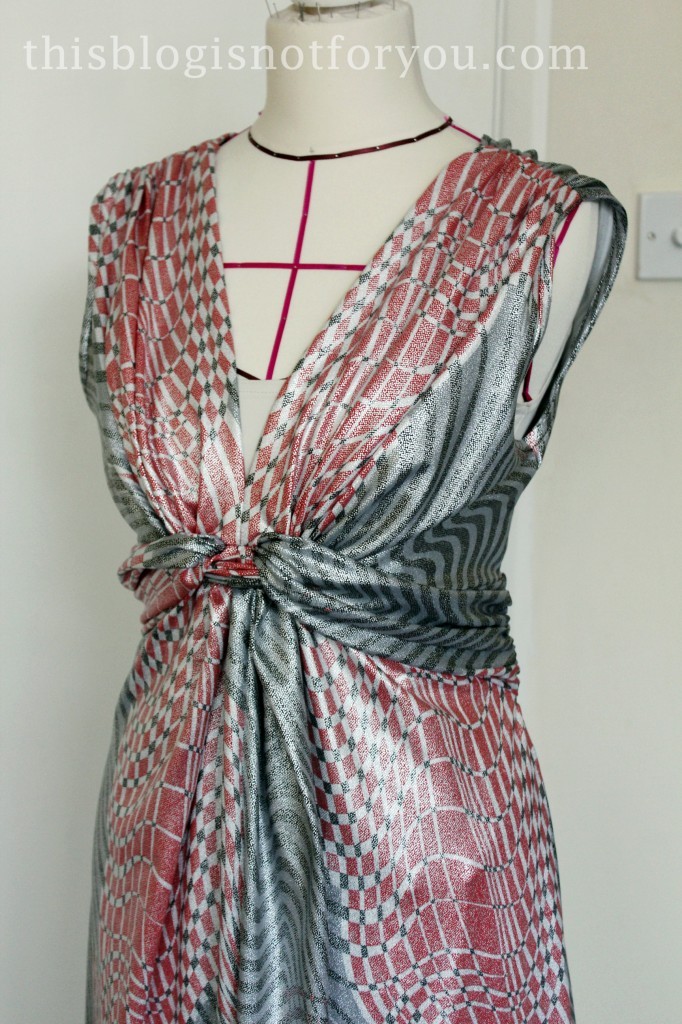
When you ignore the fabric, the dress actually looks quite nice (and fits like a glove). I’m thinking of making another (better!) version as soon as I have some closure on this one…

Dress with a Twist -  Burda 2/2013 #155 by thisblogisnotforyou.comDress with a Twist -  Burda 2/2013 #155 by thisblogisnotforyou.com

I really like the twisted details in the front, probably the trickiest bit of the pattern. Dress with a Twist -  Burda 2/2013 #155 by thisblogisnotforyou.com

It was the weekend of sewing mistakes…more stories coming up soon. I thought I’d better reveal them piecemeal… 😀

We all screw up every once in a while…What’s your latest faux pas?

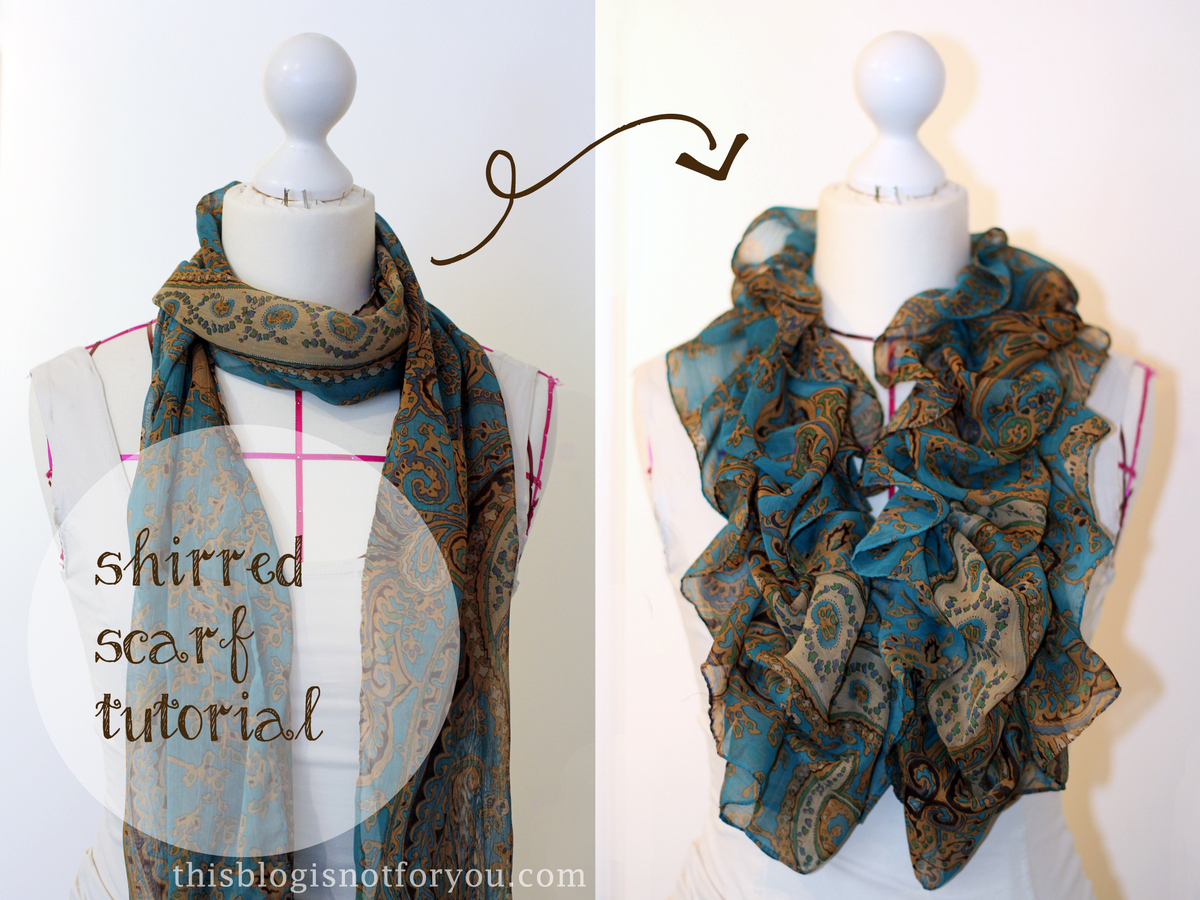
Refashion It! The Shirred Scarf Tutorial

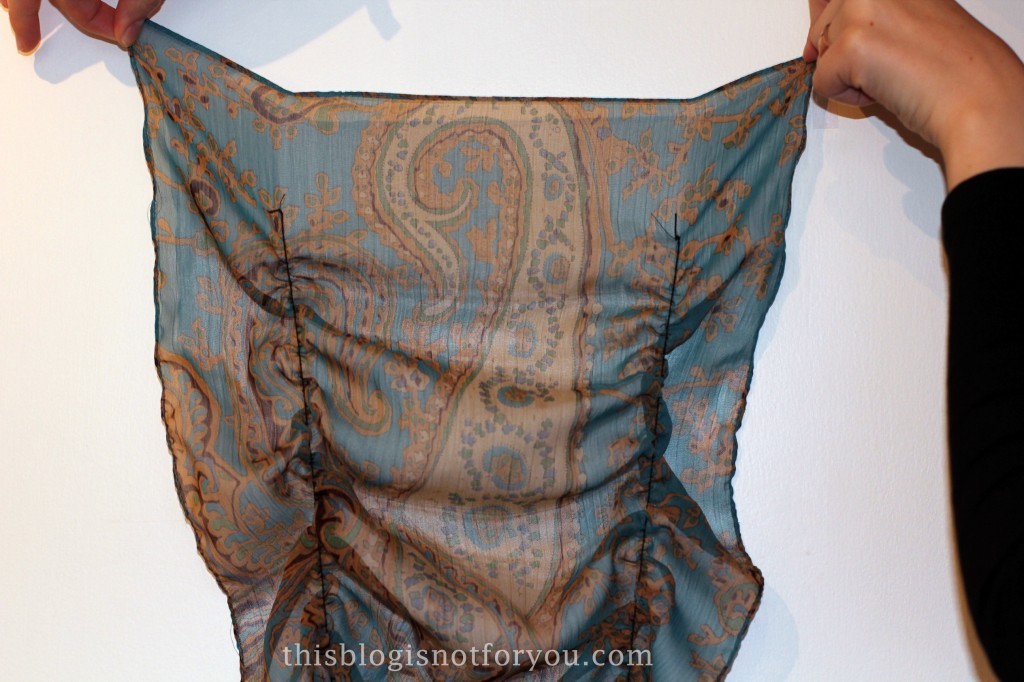
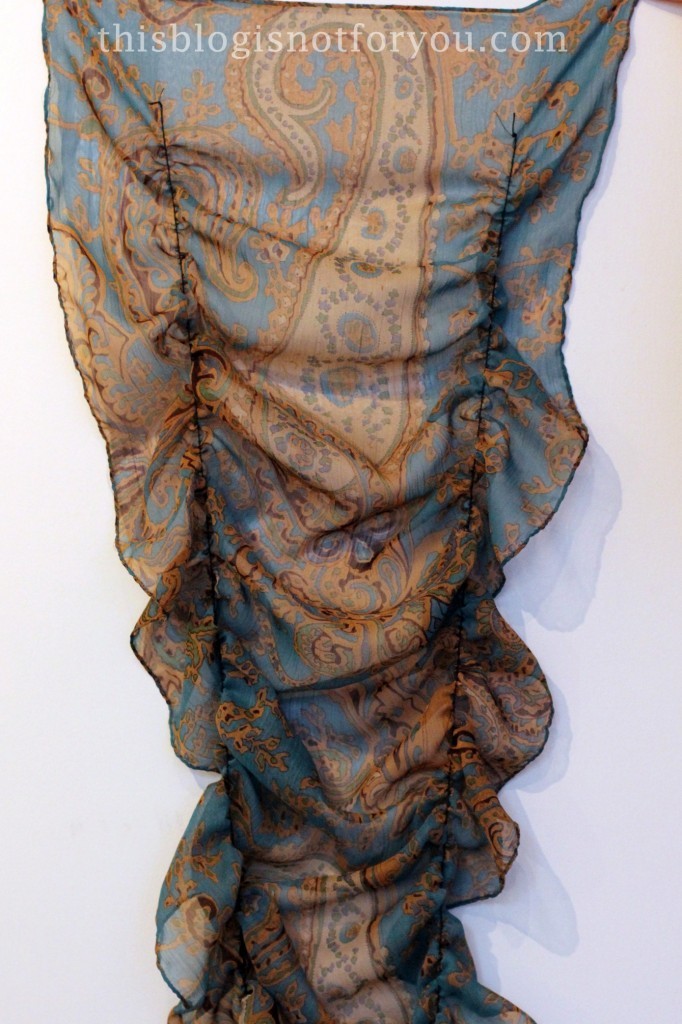
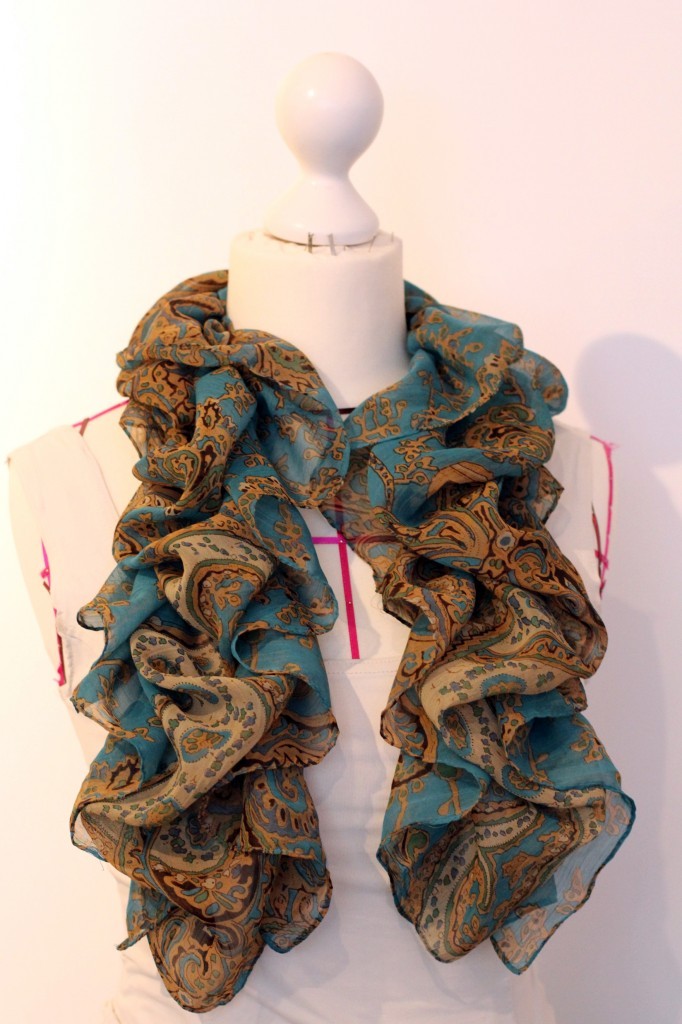
shirred scarf tutorial by thisblogisnotforyou.com


Now that exams are over, I had a little time here and there to sew and finish some things that were lying around for months. Dress #8 of my 27 Dresses Challenge is practically finished. The weather here in London just hasn’t been good enough to take proper pictures. So check out the blog at the beginning of the week if you’re interested in seeing the ‘ugliest dress I’ve ever sewn’ 🙂

Until then, here’s a quick and easy tutorial for the weekend.

It’s time for upcycling some old scarfs for summer!

All you need:

-a scarf (lightweight fabric such as silk, chiffon, …). Choose a scarf that is long enough. Consider that after shirring it will be only half as long as it used to be!

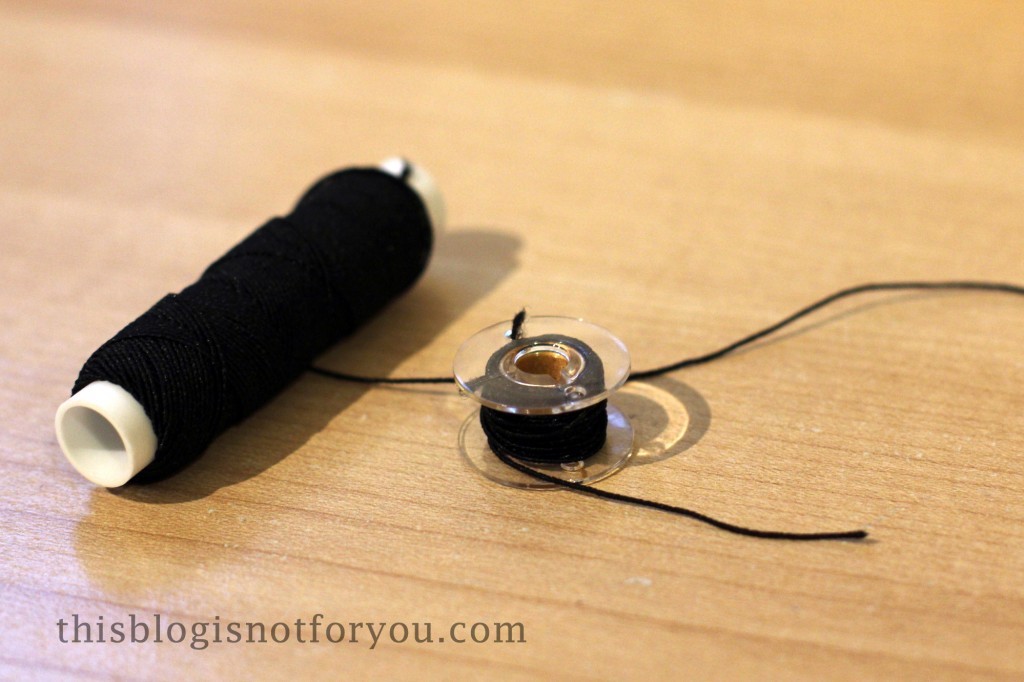
– elastic thread (and a sewing machine!)

shirred scarf tutorial by thisblogisnotforyou.com

Wind an open bobbin with your elastic thread, not too tight and not to loose. Machine winding with your sewing machine might wind it too tight. If you’re too impatient winding it by hand, you can do it with your machine, holding the thread in your hand. That way you’re able to control the tension and it doesn’t get too tight.shirred scarf tutorial by thisblogisnotforyou.com

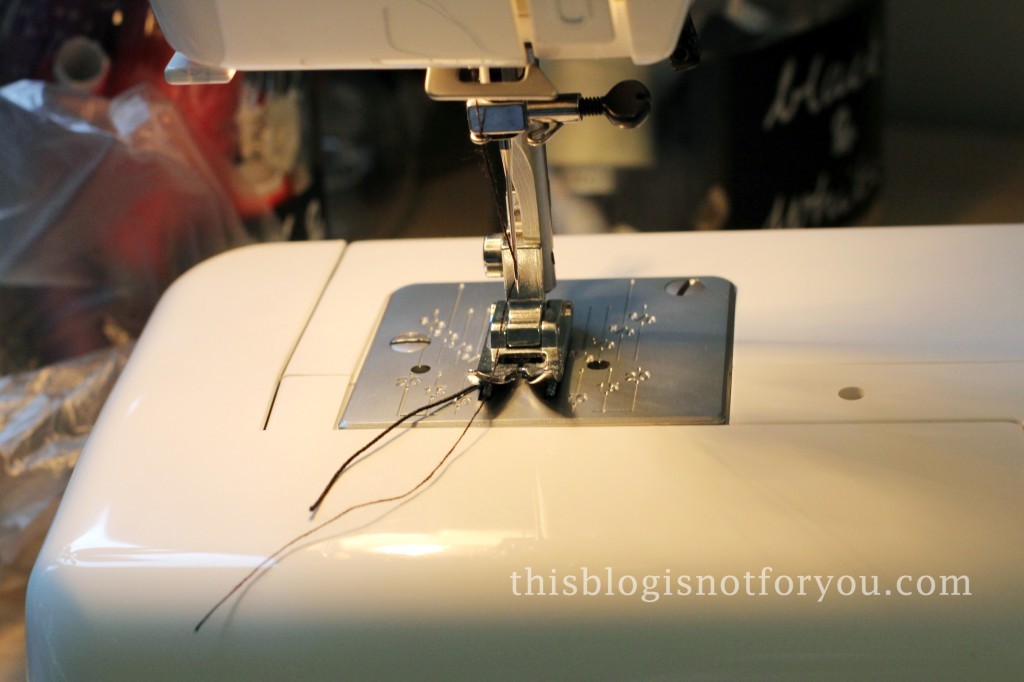
Insert the bobbin as usual. You can make the bobbin thread tension tighter, if your machine has that option. I just left mine how it was and it worked fine.

Pull the bobbin thread up manually. Make sure it doesn’t pop back into the machine (this happens when you don’t pull up enough thread).shirred scarf tutorial by thisblogisnotforyou.com

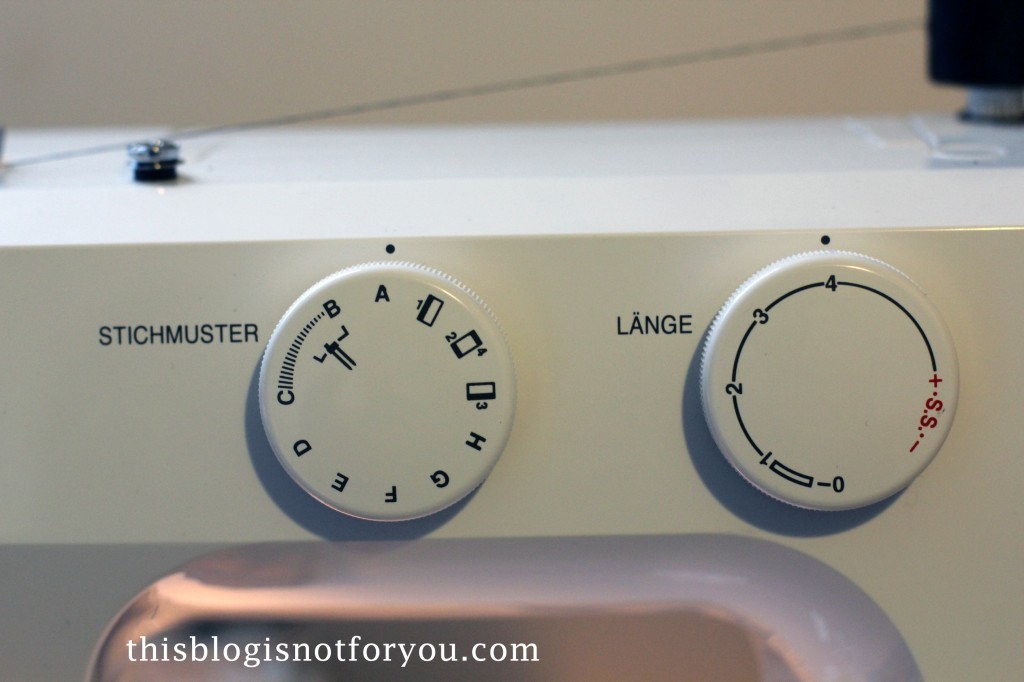
Set the machine to a straight stitch and a long stitch length (like a basting stitch).shirred scarf tutorial by thisblogisnotforyou.com

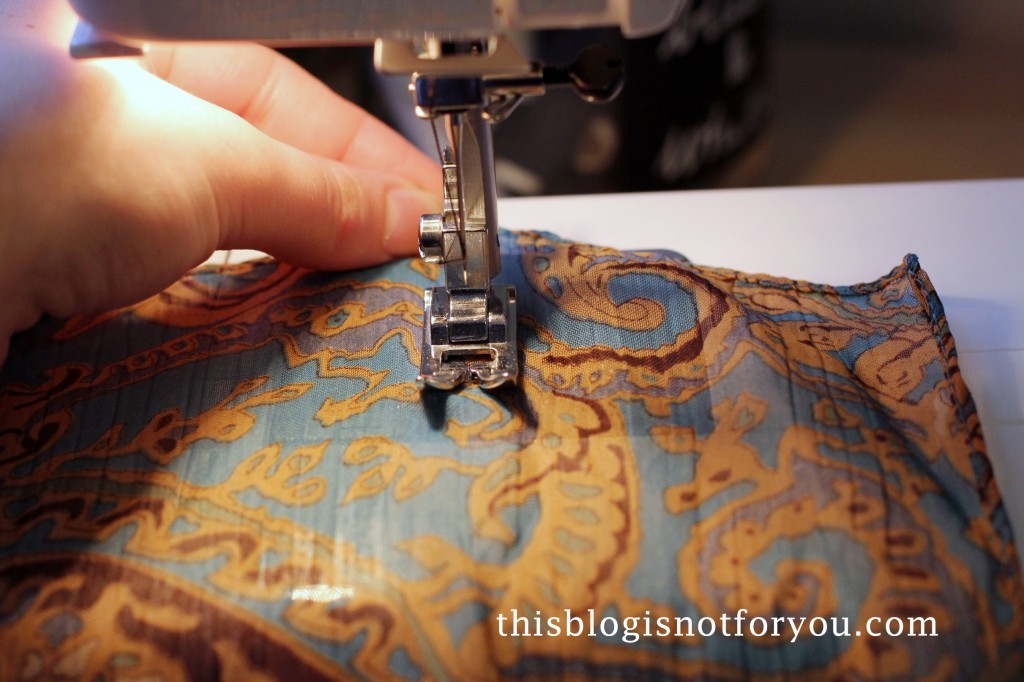
Sew two parallel rows, both the same distance from the side edge.  Don’t start directly at the upper edge, but a few inches below.

While sewing, hold the fabric behind the needle with your left hand and pull slightly. Don’t let it ruffle until you’re done. With your right hand keep the fabric straight while sewing. shirred scarf tutorial by thisblogisnotforyou.com

Before cutting the thread make sure you pull enough elastic thread out, otherwise it will pop back into the machine and you’ll have to pull it up again. You could also backstitch, but I didn’t want it to show on the scarf.

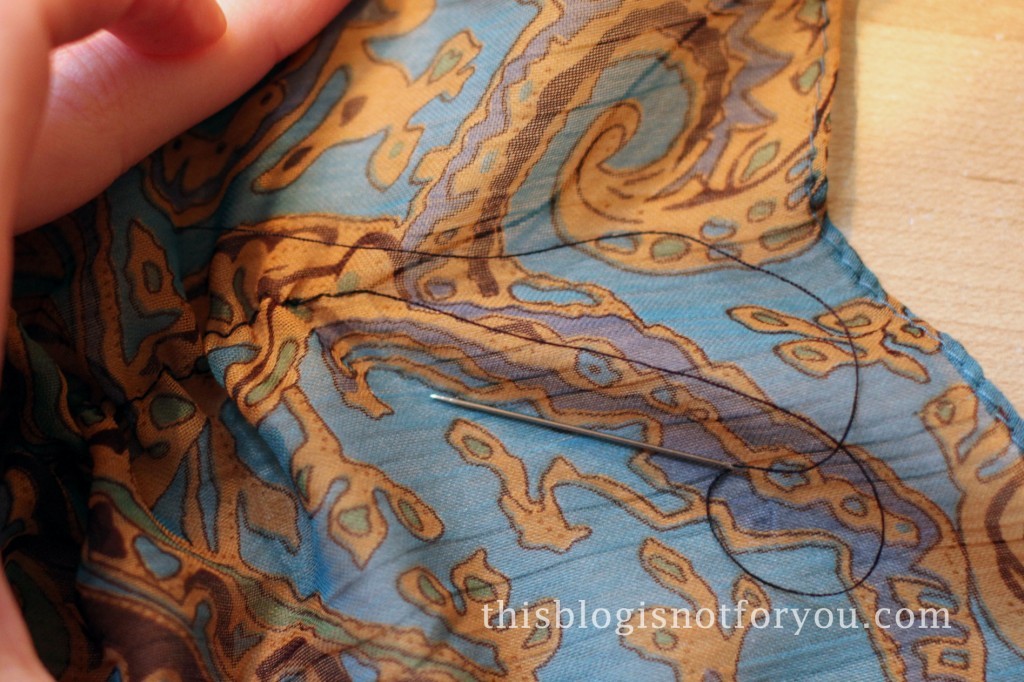
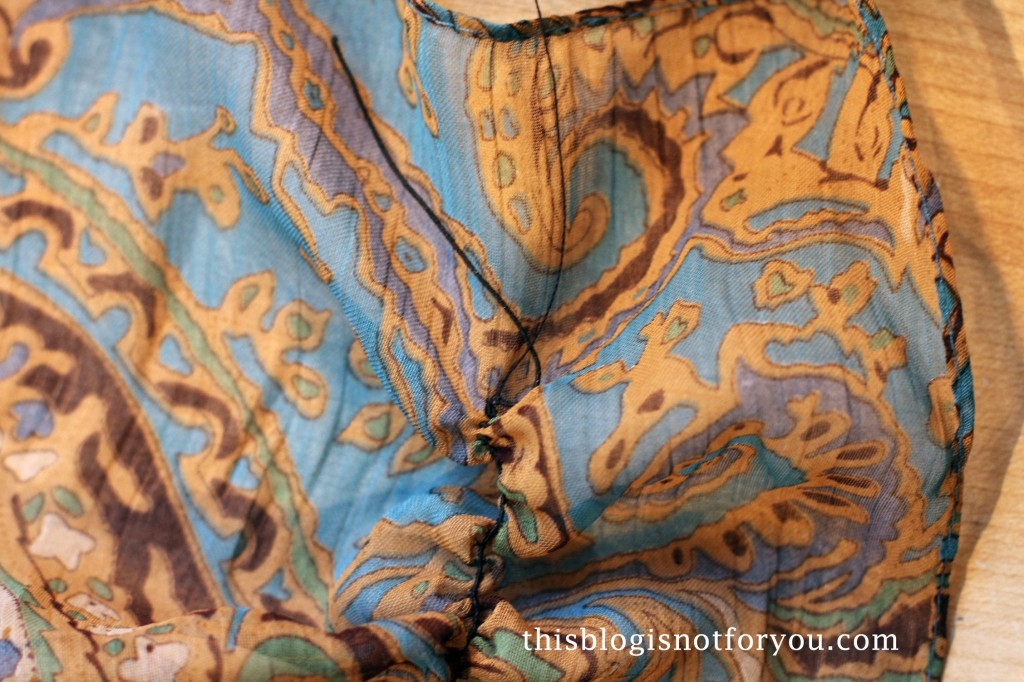
Cut the thread and use a needle to pull the upper thread through the fabric. Knots several times on the left side of the fabric before cutting the ends off.shirred scarf tutorial by thisblogisnotforyou.com

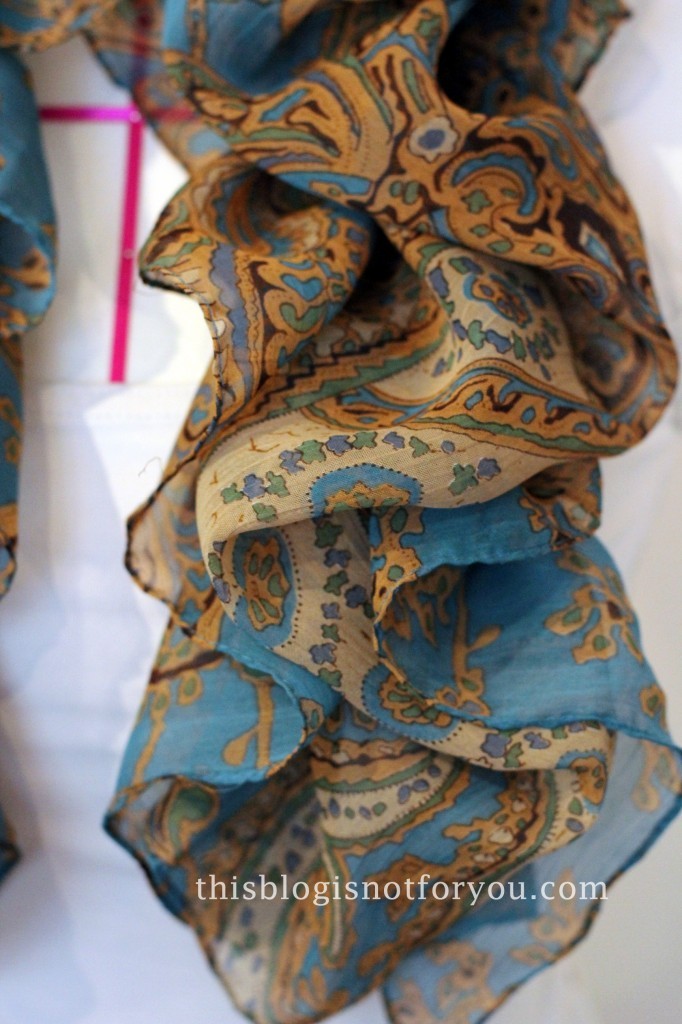
You could also sew the two rows of shirring closer together to get an even more fluffy scarf. Try it out with a few old scarf or scraps of fabric to see what works best for you.shirred scarf tutorial by thisblogisnotforyou.comshirred scarf tutorial by thisblogisnotforyou.comshirred scarf tutorial by thisblogisnotforyou.comshirred scarf tutorial by thisblogisnotforyou.com

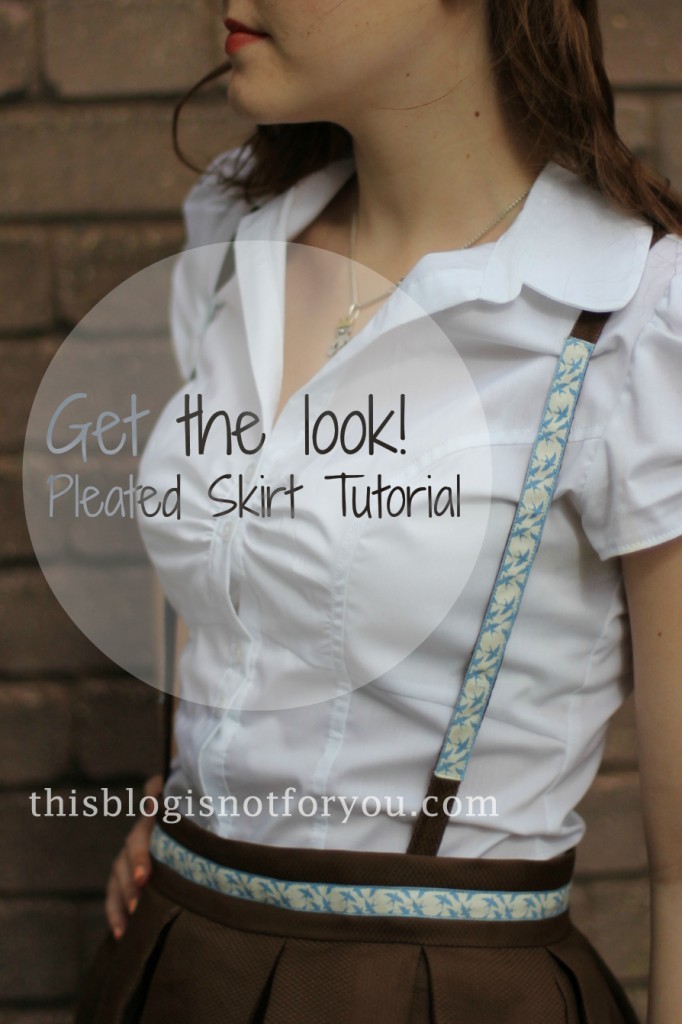
Get the look: Pleated Skirt with Suspenders and Vintage Trim Tutorial – no pattern needed!

pleated skirt with suspenders and vintage trim tutorial by thisblogisnotforyou.comAs promised, here’s the tutorial for the pleated skirt and suspenders I made on the weekend.

It’s a fairly easy sewing project and you won’t need any special skills to tackle it. The trickiest part is probably inserting the invisible zip, but this post also includes a tutorial on how to do it. So no worries, your skirt will turn out to be awesome! Let’s get cracking!
thisblogisnotforyou.com

You won’t need a pattern to make this skirt.

All you need:

– fabric (about 1m/40” wide and 1,5/60” long, depending on your waist measurements and the length of the skirt you prefer)

– invisible zip (ca. 25cm/10” long)

– trim (1,5-2m/60-80”)

– elastic band, 4 buttons

The trim I used is from the newest Cloth issue 18:
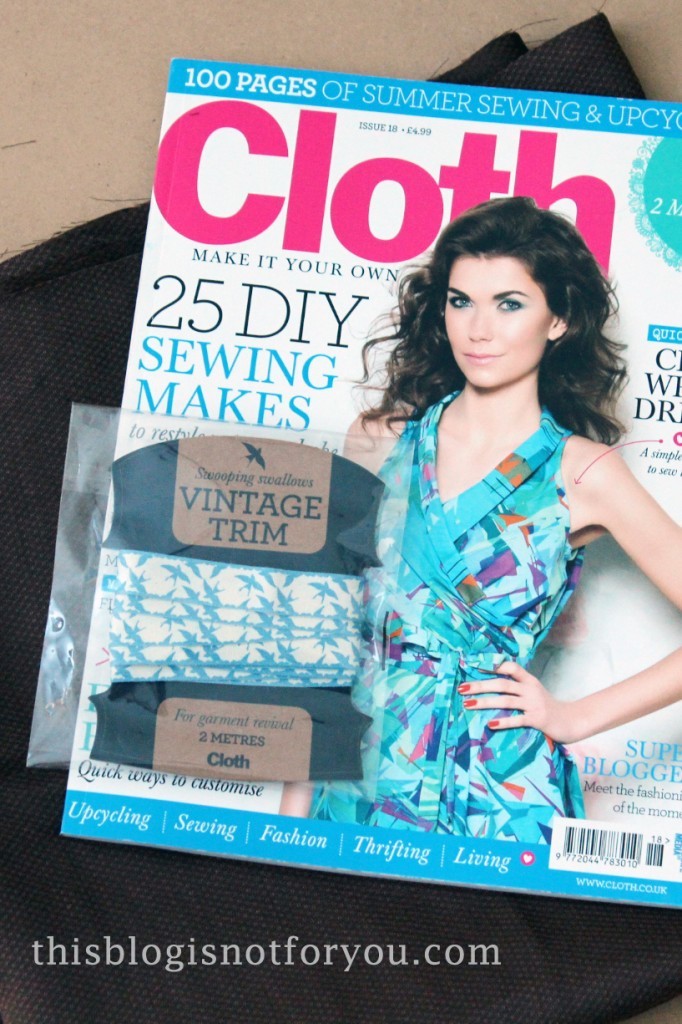
pleated skirt with suspenders and vintage trim tutorial by thisblogisnotforyou.comFor the skirt you need fabric that is about two times as wide as the width of your waistband.
So first you need to decide how high you want your skirt to sit. Mine is a bit lower than my waistline. Measure the circumference of the part of your body where you want the skirt’s waistband to sit (and don’t forget to add about 2cm/1” of seam allowance on each side before cutting out!)

Use this as reference for the following calculations (the picture below also makes it much clearer):

– The length of the skirt panels is three times as wide as half the length of your waistband. For instance, the length of my waistband (excl. seam allowance) is 75cm. So each skirt panel will be gathered into half the length of the waistband, so 37.5cm.
Since we are making ‘box pleats’ we need three times as much fabric, so 37.5 x 3 = 112.5

If your fabric is wide enough, simply cut it in half two get your front and back panel. The top seam allowance of the skirt panels equals the width of the waistband (mine is 4cm).

To make the waistband and suspenders we don’t need a lot of fabric.
My waistband is 4cm wide. Since you need to fold it over later on, the overall width is 8cm plus seam allowance.
I made the suspenders rather narrow and used strips of each 4cm width (1,5cm wide + 0.5 cm seam allowance, so they are in the end of the same width as the trim).
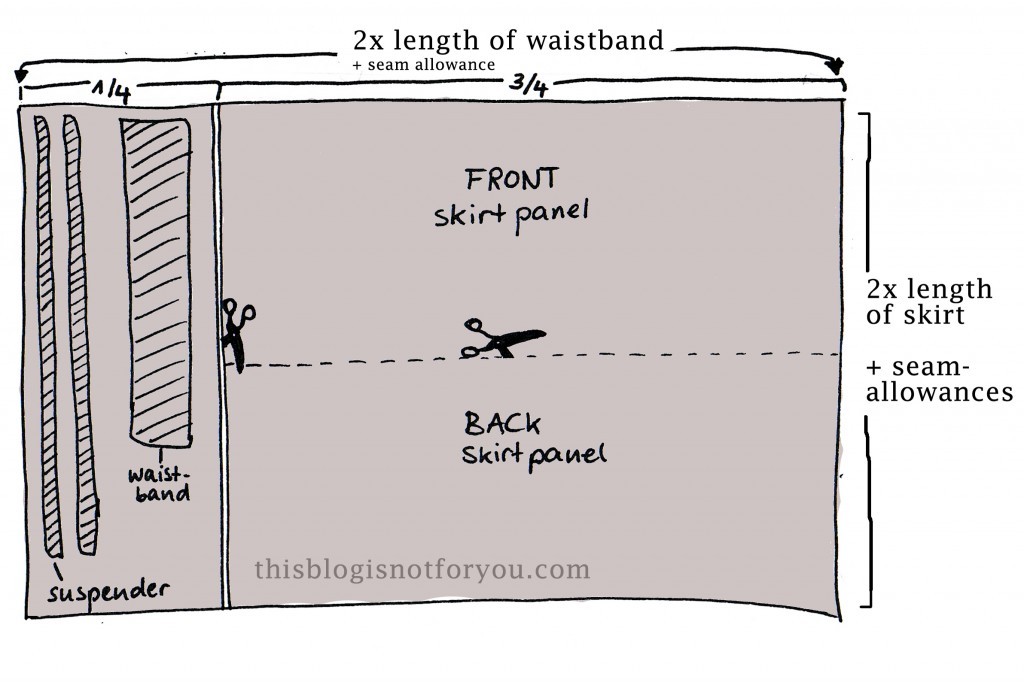
fabric cutting plan for pleated skirt by thisblogisnotforyou.com

When you’re done with all the calculations and cutting, start sewing together one of the skirt panel’s side seams (we have to first insert the zipper, before we can do the same with the second side seam).

When you don’t have a serger, but want to have neatly finished seams, what you can do is use a french seam.french seams tutorial for pleated skirt by thisblogisnotforyou.com
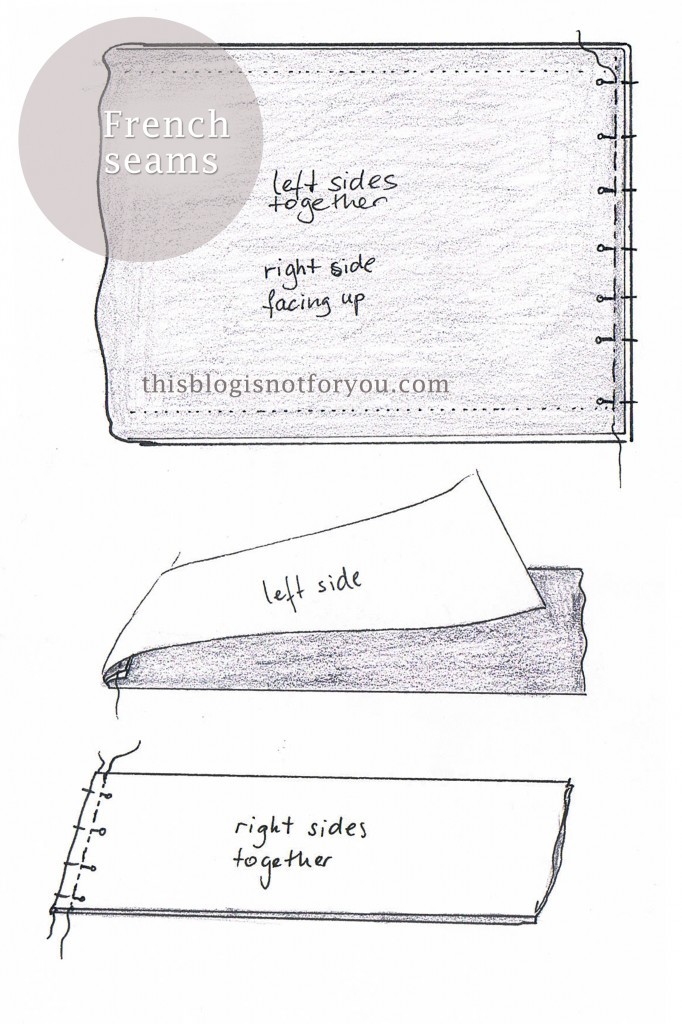
Place the skirt panels on top of each other, left sides together, to the right side are facing out. (If you’re a sewing novice: the right side will be the side of the fabric that will be on the outside later on).

Sew them together using a very narrow seam allowance (half of what you normally use). I used 5mm.

Then fold them over, so that the right side are together and the left side are facing out.  The raw edge is now between the two layers of fabric. Press the seam. Now sew another stitch to the left of the raw edge (which is now hidden between the two layers).
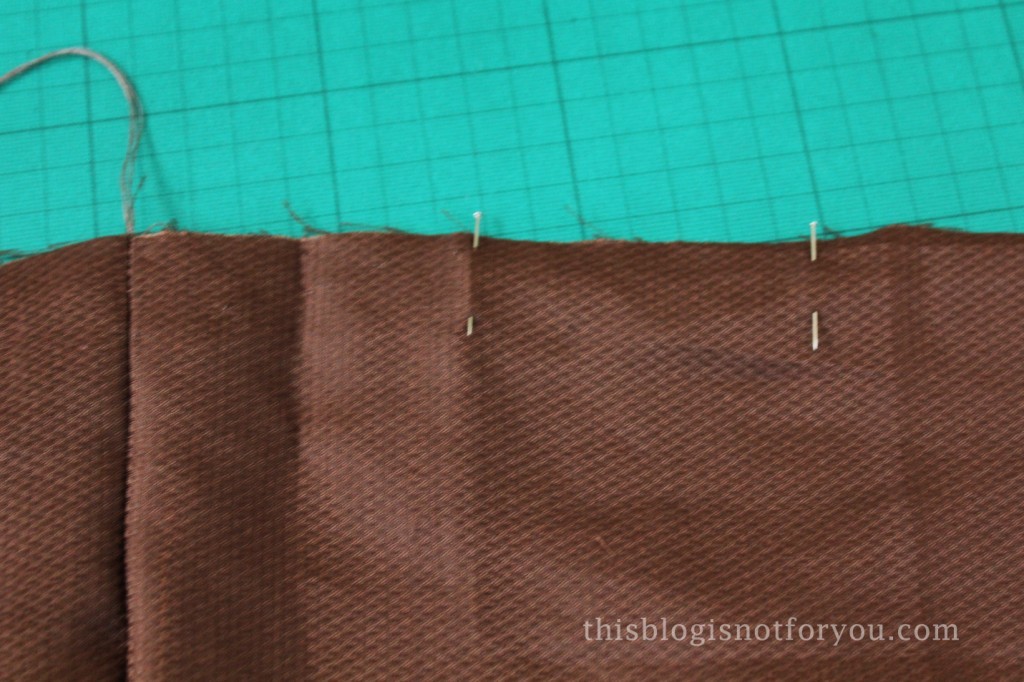
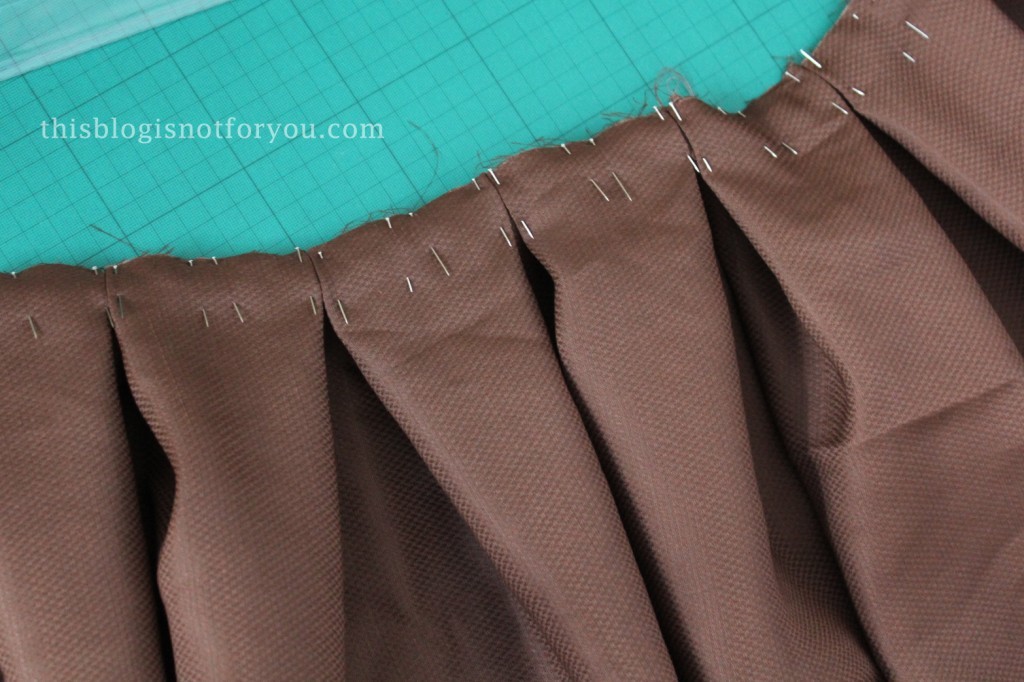
tutorial for pleated vintage skirt by thisblogisnotforyou.comNow you gather the skirt panel by neatly folding them into even box pleats.
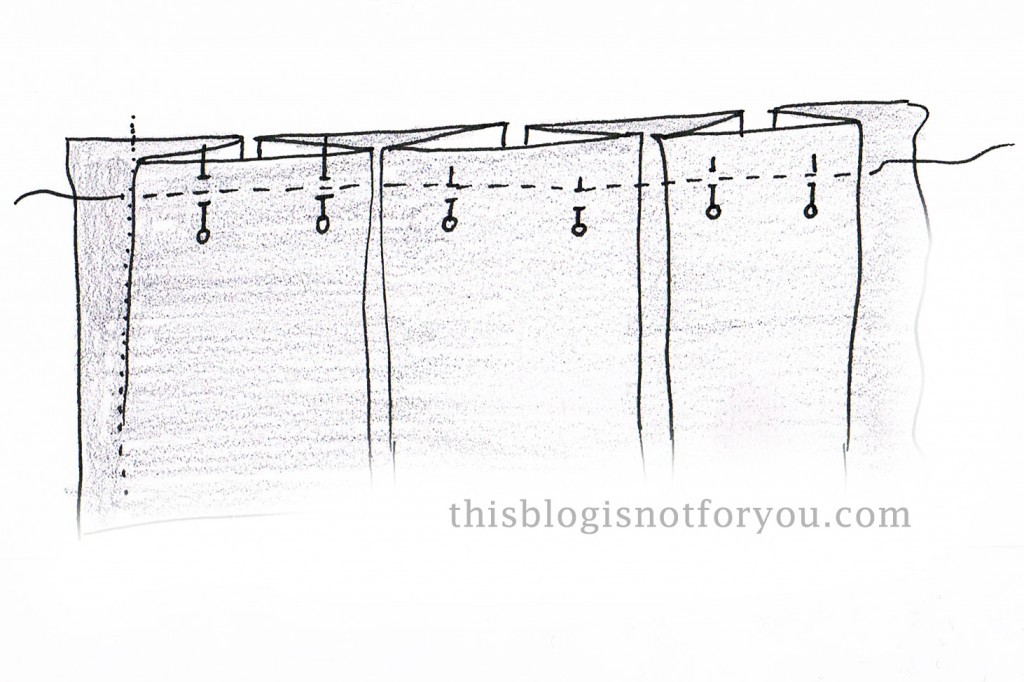
You first have to determine the width of each pleat. I wanted to have 5 in the front and 5 in the back, so to match my waistband (2x 37.5cm) each pleat has to be 7.5cm wide.

The fabric that is folded back is twice as much, 15cm. Measure and the mark the folds of the pleat with pins.

Here’s how the box pleats are folded.
tutorial for pleated vintage skirt by thisblogisnotforyou.com

tutorial for pleated vintage skirt by thisblogisnotforyou.com

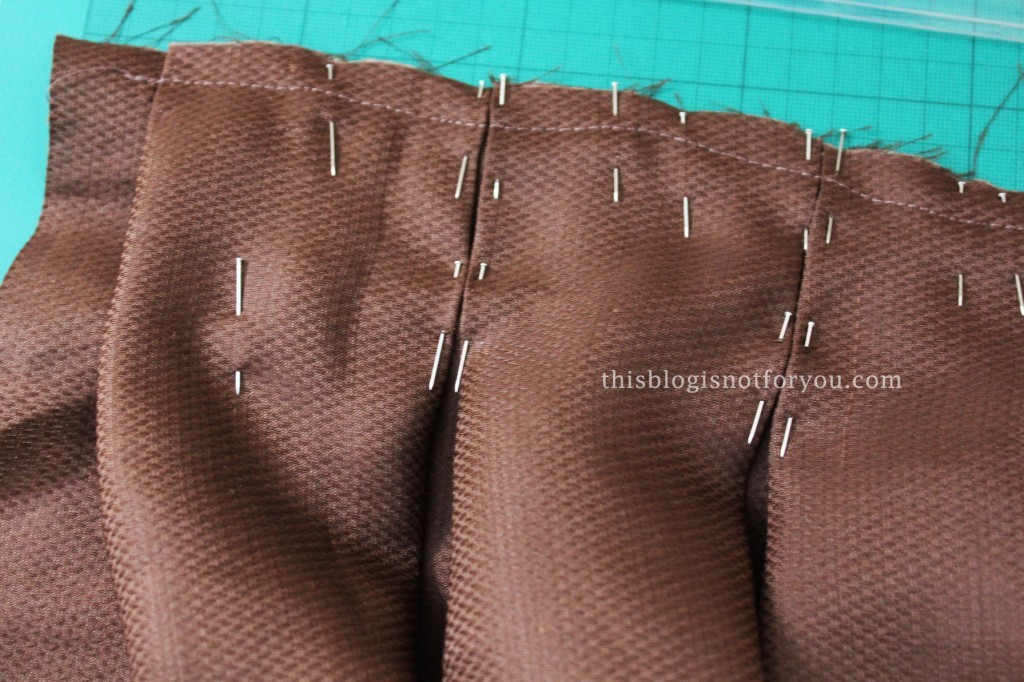
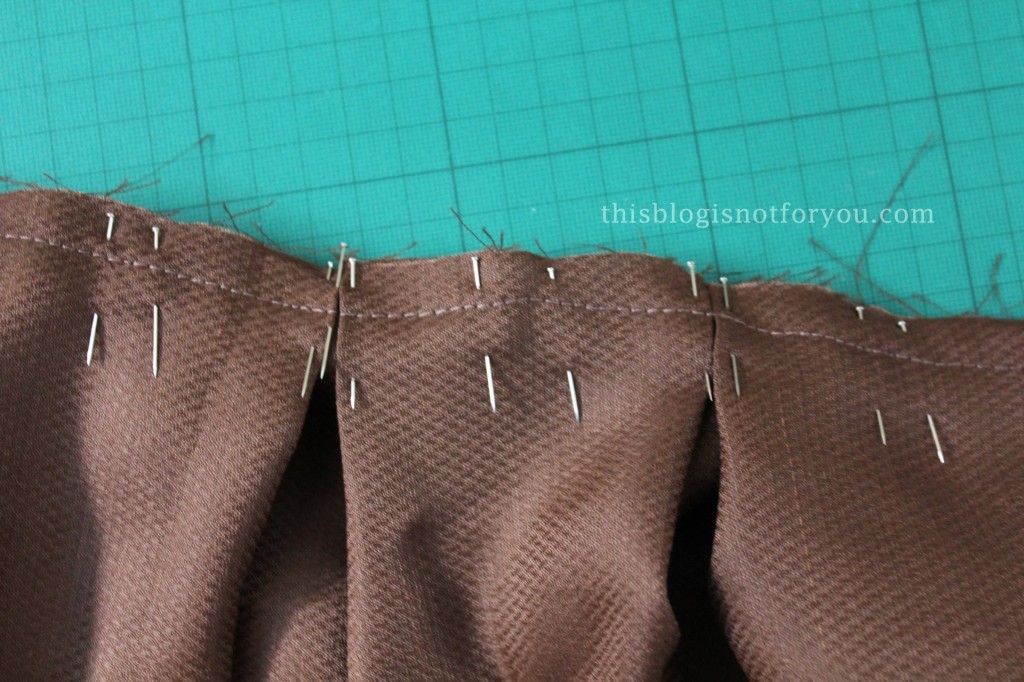
I used quite a lot of pins 🙂 But it’s important that the pleats stay in place to get a neat result in the end.

Now stitch the pleats in place. Normally, you really shouldn’t sew over pins, be careful not to damage your machine’s needle. If you don’t want to stitch over the pins, add a second row of pins to secure the pleats (you will need it anyway later on!).
tutorial for pleated vintage skirt by thisblogisnotforyou.comtutorial for pleated vintage skirt by thisblogisnotforyou.com

When you’ve stitched the first seam and added the second row of pins, you sew on the waistband.
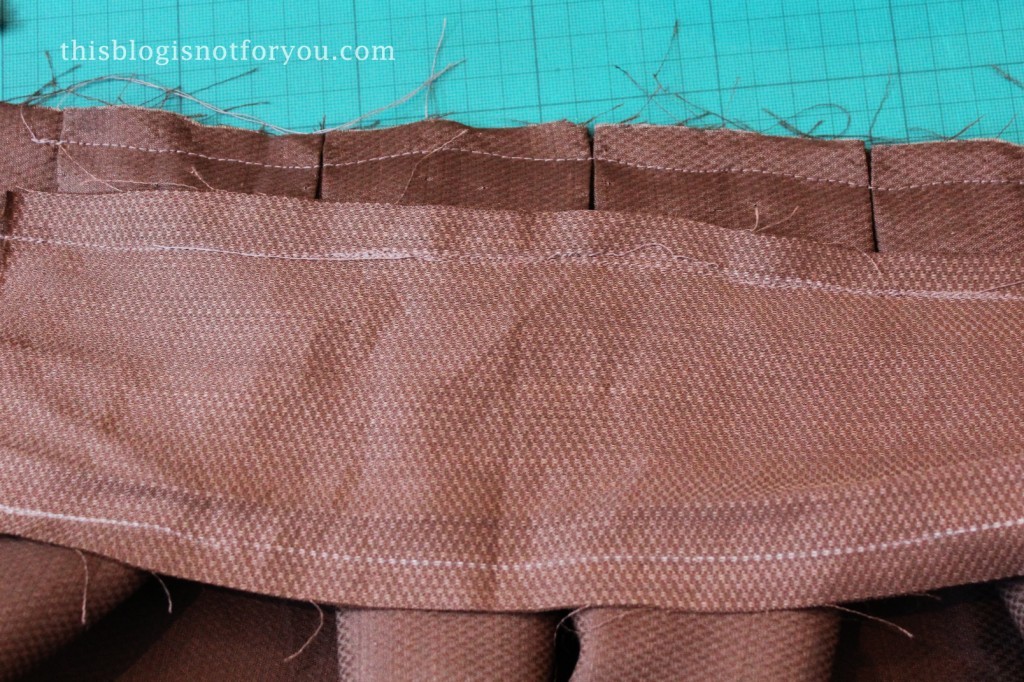
The second row of pins is important to keep the pleats in place, since the seam of the waistband will be below the seam you just stitched. You could also just press the pleats in place, if you prefer doing that (my fabric was hard to press properly, so I just stuck with the pins).
tutorial for pleated vintage skirt by thisblogisnotforyou.com

Place the waistband on the gathered skirt panel, right sides together. The seam you stitch  has to be as far away from the raw edge as the waistband is wide (4cm in my case. I added 1cm of seam allowance, so the distance between the raw edges is 3cm).tutorial for pleated vintage skirt by thisblogisnotforyou.com
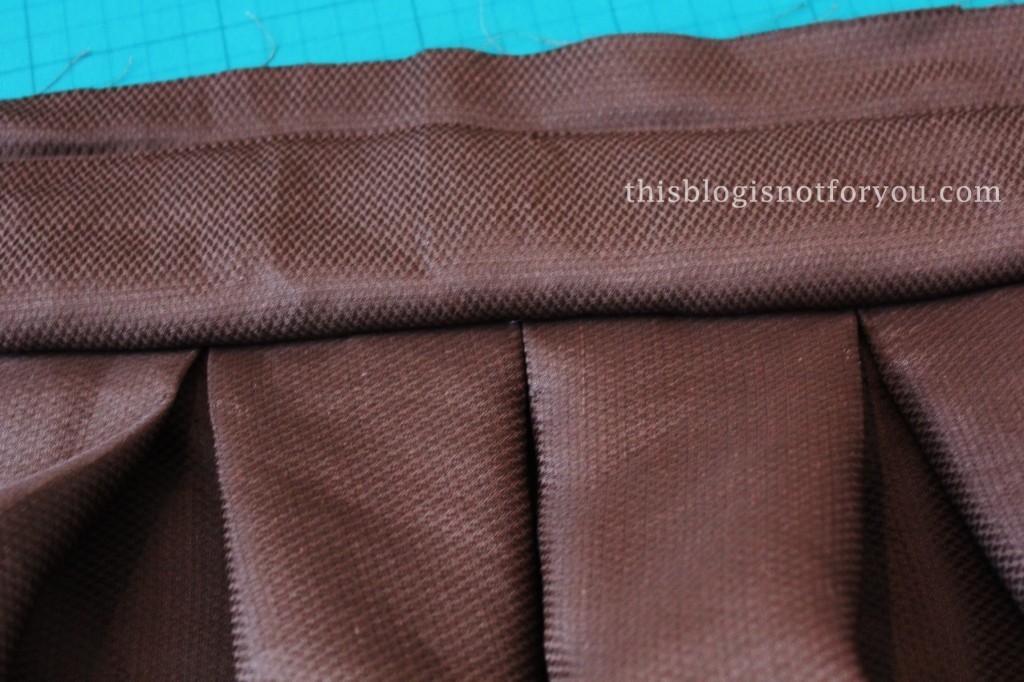
Fold open and press. Then place the trim in the middle and topstitch onto the waistband.
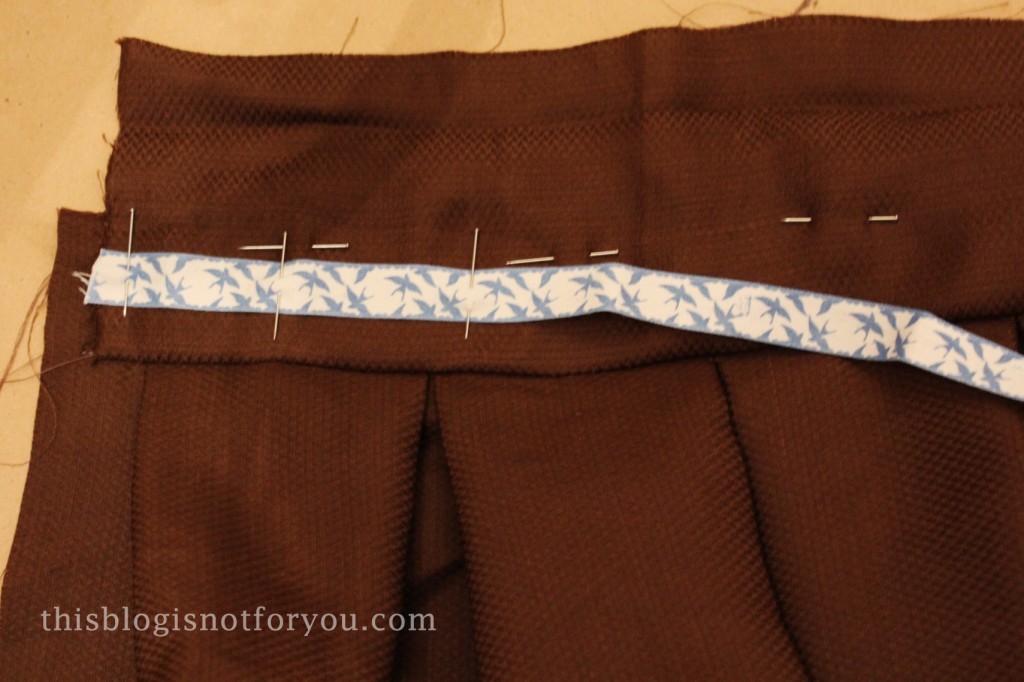
tutorial for pleated vintage skirt by thisblogisnotforyou.com

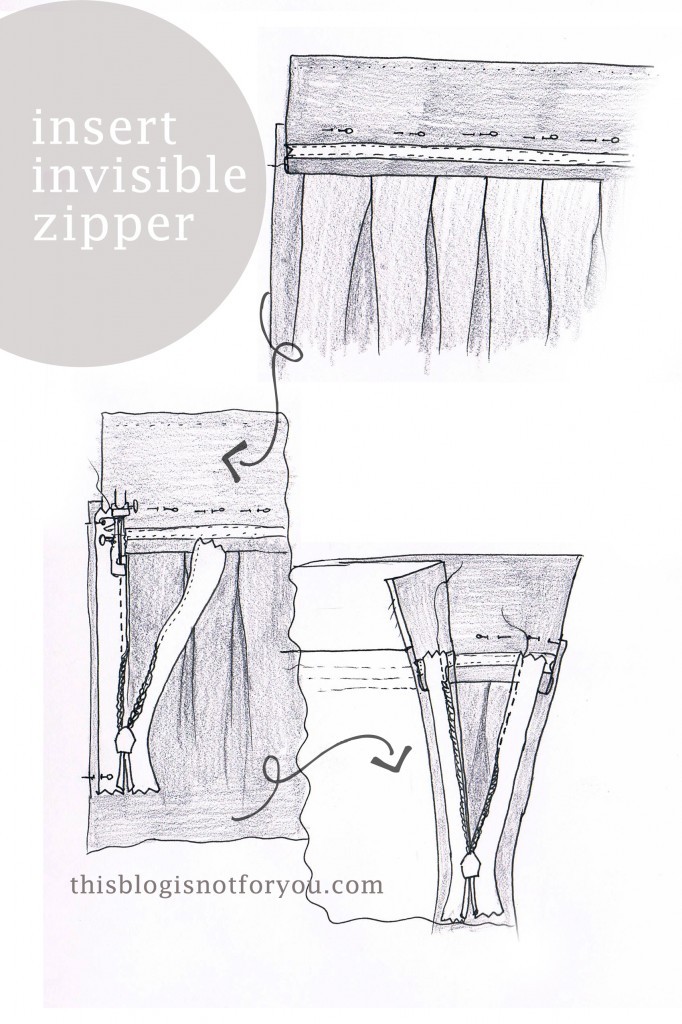
Now the invisible zip:invisible zipper tutorial for pleated skirt by thisblogisnotforyou.com

Make sure you close the zipper before pinning and stitching the other half. The seams of the waistband and the edges of the trim have to be in line with each other

When you’re done, fold and press the upper seam allowance of the waistband. Fold over and handstitch to the zipper and the back of the skirt.
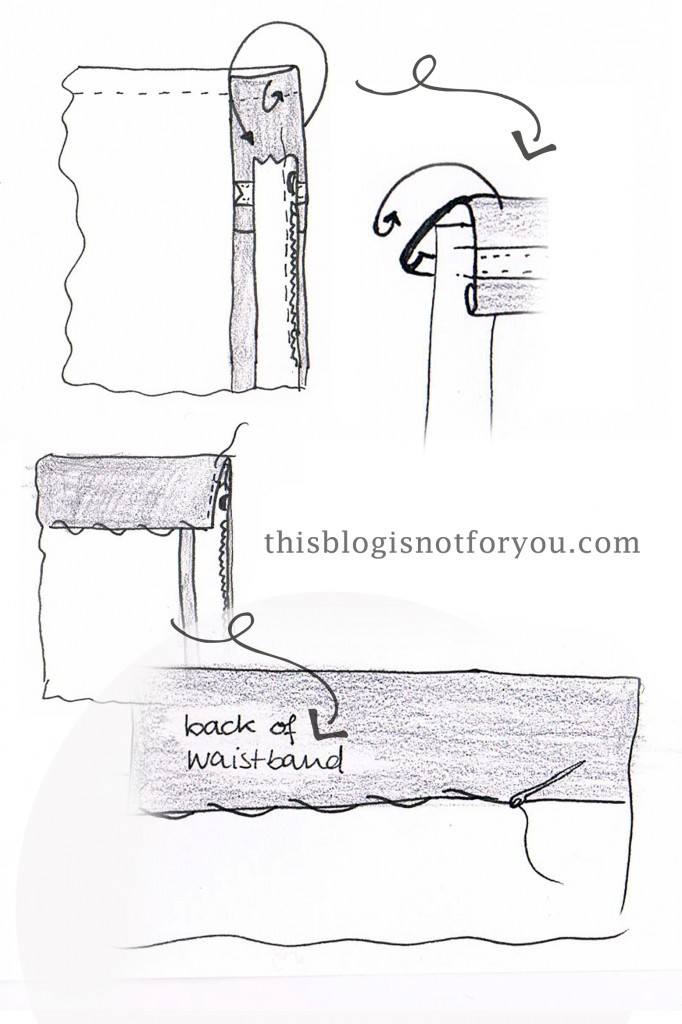
invisible zipper tutorial for pleated skirt by thisblogisnotforyou.com

Also, sew the second side seam below the zipper.

Hem your skirt.tutorial for pleated vintage skirt by thisblogisnotforyou.com
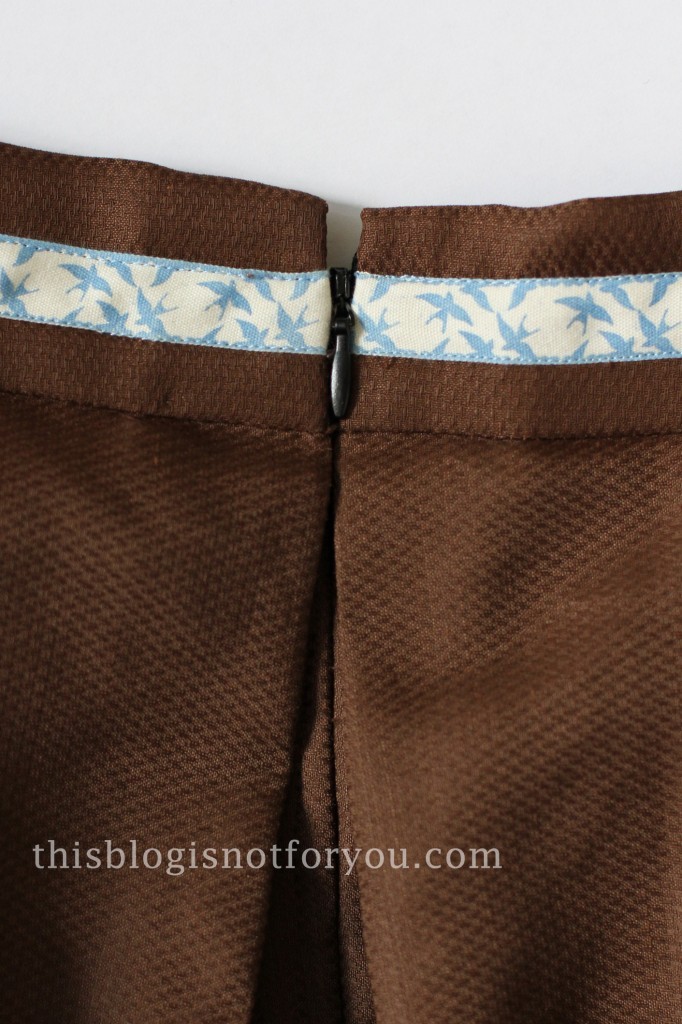
Here you can also see the french seam. It’s quite a nice finish and the raw edge is neatly hidden.tutorial for pleated vintage skirt by thisblogisnotforyou.com
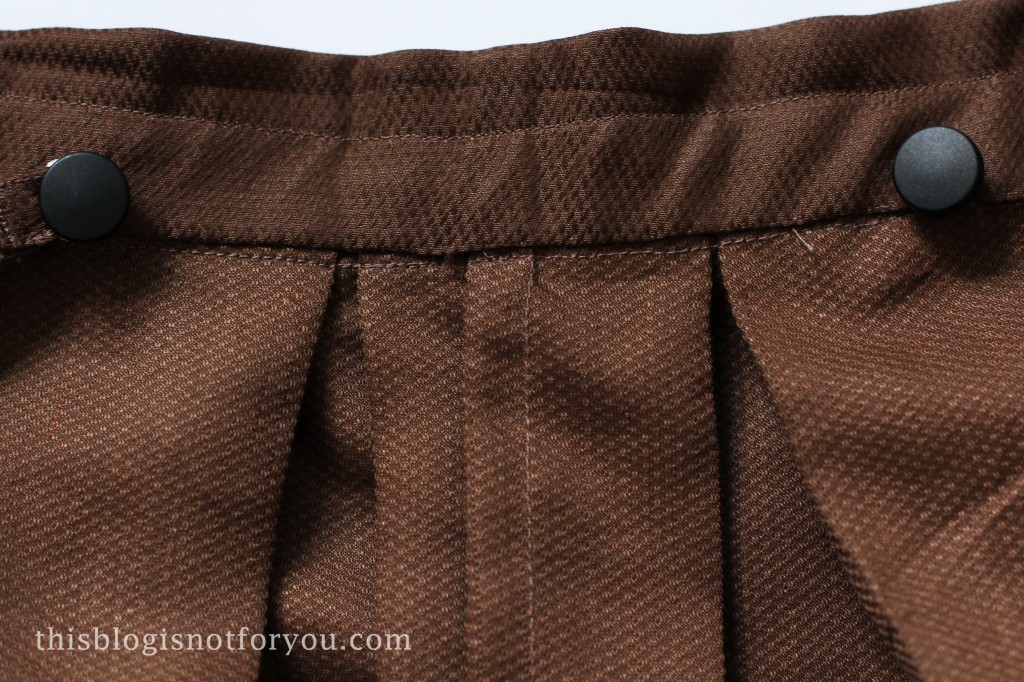
Now it’s time for the suspenders (or braces, for all the London gals 🙂 ).

Try on your skirt and measure the legth of the suspender straps by using your measuring tape. Mine are crossing at the back, keep that in mind while measuring. Add 4cm/2” of seam allowance on both ends.

Mine are 1.5cm wide (as the trim). Using 0.5cm seam allowance I cut out strips of 4cm width. Fold the strips in half, right sides together. Stitch.

Use a safety pin so turn the tubes you now have inside out. Press.

Add the trim and topstitch.

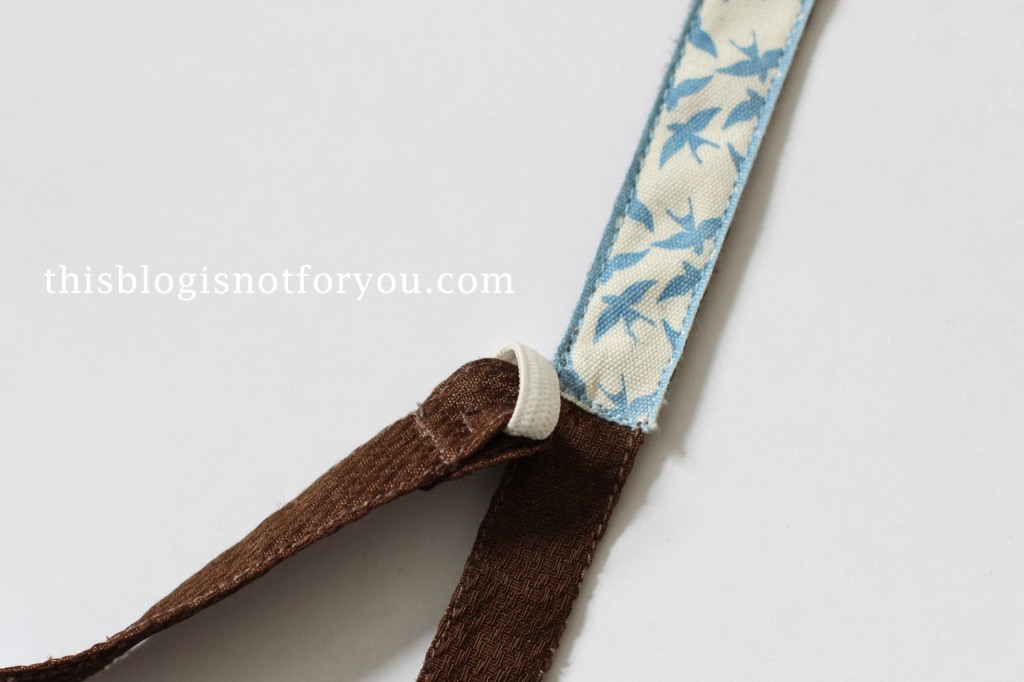
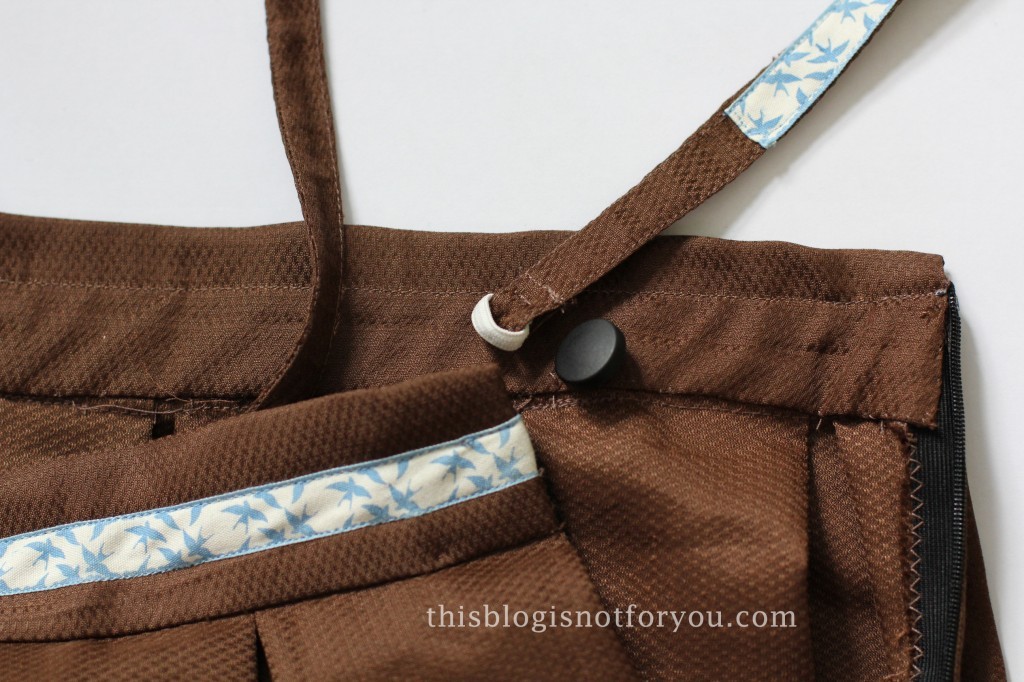
Sew the elastic band into four small loops (matching the size of your buttons).

Pull the end of the strap through the loop and fold over. Hide the ends of the elastic band in the fold and stitch together. Do that on all four ends.
tutorial for pleated vintage skirt by thisblogisnotforyou.comWith your skirt on, mark the position of the suspenders and sew on the buttons.tutorial for pleated vintage skirt by thisblogisnotforyou.com
Press your skirt’s hem. I pressed the pleats only half way down to add a little fullness to the skirt.

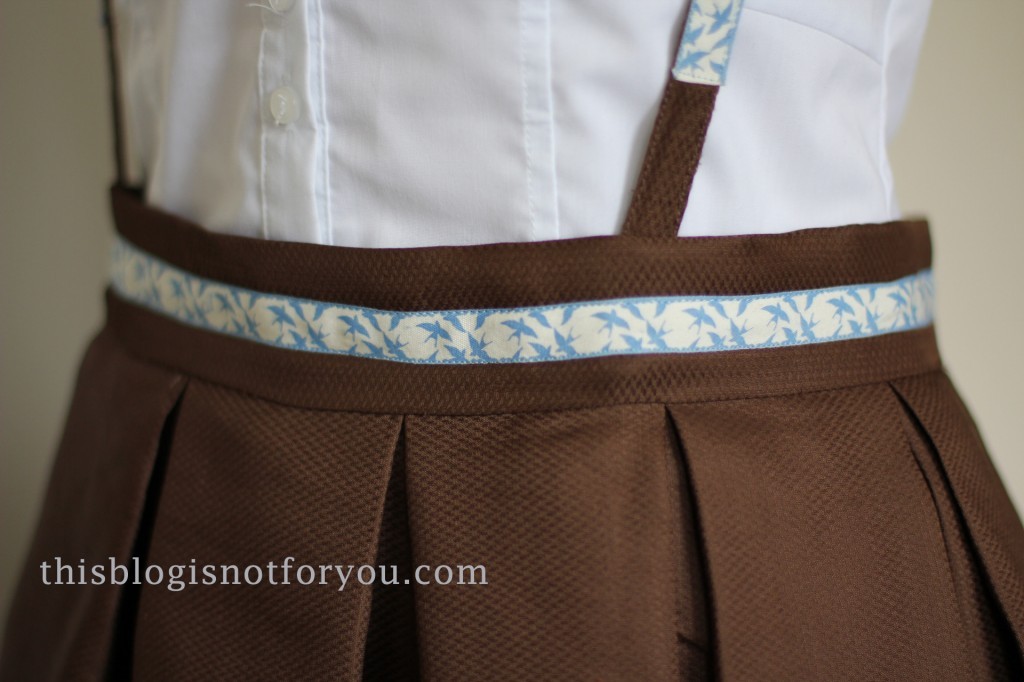
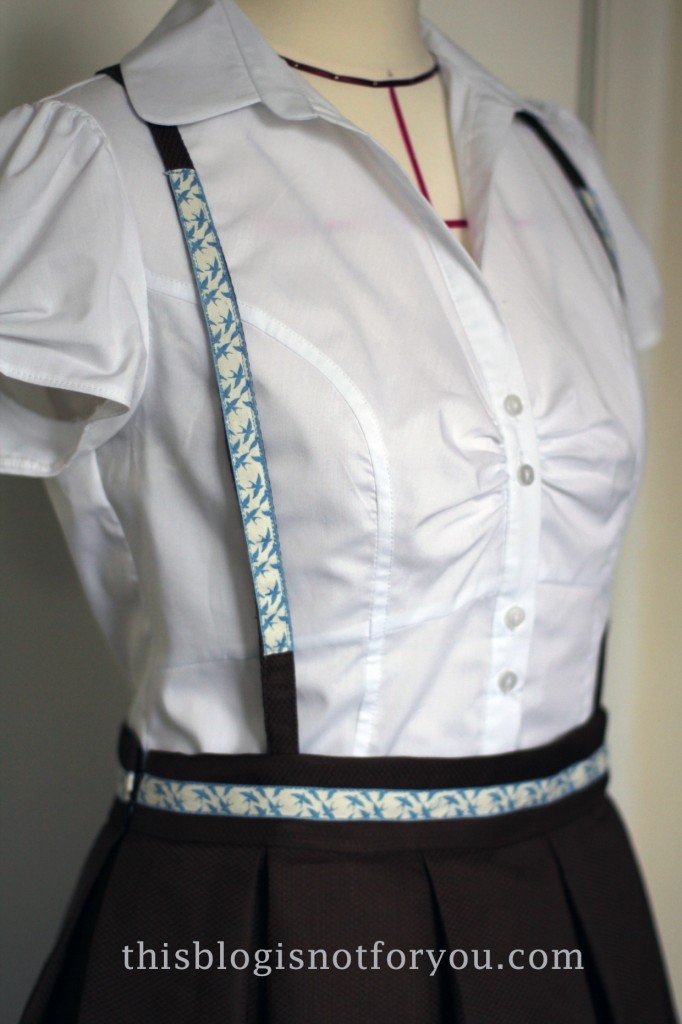
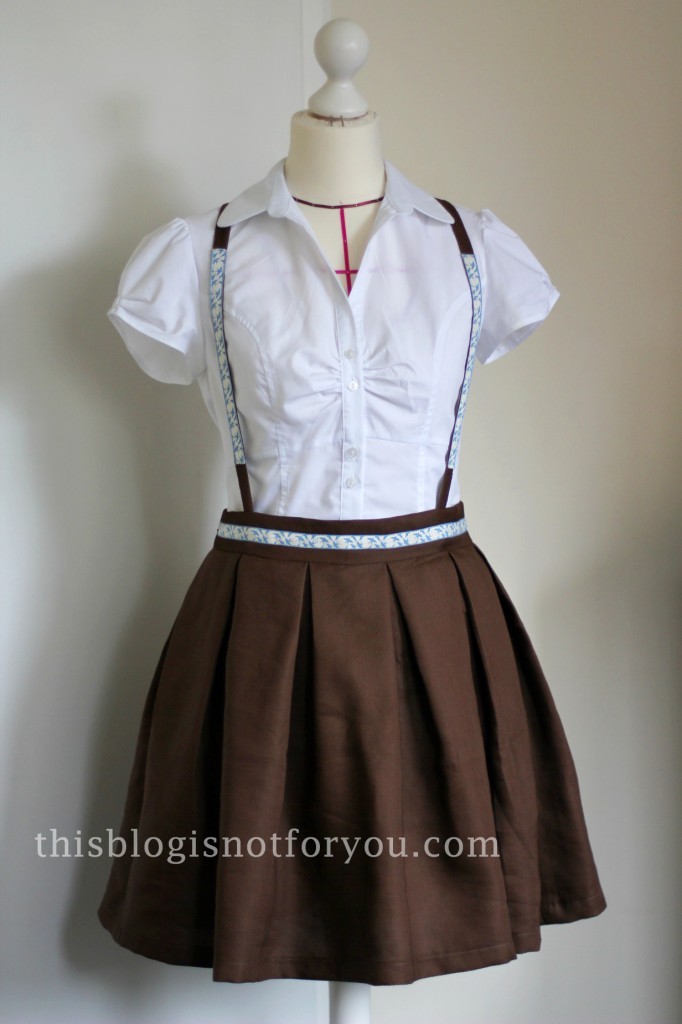
Et voilá! You’re done! pleated skirt with suspenders by thisblogisnotforyou5
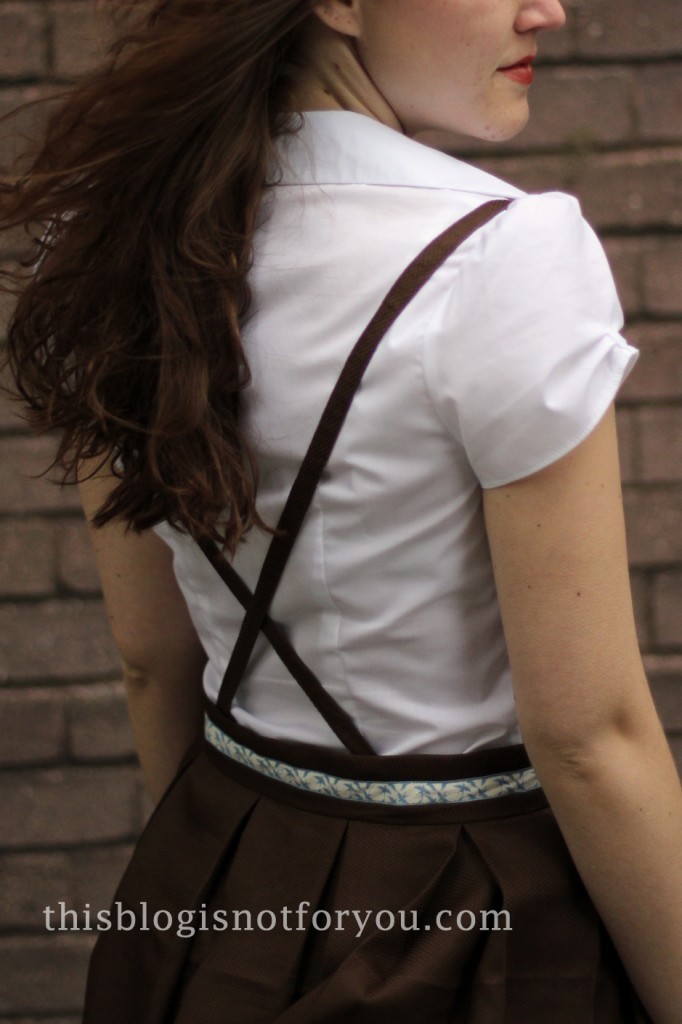
I’d LOVE to see what your skirt looks like! Just send me a picture: hello(at)thisblogisnotforyou(dot)com or upload them on the facebook page!

If you have any questions regarding this tutorial, feel free to ask! x

PS: After writing this post, I noticed that this skirt looks a lot like the Chihiro skirt – so in case you’re into Super High School Level Cosplay and want to dress up as Chihiro Fujisaki feel free to make and wear this skirt! x

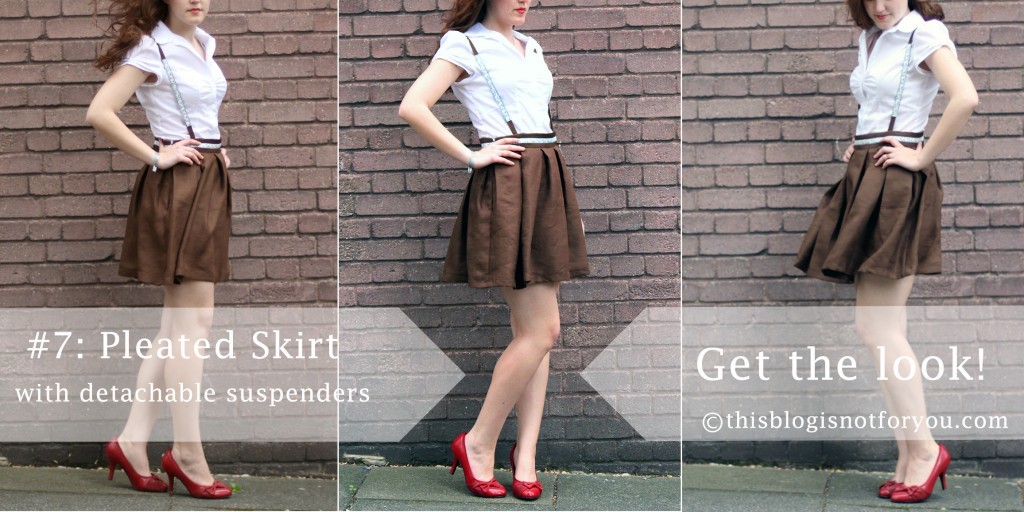
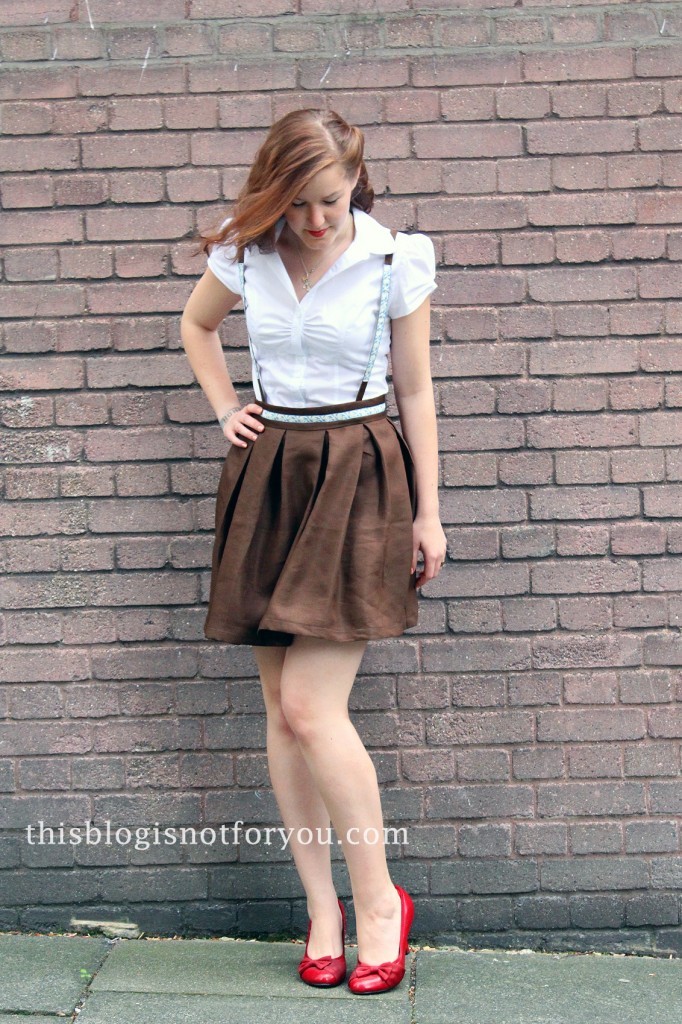
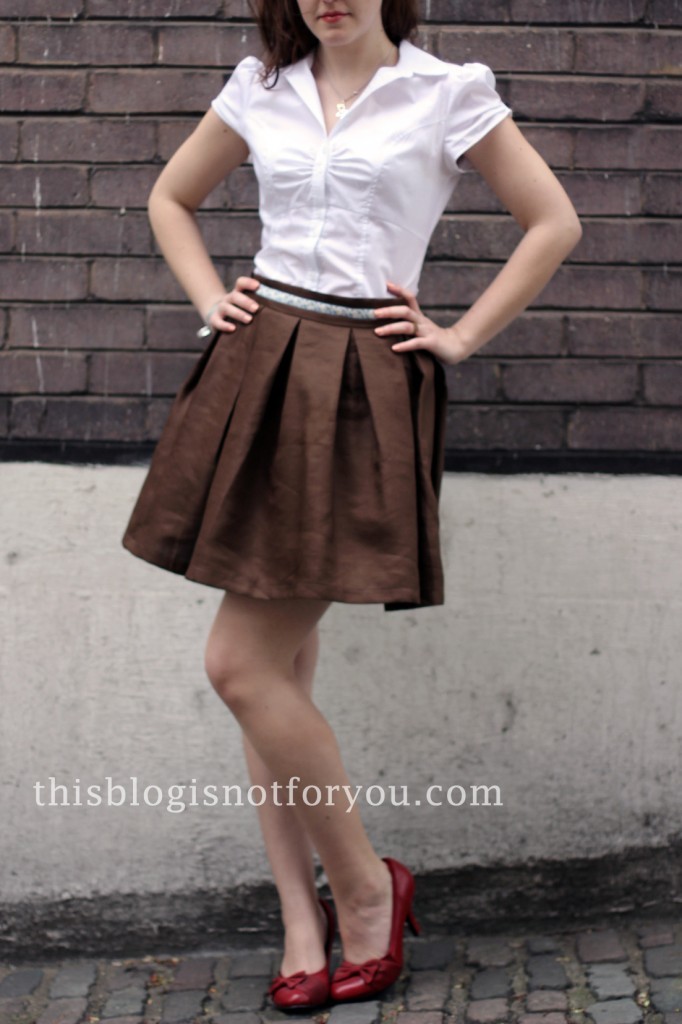
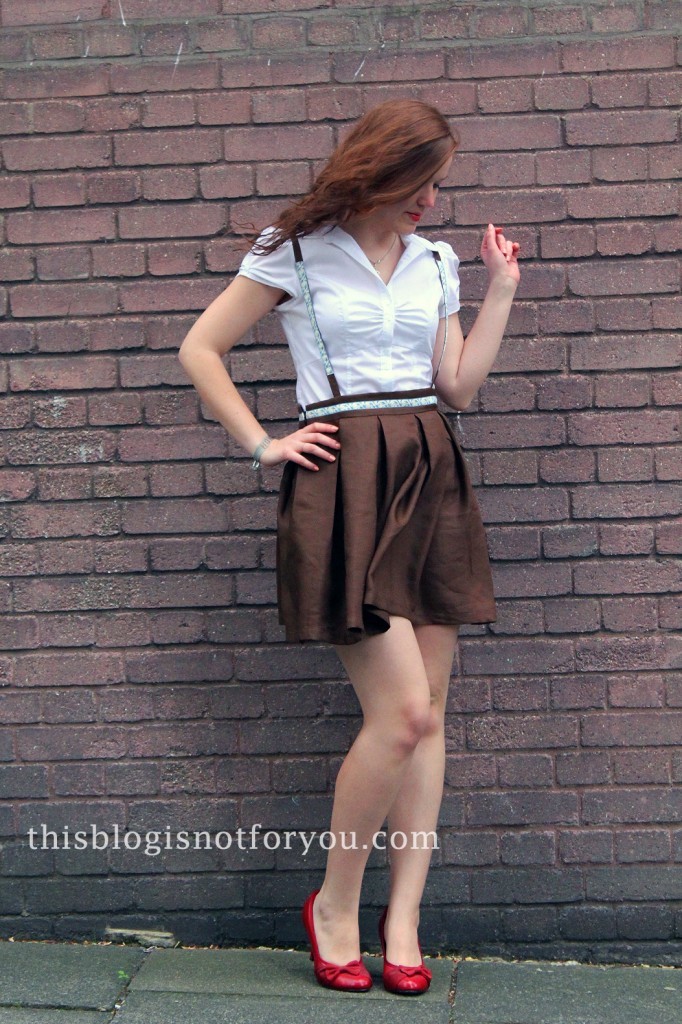
Pleated Skirt with Vintage Trim and Detachable Suspenders

thisblogisnotforyou.comthisblogisnotforyou.com

May I present…? #7 of my 27 Dresses Challenge!

I really didn’t plan to make this fun vintage-style pleated skirt with suspenders. I was admiring Debi’s newest vintage make  last week – a beautiful blouse with the prettiest vintage trim the world has seen.
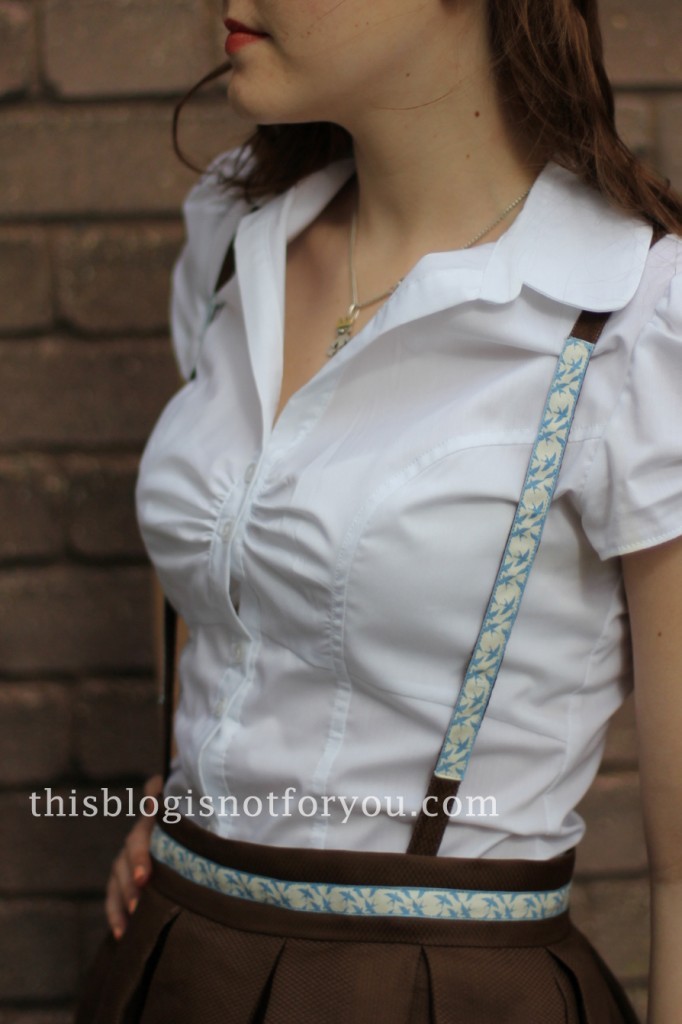
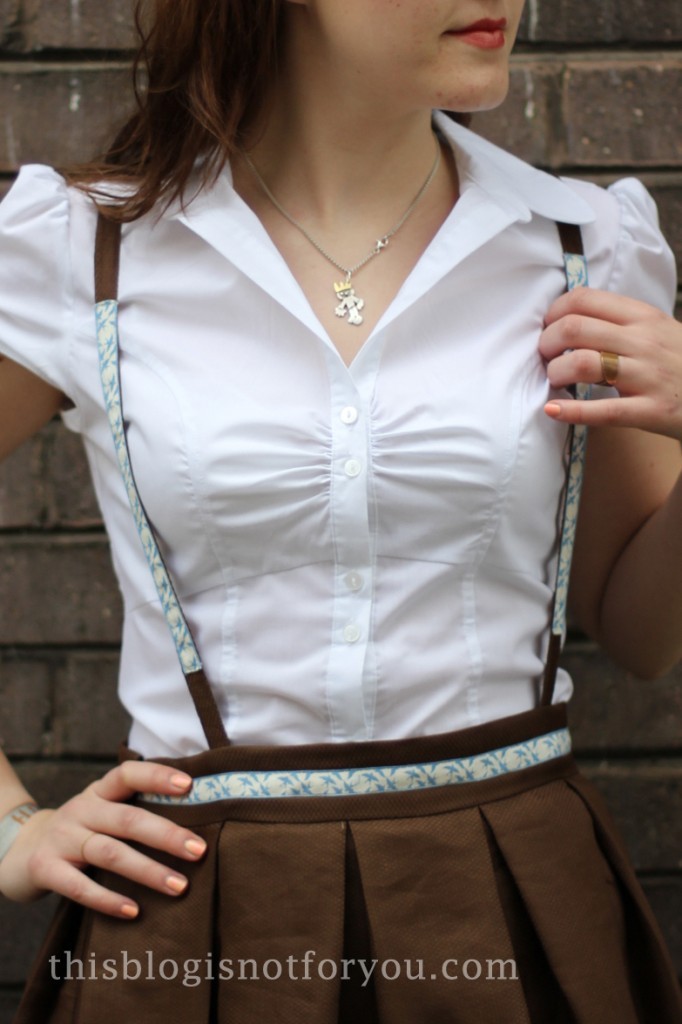
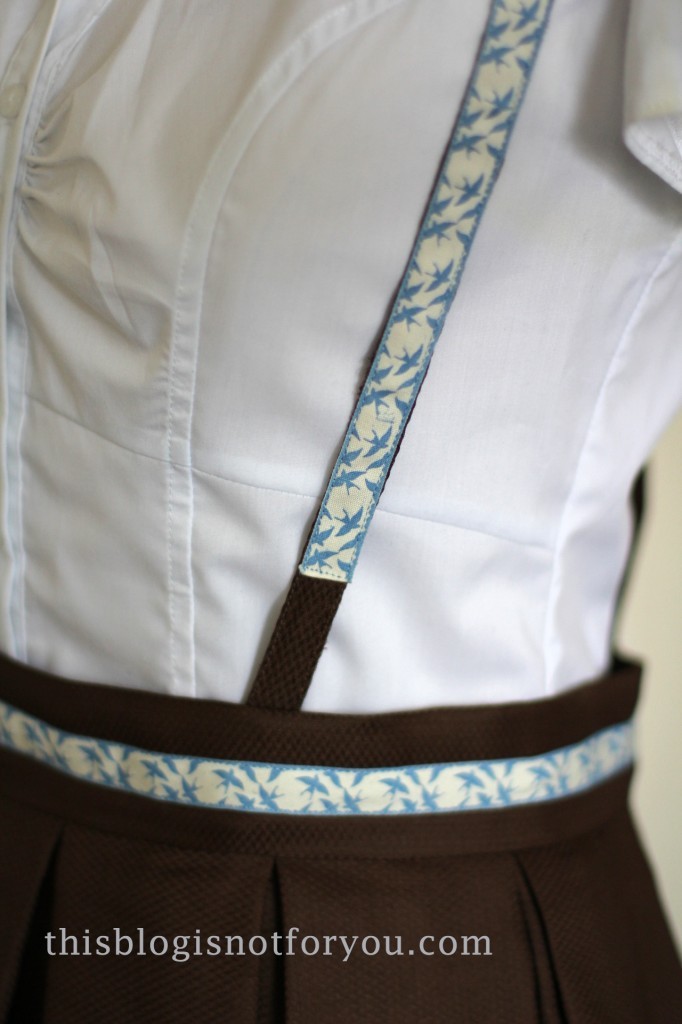
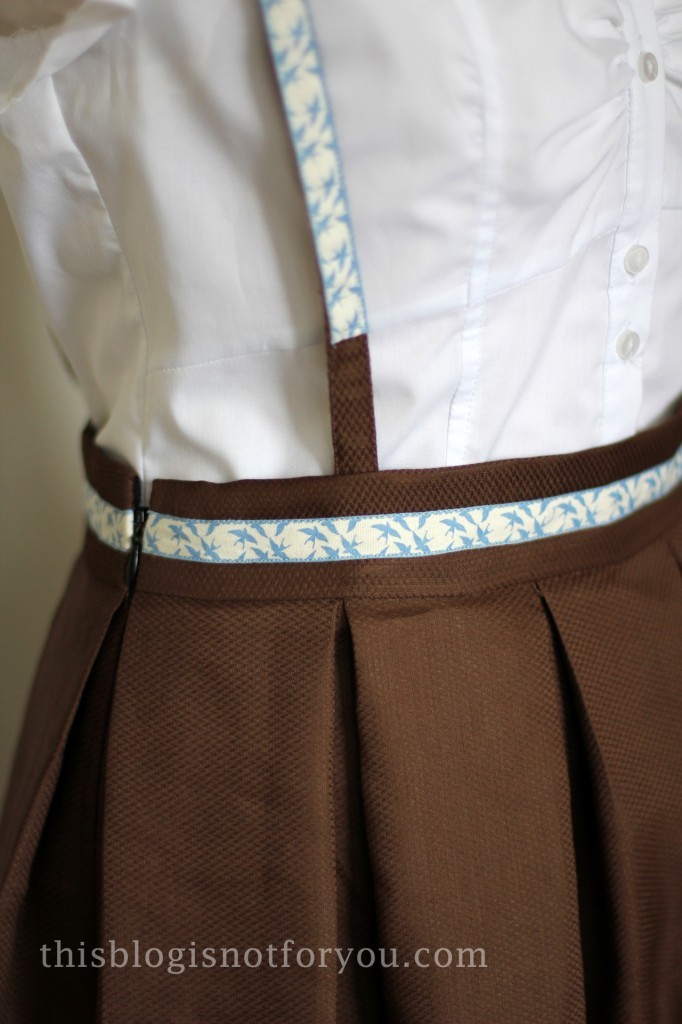
While I was still marvelling at the trim, I stumbled upon Cloth Magazine’s facebook page where they advertised their newest issue – including 2m of exactly the trim Debi had used for her blouse – the swooping swallows.

Well, you know what happened then 😉

Here are some picture with suspenders on and off – and drizzle instead of sun. London, baby!
thisblogisnotforyou.com thisblogisnotforyou.com          thisblogisnotforyou.com thisblogisnotforyou.com

I made this skirt without a pattern. This time I didn’t forget to take pictures of the process. Meaning what? YES!

There’s a tutorial coming up sooooon, very soon 😉

All you need to do until then is pick 1,5m of pretty fabric and get the Cloth vintage trim or whatever trim you want to use for your skirt.
thisblogisnotforyou.comthisblogisnotforyou.comthisblogisnotforyou.com

Cutest trim ever, right? I’d love to have more of it, but I seriously don’t need more than one magazine :)thisblogisnotforyou.comthisblogisnotforyou.comthisblogisnotforyou.com

Who’s in and wants to make this cute skirt?