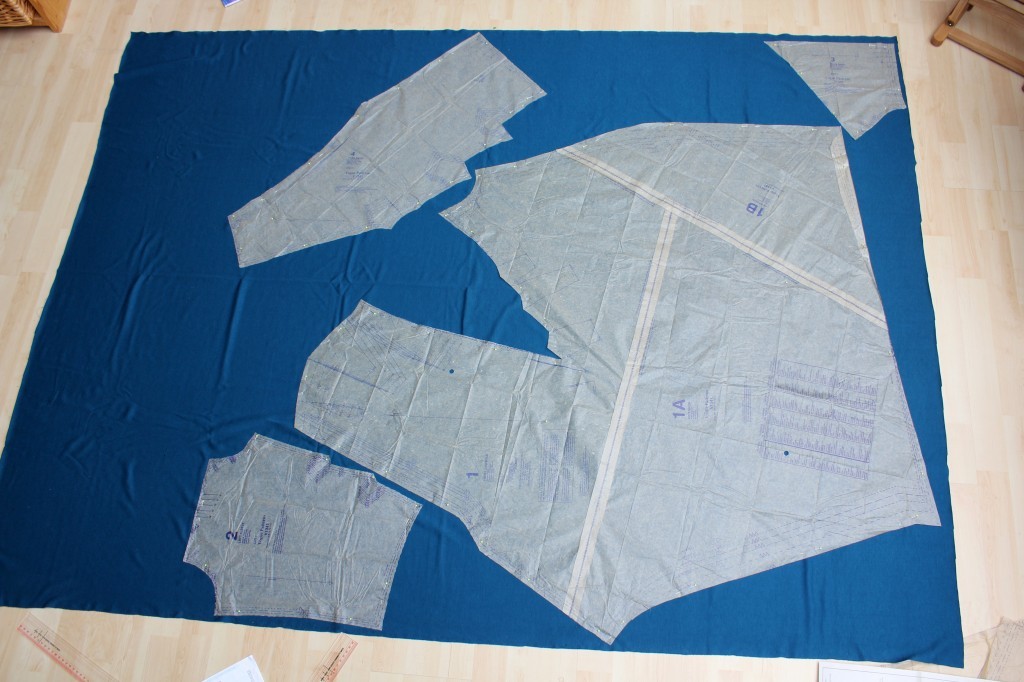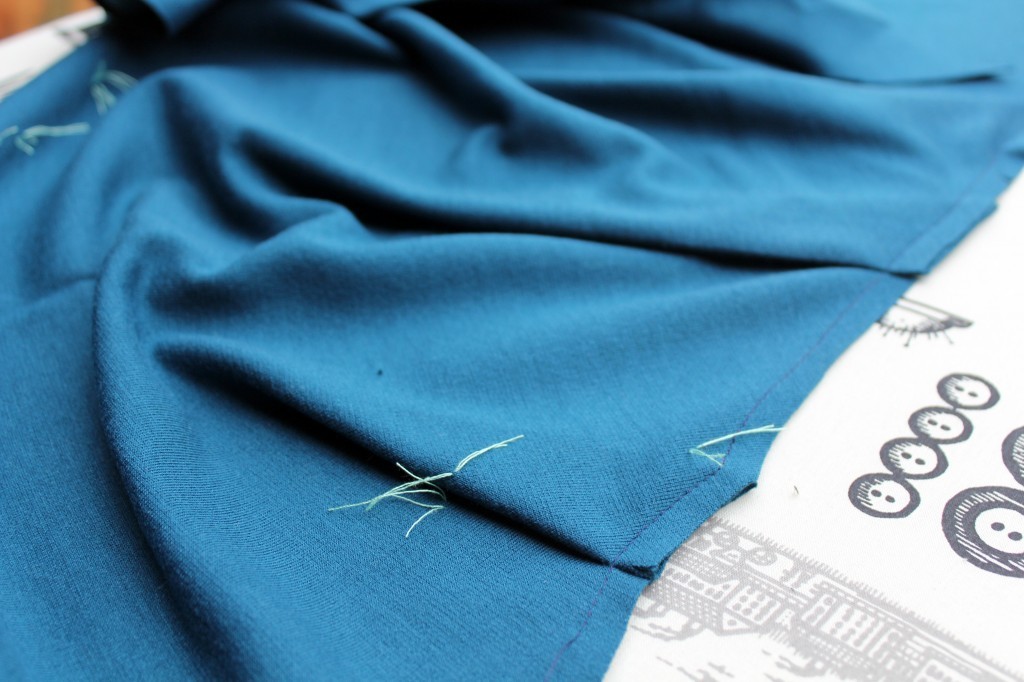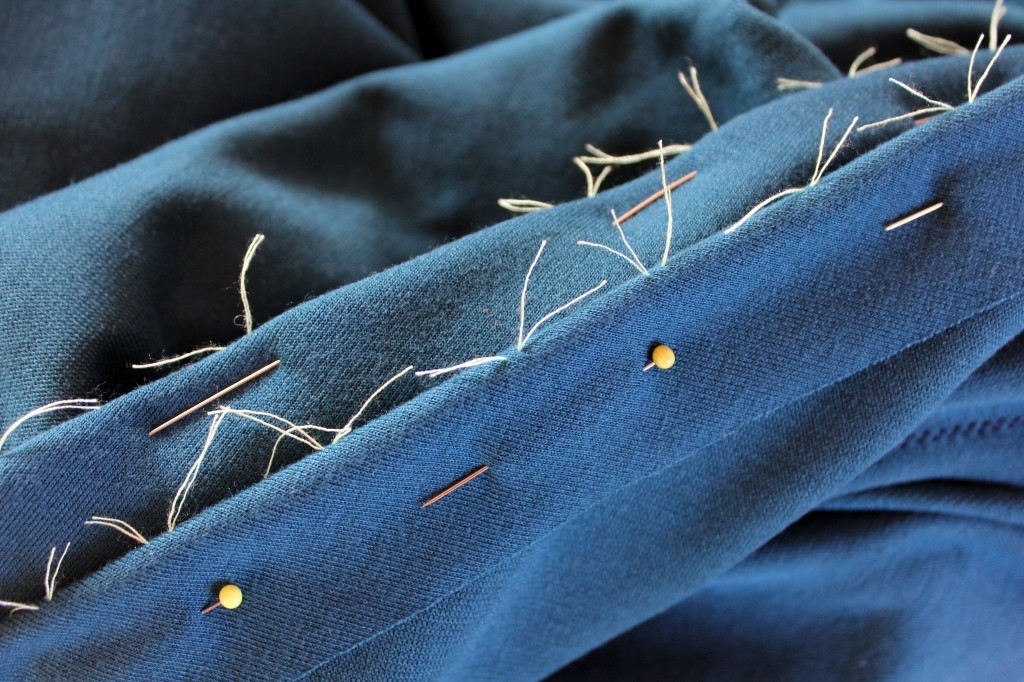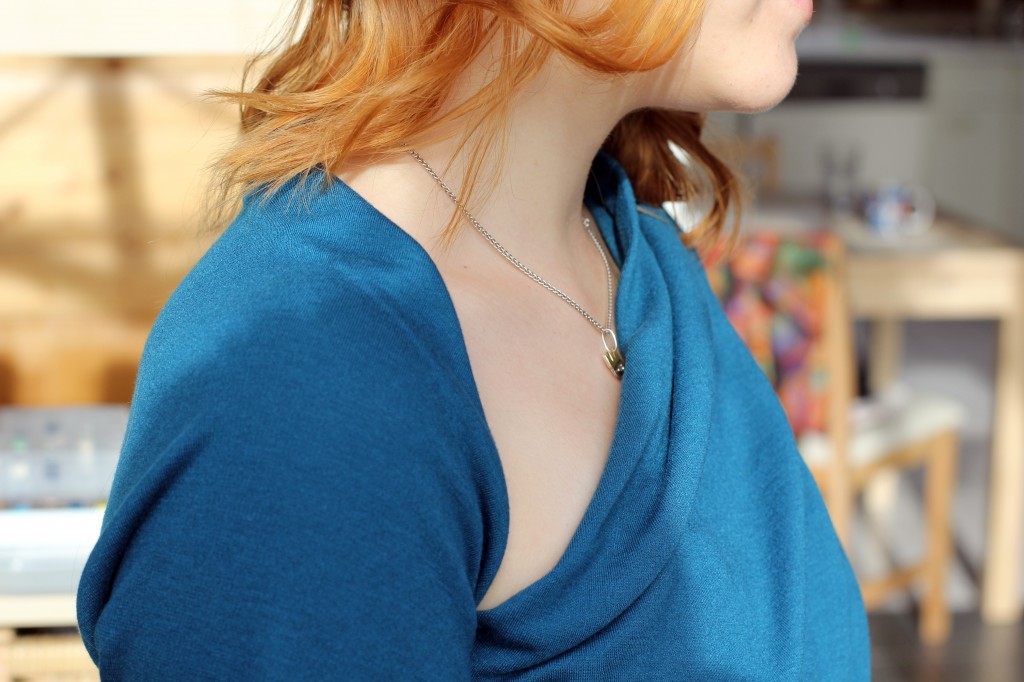
T&TB Agnes Top with Puff Sleeves

Tilly & the Button Agnes Top by thisblogisnotforyou.comTilly & the Button Agnes Top by thisblogisnotforyou.com

MERRY SEWING EVERYONE!

Hello sewing-friends! Hope you’re having a great festive season!
My mum-in-law gave me a handmade (!) sewing (!) advent calender, which is absolutely awesome! Every day I get a new suprise sewing supply, notions or fat quarters of beautiful fabrics. It’s the best gift ever! Too bad it ends on the 24th – it really could go on for ever. It never was so easy to get out of bed in the morning!

But that’s not the only reason why December rocks. Not only do I love getting together with my family so very soon, I am starting a new job in January and until then I’ve got a couple more weeks off. And you know what that means. I am in a total sewing frenzy. I am almost done with finishing handmade Christmas presents, so the selfish sewing IS ON!

This sounds really bad, but it makes me very happy.

I’ve made more garments than I can blog. Maybe I can get around to posting them during the holidays, but I also might be very distracted by Plätzchen and mulled wine and will probably completely forget about it.

Aaaanyway, back to the actual reason why you’re reading this post: I finally gave in and jumped on the Agnes-train, just like all of the other sewing bloggers out there. I don’t know why I hesitated so long. I guess, because the pattern is so very basic and therefore quite expensive. But I don’t mind supporting independent pattern businesses and by now I’ve made 5 different Agnes’ – so the pattern is definitely worth buying!

I often underestimate basic patterns, but when I finally buy them, they often are mind-blowingly good! Basic patterns are easy to sew, to adapt and very time-efficient. Best example is Agnes (or Ultimate Pencil Skirt, Coco, Lottie Blouse etc.): I’ve made five different versions and not two are the same.

Tilly & the Button Agnes Top by thisblogisnotforyou.comTilly & the Button Agnes Top by thisblogisnotforyou.com

THE PATTERN & FIT

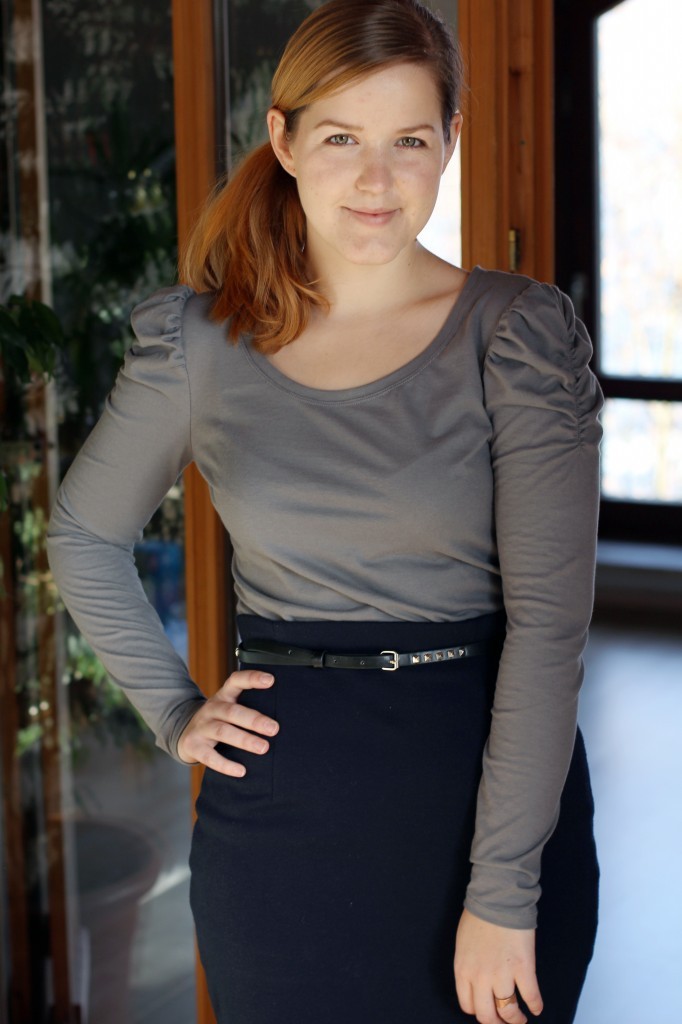
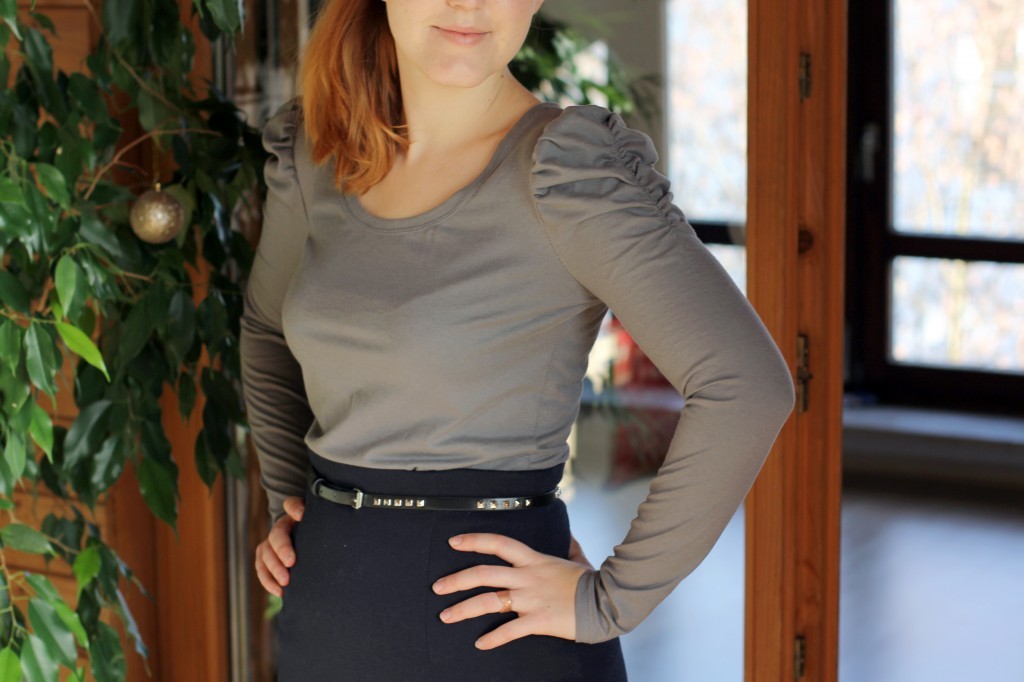
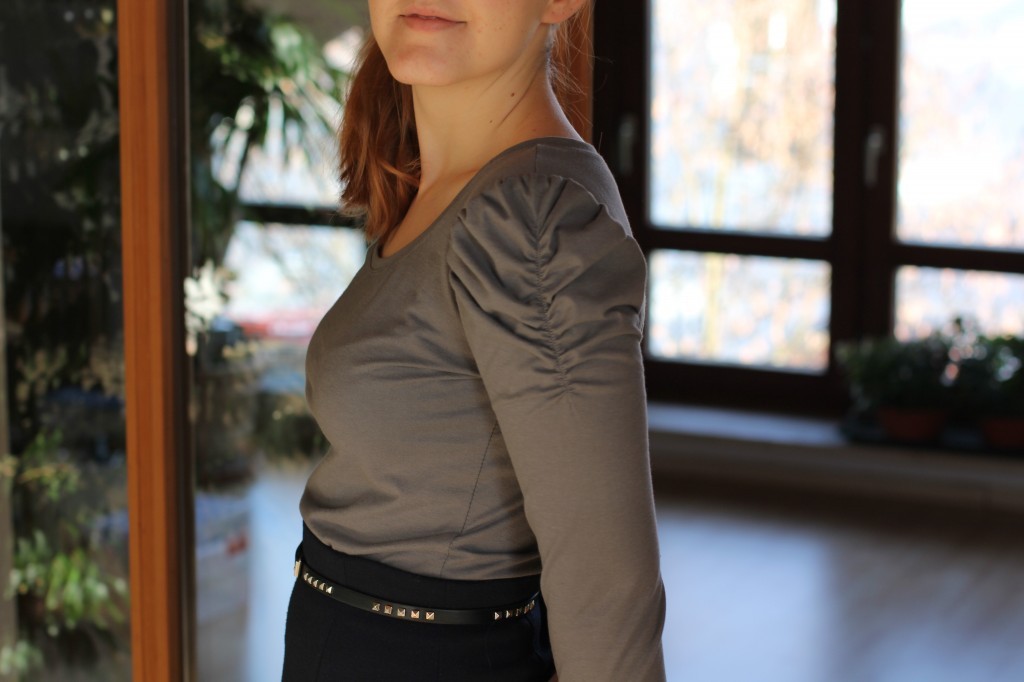
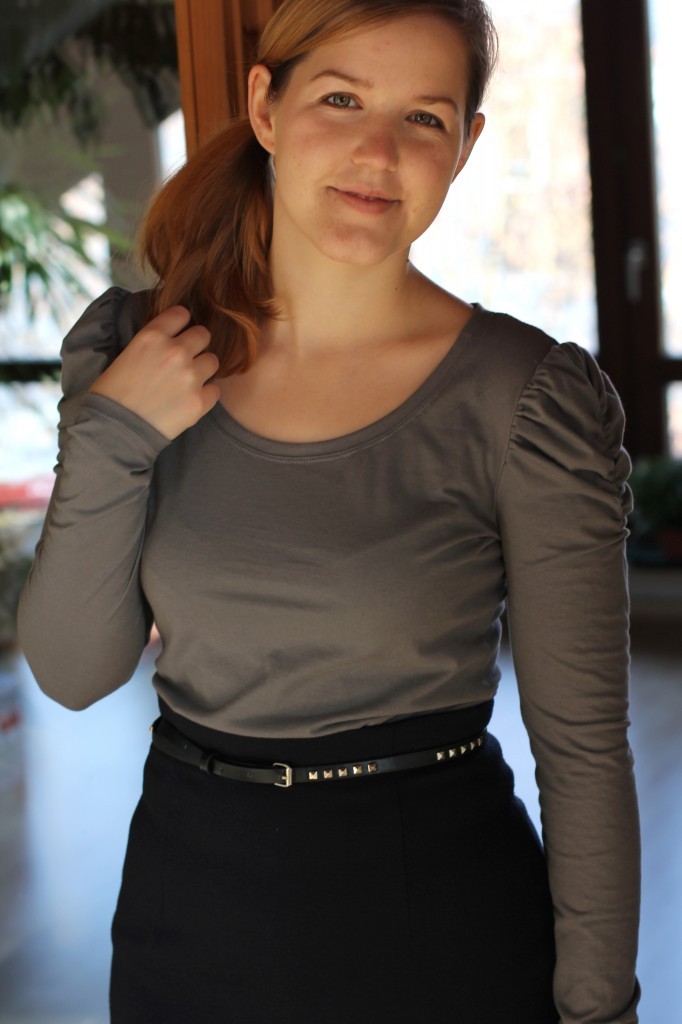
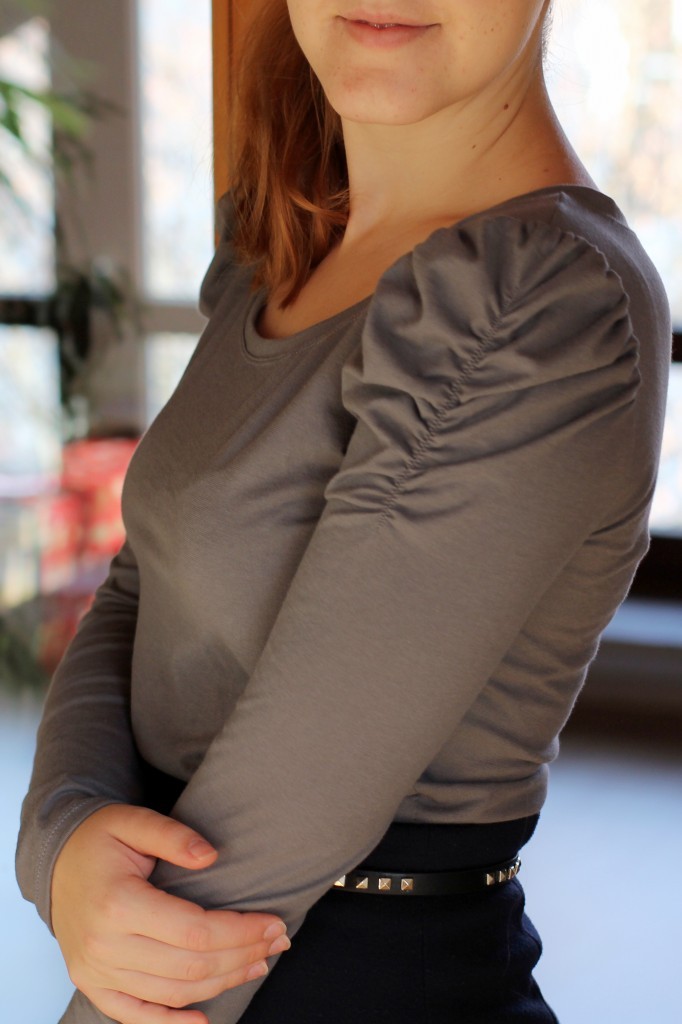
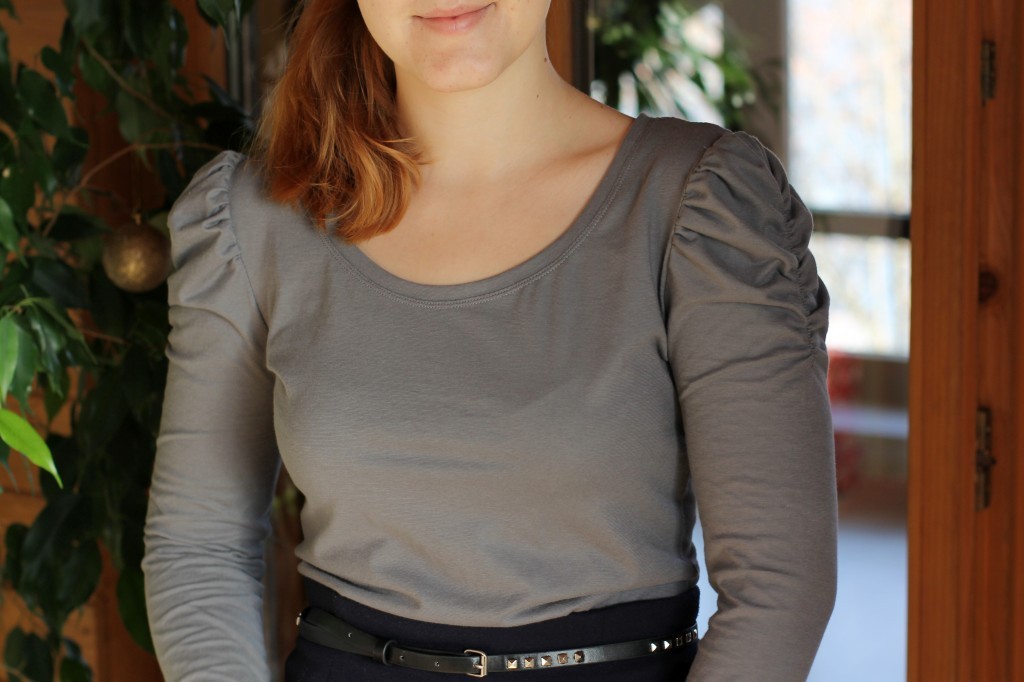
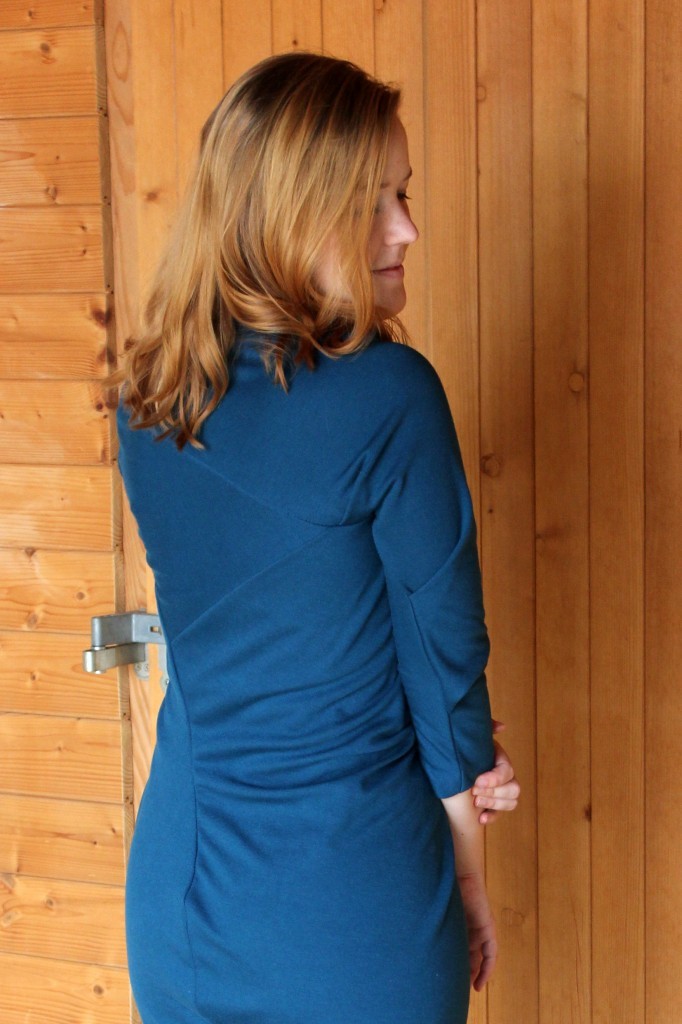
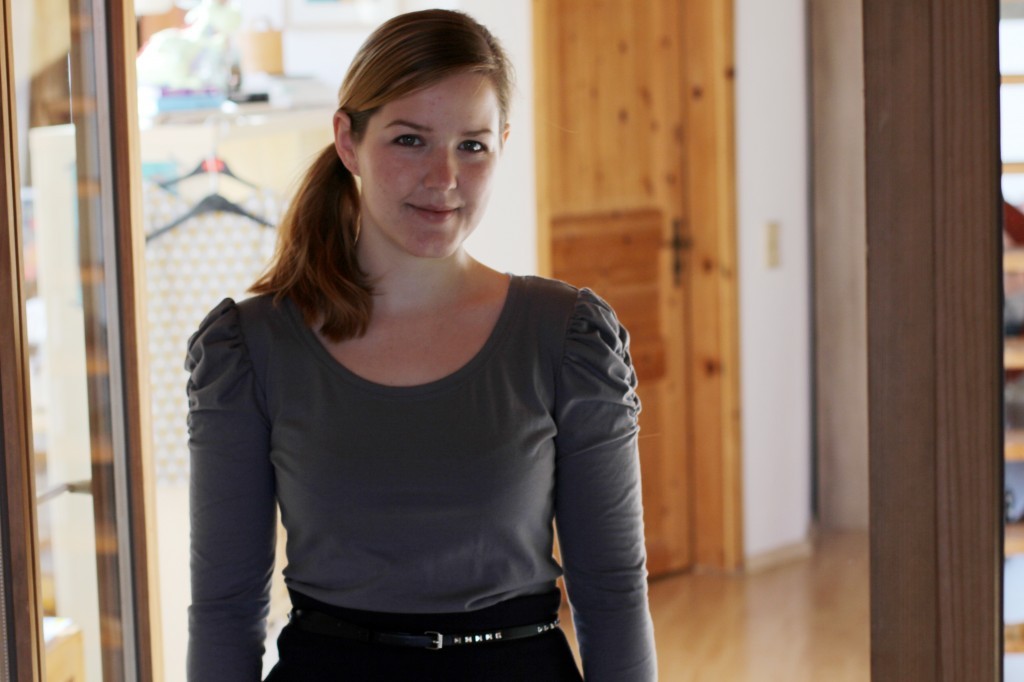
The pattern is the Agnes Top by TILLY AND THE BUTTONS (courtesy of WeaverDee.com). I made the long-sleeved version with a ruching detail on the puff sleeves.

This is the very first one I made, more or less a muslin, but a very wearable one. I had some fitting issues with Tilly’s patterns in the past, so I decided to make one from inexpensive fabric remnants before cutting into the good fabric. I think I used less than 1 metre of fabric.

I knew from reading other blogs, that the pattern runs quite small. According to the envelope it has quite a bit of negative wearing ease. I didn’t want it to be too tight, so I went with a larger size where the finished garment measurements are the same as my measurements. I cut out a size 4, which astonishingly fits me really well. (According to the pattern I am a size 3: 34in at the bust. Size 4 is 36in at the bust, but the finished garment measurement is 34in. Keep that in mind when deciding about how tight you want your top to fit.) Apart from making the sleeves a tiny bit wider, I did not have to change anything else in the following Agnes’ I made.Tilly & the Button Agnes Top by thisblogisnotforyou.comTilly & the Button Agnes Top by thisblogisnotforyou.com

CONSTRUCTION

The top is super easy to assemble, no major sewing challenges really. If you are new to sewing, the neckband might be the trickiest bit. For me that was my biggest worry, but it turned out quite well on the first try. For the later versions I shortened the neckband pattern by 5mm (so 1cm over the whole length) and now it sits perfectly flat. After making 5 Agnes’ I now consider myself a neckband pro. I never felt so good!

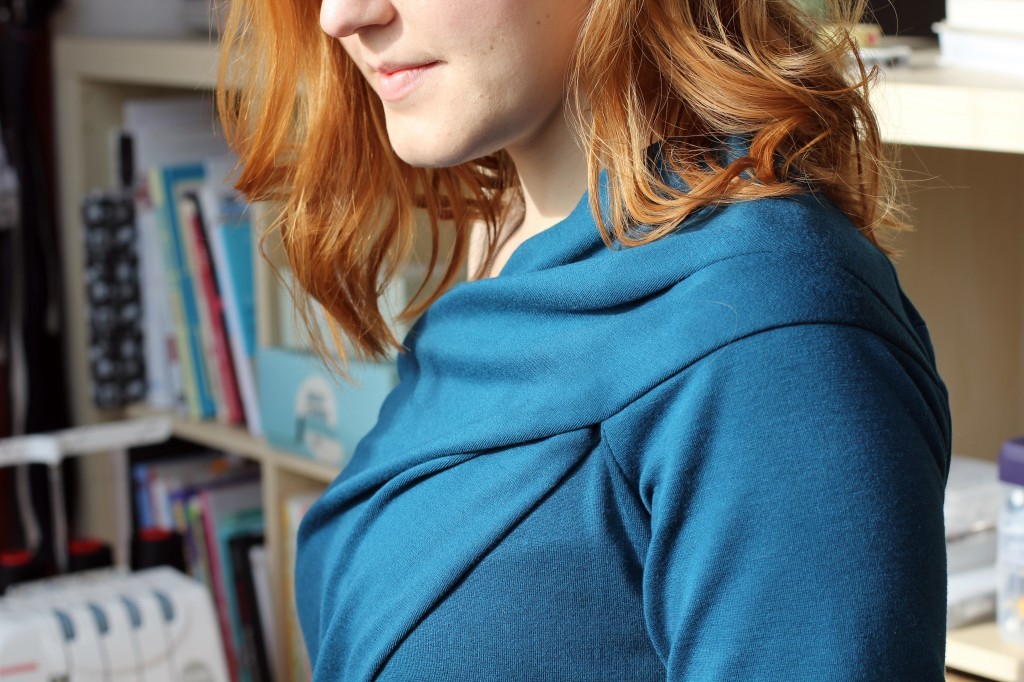
The sleeves are constructed in flat, which is my favourite technique for knit fabrics. It’s just so much faster than a set-in sleeve. The sleeves are ruched by a small piece of elastic, which is stretched while you sew.

I like a puff or ruched sleeve, but both in one are a bit too much for my taste. It makes my shoulders look quite massive, not quite the romantic look I was aiming for. Unless you consider football romantic. It wil probably look really lovely on a petite figure (someone like Tilly herself) but I will stay away from this look, I think.

It looks alright with a simple, close-fitting skirt, so it will definitely get some wear now and them. I scrapped the ruched sleeves for all the other versions and I am super happy with those.
Tilly & the Button Agnes Top by thisblogisnotforyou.com

Will I make it again? Well I know that I already have! And there sure as hell will be more. Although I love more challenging projects, this pattern is pure instant-gratification! It’s very versatile as well and it doesn’t use up much fabric – perfect stash buster pattern. Overall grade: 9/10.

xx

Charlie


Happy sewing!

facebook/bloglovin/pinterest
twitter/instagram

Stay in touch!

By Hand London Georgia Dress

ByHandLondon Georgia Dress by thisblogisnotforyou.comByHandLondon Georgia Dress by thisblogisnotforyou.com

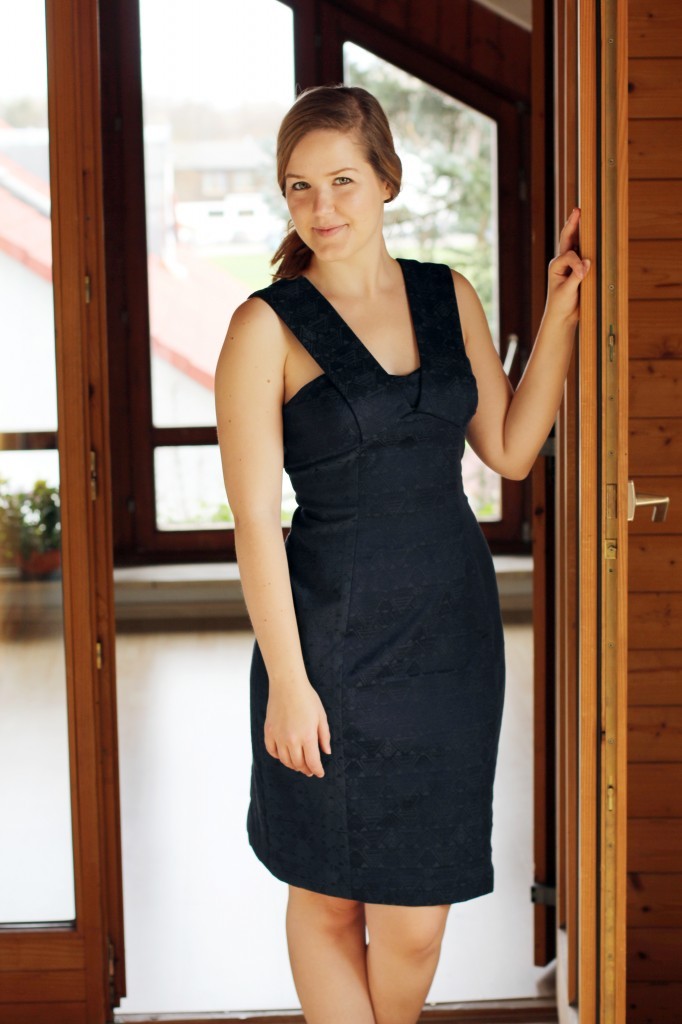
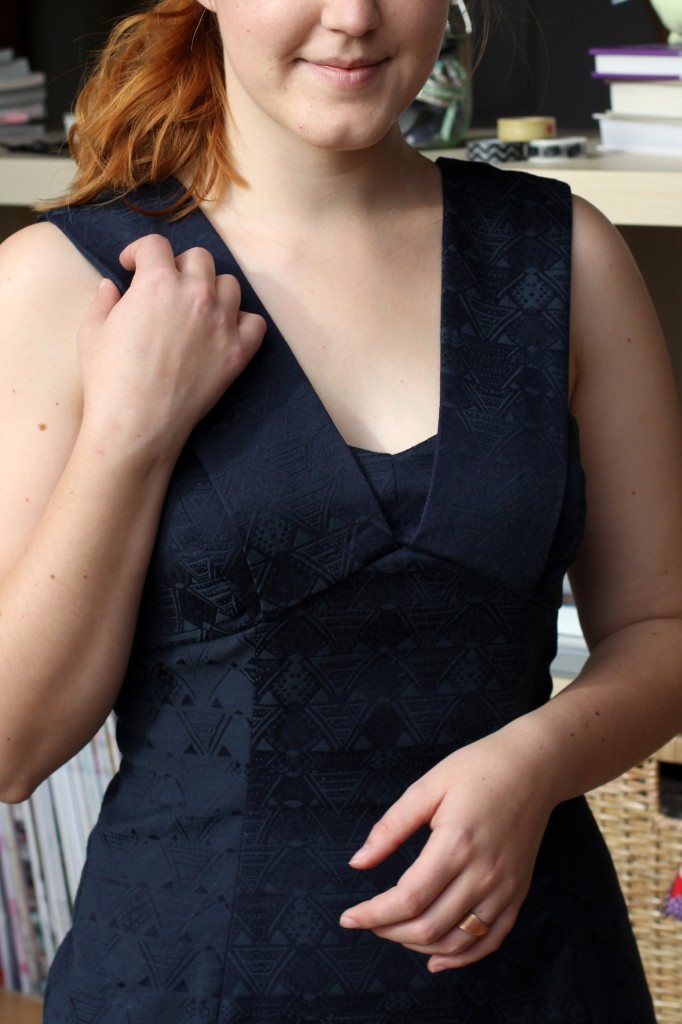
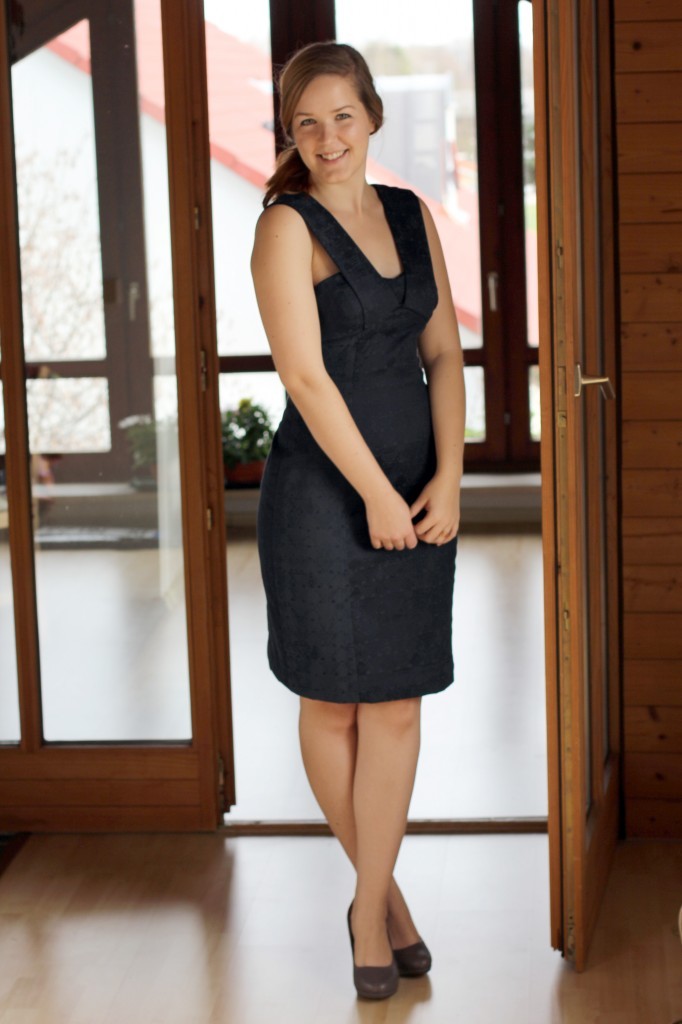
This post is long overdue! I made this dress in August this year. I whipped it up in just a couple of days, which is normally more than enough considering I sometimes make a dress in a day. But it was the first time sewing the By Hand London Georgia, so I had to trace the pattern, adjust the fit etc. Also, I tried out some construction techniques from my new Couture Sewing book which is probably the main reason why this kept me busy for a couple of days.

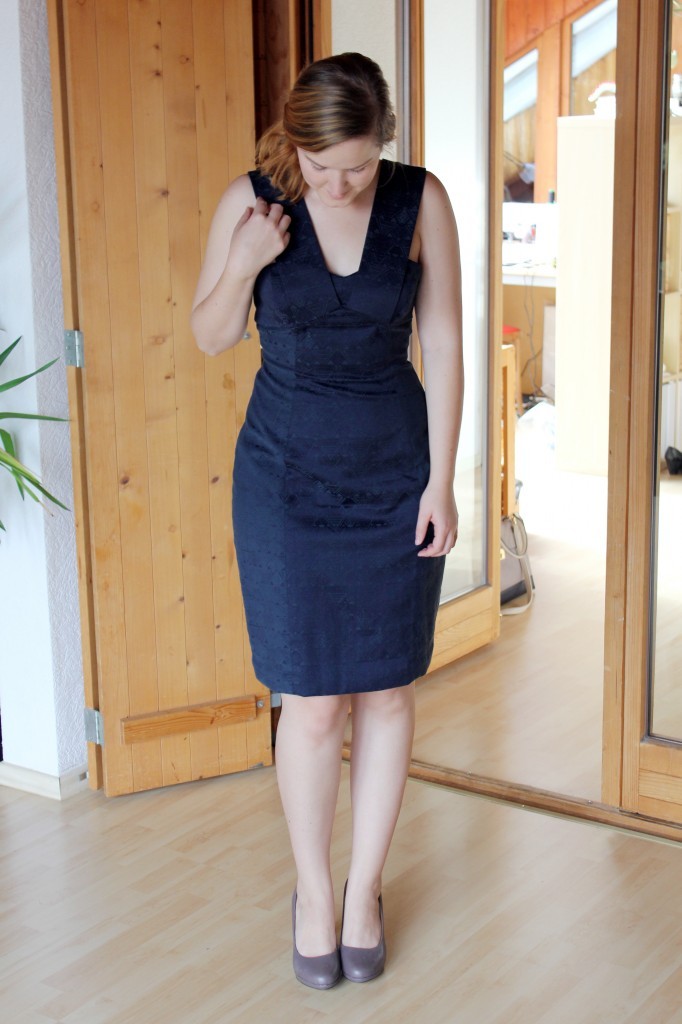
I made this dress a bit short notice, to have something nice to wear to the Mr.’s graduation ceremony at UCL. It came together without any problems and the fitting wasn’t too difficult. As it was a cold and rainy weekend I wore it with a bordeaux red blazer and felt very pretty! All in all, I’m really happy with this dress!

ByHandLondon Georgia Dress by thisblogisnotforyou.com

THE FABRIC

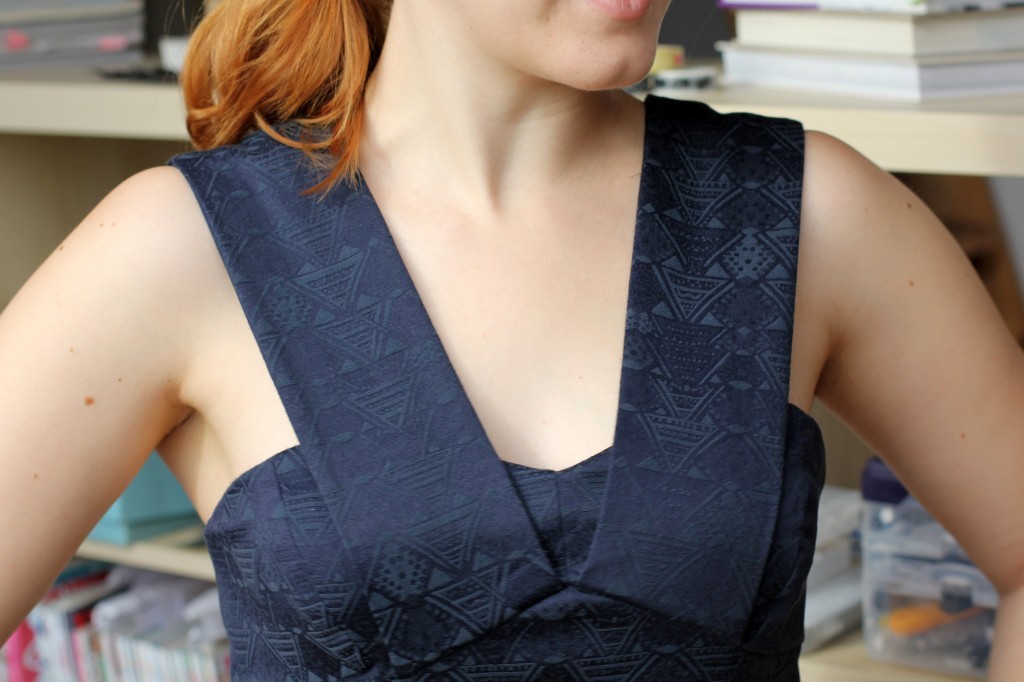
I bought this stretchy jaquard polyester/cotton blend at a bargain price at Karstadt, a large German department store. They always have quite good fabrics in their remnant corner. I found this at a sale price for 4€/m which is as cheap as you can get at Karstadt. Fabrics of this quality are usually much, much more there. I bought three metres and already hat the Georgia Dress in mind.

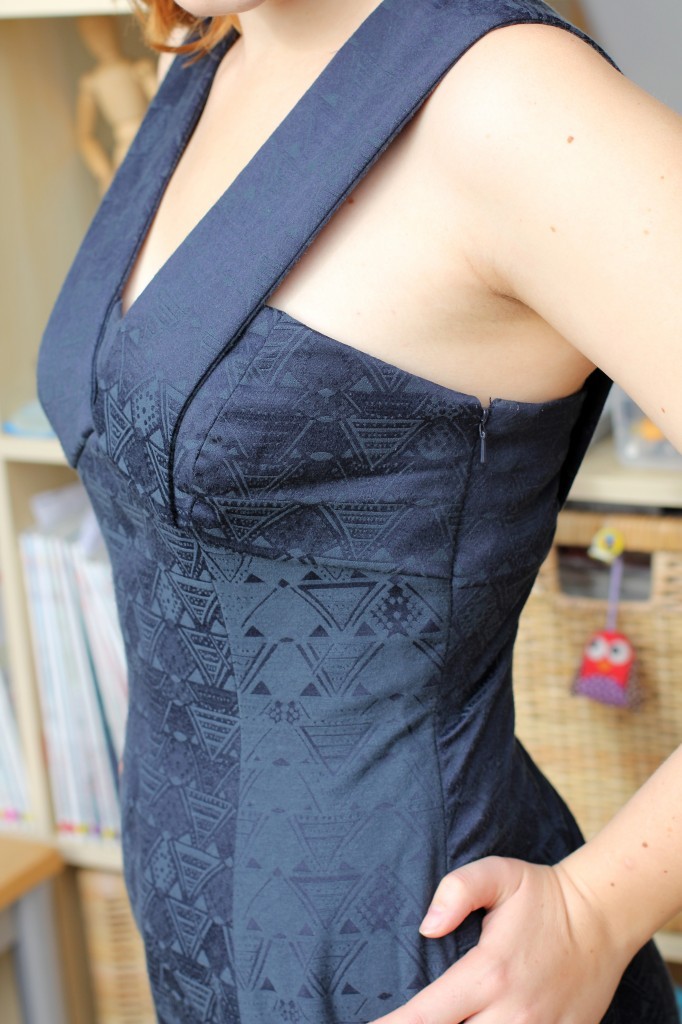
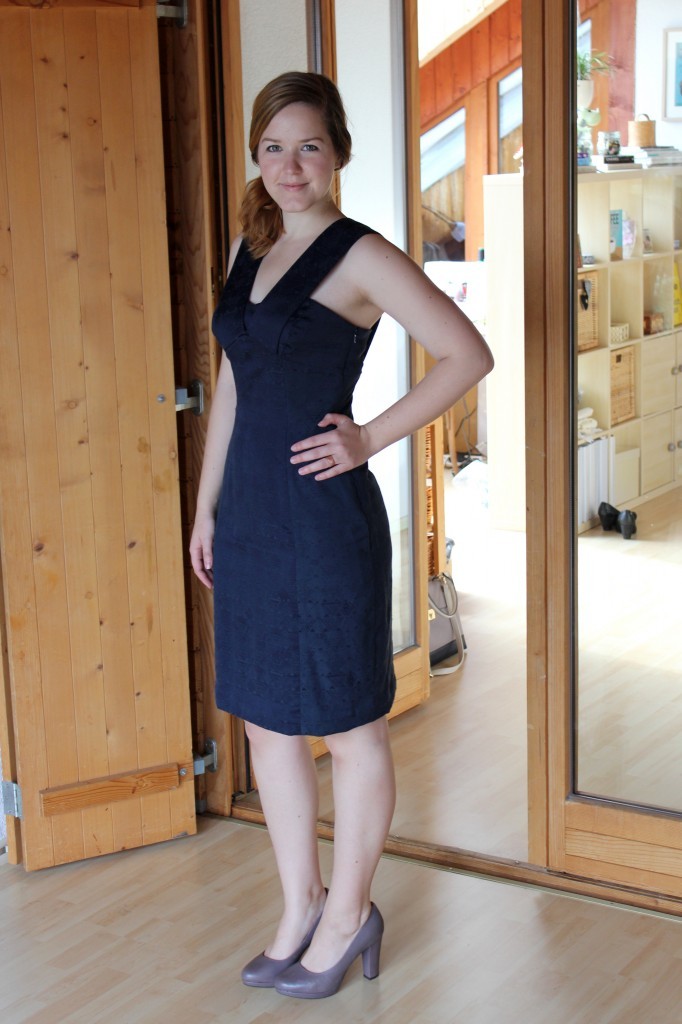
As this is jaquard, this fabric is sort of doublesided. Probably not meant to be, but the left side looked really interesting and was slightly brighter than the right side of the fabric. I decided to incorporate this detail into the dress and thought that the skirt panels would be perfect for that. On garments with princess seams I like to work with contrasting fabrics, when possible, to create a slightly more slimming silhouette. It worked beautifully with the two different sides of the jaquard, but it’s really hard to photograph. Below is the only picture where you can see the contrast a little bit.ByHandLondon Georgia Dress by thisblogisnotforyou.com

PATTERN & FIT

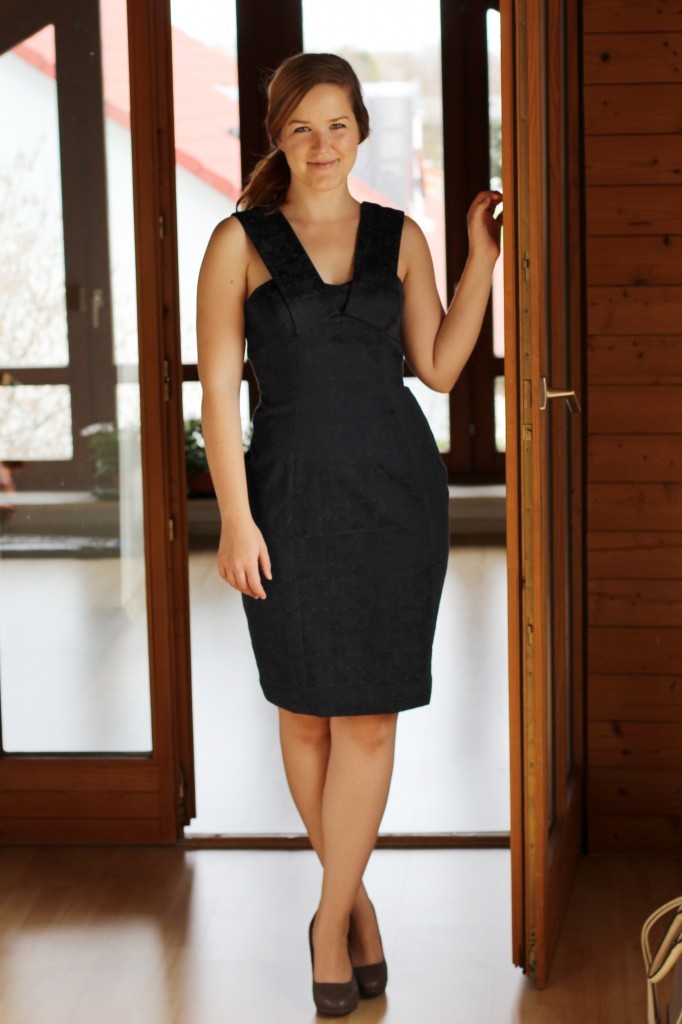
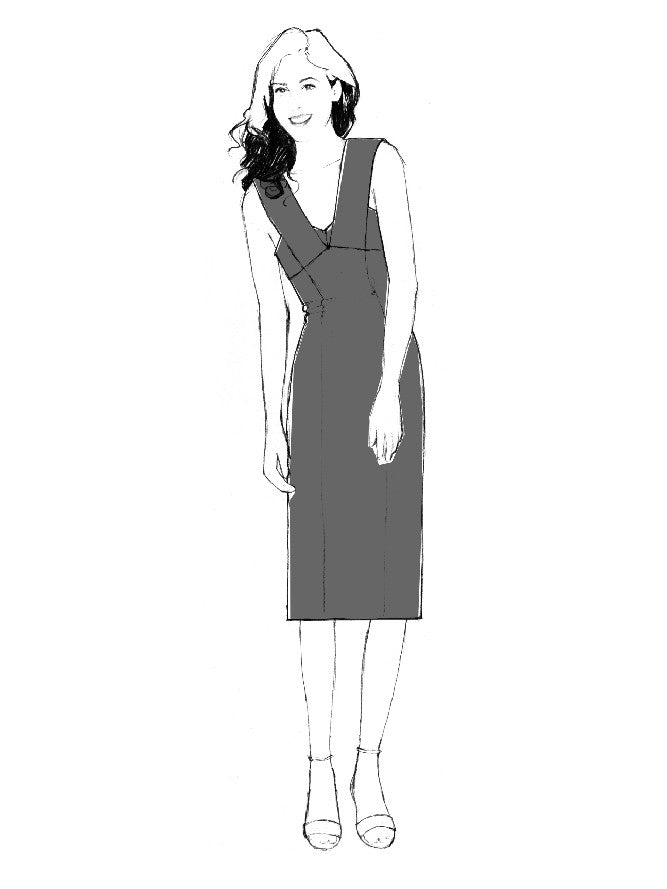
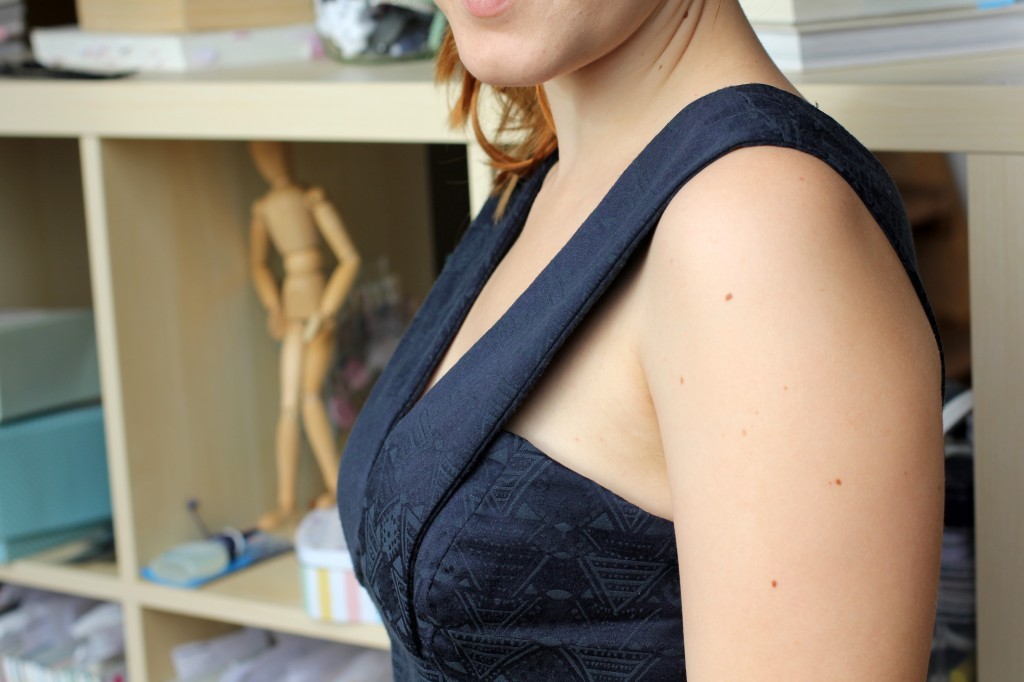
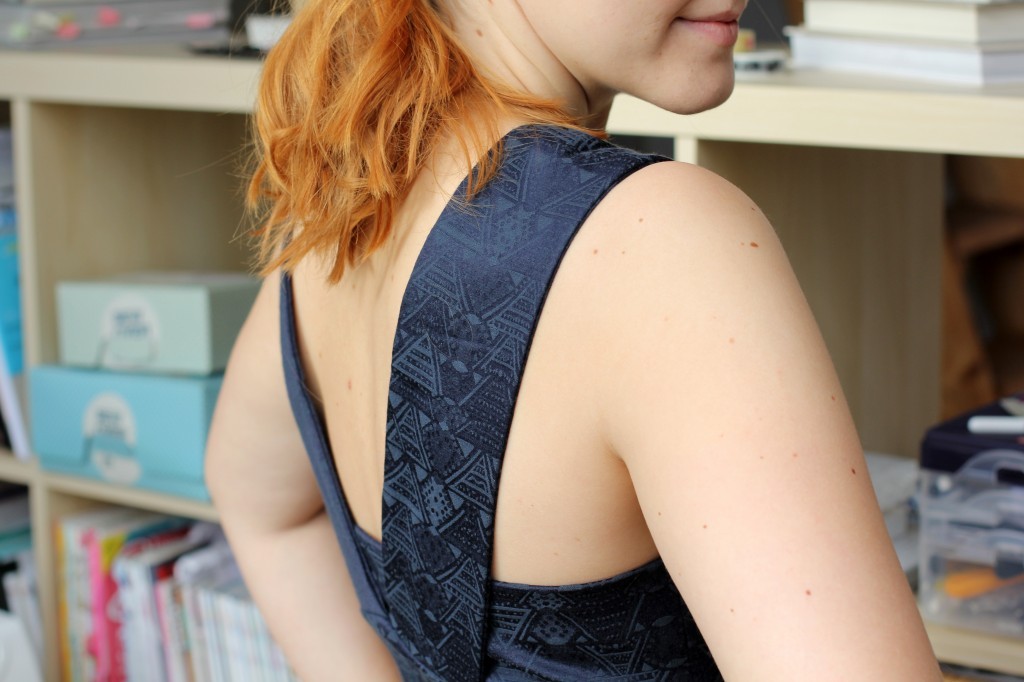
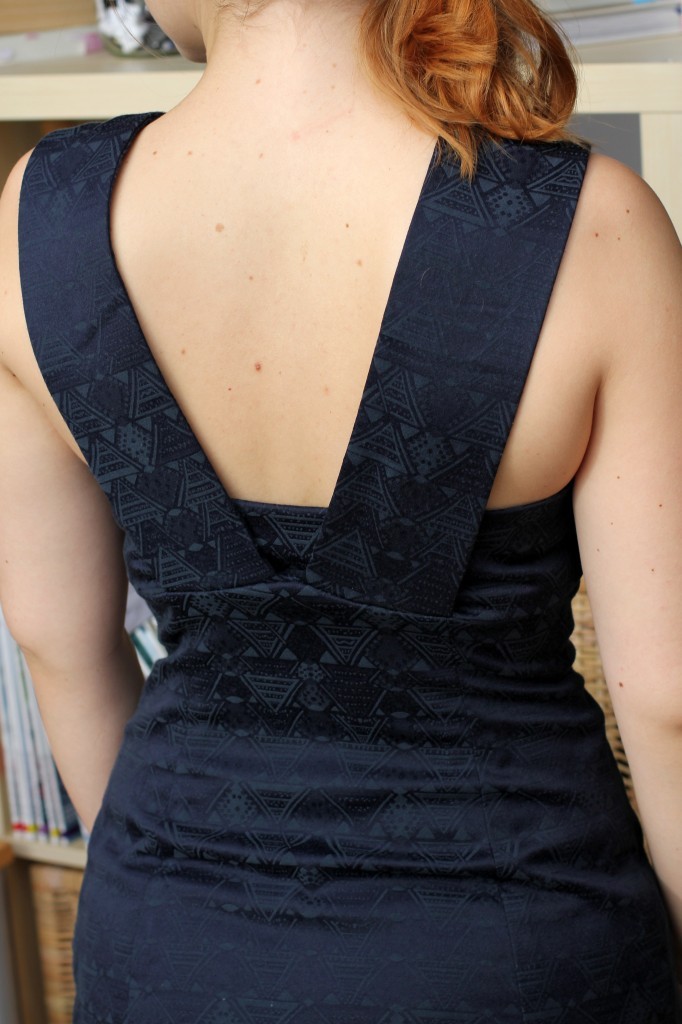
The pattern is the Georgia Dress by By Hand London. It’s a lovely, versatile dress. I’m not a big fan of strapless dresses or the view with the narrow straps, so the wide straps definitely sold the pattern for me! I love how they go across the top of the dress, a detail I haven’t really seen anywhere else.

source: http://byhandlondon.com/

The pattern is great and came together easily. I really like the illustrated instructions, which are pretty failproof. I graded the skirt up to a larger size and the first fitting went quite well. I took the dress is here and there. The only part hard to fit was the top, as the cups consist of several pattern pieces and are lined as well. Although my measurements were the same as on the pattern for the bust, the top was quite a bit too large and gapey. I took it in at the side seams. It sort of fits ok, especially with the wide sleeves giving some more structure, but it’s still a bit too wide and will need some more fitting should I sew it again.

The waist and hip areas were easy to fit because of the different panels of the skirt that go right up to the bust line. No darts! Yay! It really fits like a glove!

ByHandLondon Georgia Dress by thisblogisnotforyou.comByHandLondon Georgia Dress by thisblogisnotforyou.com

CONSTRUCTION

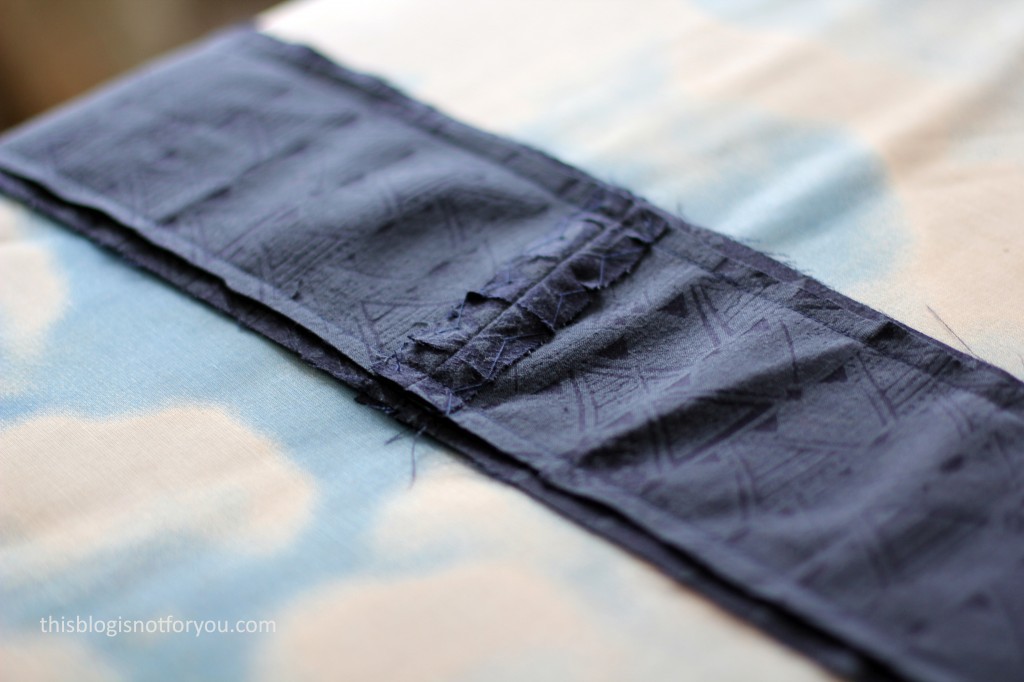
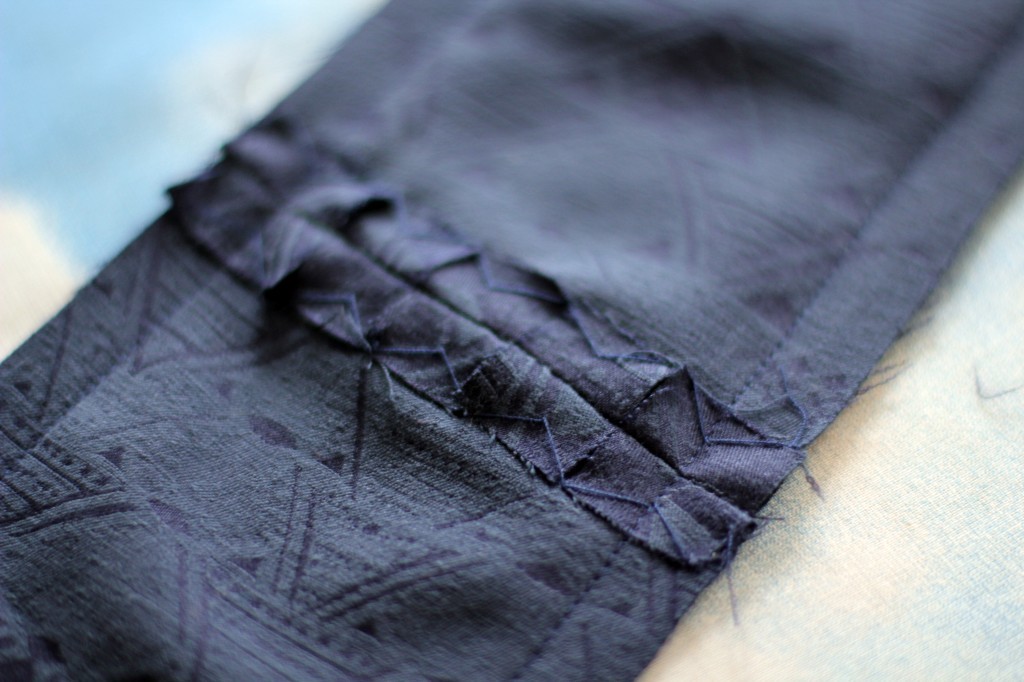
While sewing this dress I tried out different couture sewing techniques from the Roberta Carr book: Couture: The Art of Fine Sewing. This is probably the main reason why sewing this dress took so long. I mainly focussed on reducing bulk at the seams, clipping and catchstitching curved seams (the dress has a lot of those!) and pressing techniques. I absolutely love the book and will have to read it over and over again to memorise all these helpful tips and tricks. I won’t lie, couture techniques take ages and will slow down your sewing process, which is what couture is about. I will definitely try to use more of these techniques in my sewing.

ByHandLondon Georgia Dress by thisblogisnotforyou.comByHandLondon Georgia Dress by thisblogisnotforyou.com

Apart from the curved seams (especially at the bust cups), there were no particularly tricky bit in constructing this dress. It’s a dress a beginner could definitely tackle, yet it’s still interesting enough for an advanced sewer.ByHandLondon Georgia Dress by thisblogisnotforyou.comByHandLondon Georgia Dress by thisblogisnotforyou.comByHandLondon Georgia Dress by thisblogisnotforyou.comI had to get out a strapless bra for this dress, otherwise the wide straps on this dress wouldn’t look half as good. They are at an angle, so bra straps would probably show, especially at the back.ByHandLondon Georgia Dress by thisblogisnotforyou.comByHandLondon Georgia Dress by thisblogisnotforyou.com

Will I make it again? I really like this dress and feel very confident wearing it. I will most likely make another one, but not this year. The straps make it hard to pull off a layered look, so it’s more of a summer dress for me.

xx

Charlie


Happy sewing!

facebook/bloglovin/pinterest
twitter/instagram

Stay in touch!

The 11 Most Useful Sewing Tools (And why you don’t need to own every tool out there to improve your sewing)

The 11 Most Useful Sewing Tools by thisblogisnotforyou.com
I’m a perfectionist.

Well, the kind of perfectionist who doesn’t do things perfectly but is constantly dissatisfied with the result. For example, I’m often unhappy with my sewing and want to do something about it. Instead of the obvious ‘taking more time with my projects and practising techniques’, I tried to take short cuts. I kept buying more and more tools and books and supplies that promised to make a more professional seamstress out of me.

Now, after five years of sewing almost every free minute, I sit on a massive pile of sewing tools and books which I hardly use. I don’t regret the money spent, because it was spent on something I love. What I do regret is the time spent looking for and buying unnecessary stuff instead of using the things I already had and taking time to learn how to use them properly.

This last year I really started learning how to do things properly. I actually read the sewing and couture books I bought ages ago and started to adopt certain techniques and generally tried to be more patient with myself and my sewing. This brought my sewing to a whole new level. Not only do my garments look much more polished now, I noticed that I use fewer tools. I now have my go-to tools I use all the time which are absolutely sufficient to make a professional-looking garment.

We are a consumer society and we are constantly told what we need to buy to be happier and more successful. This includes the market of sewing goods. Investing in your hobby is  fun and if your goal is to collect all the sewing books out here, please do so! But for those that constantly feel under pressure to accumulate more stuff to ‘become more professional’ and might not be willing to spend so much money, this can be frustrating as hell. So let me tell you: You don’t have to have all the tools, just a few right ones. In the end, it comes down to your manual skills and not the amount of tools you are using.

If you’re a beginner confused by the vast variety of sewing supplies, maybe this helps to get an idea what you really need to spend your money on. Quality is better than quantity!
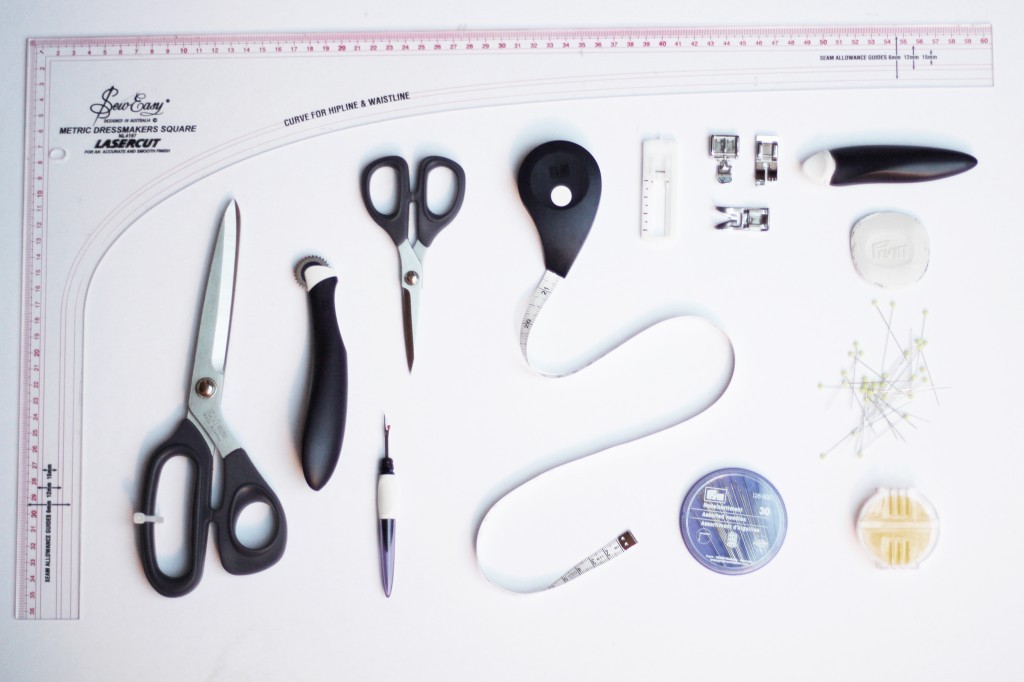
The 11 Most Useful Sewing Tools by thisblogisnotforyou.com

11 MOST USEFUL SEWING TOOLS

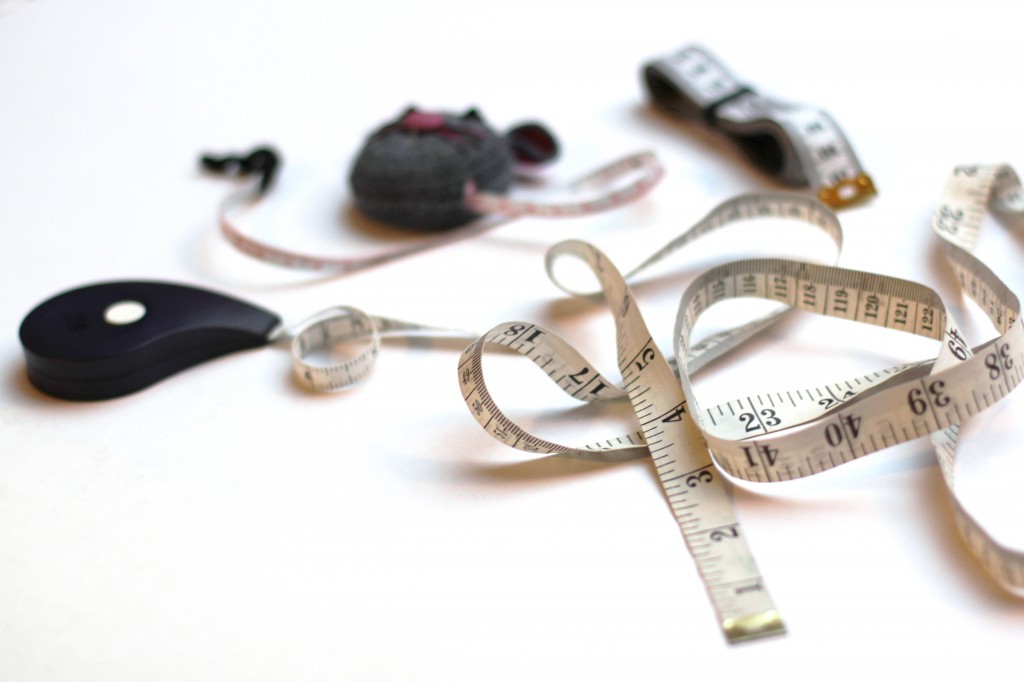
1. Measuring tape

That’s an obvious one, I know. But it’s one of the most used tools I have, so I had to include it in this list. I have different measuring tapes, but I use one the most: It’s metric on one side and imperial on the other, which makes it easier to work with US patterns. It’s pretty old and therefore really soft now and I only use other ones when I cannot find this one because it’s buried somewhere in my creative mess.

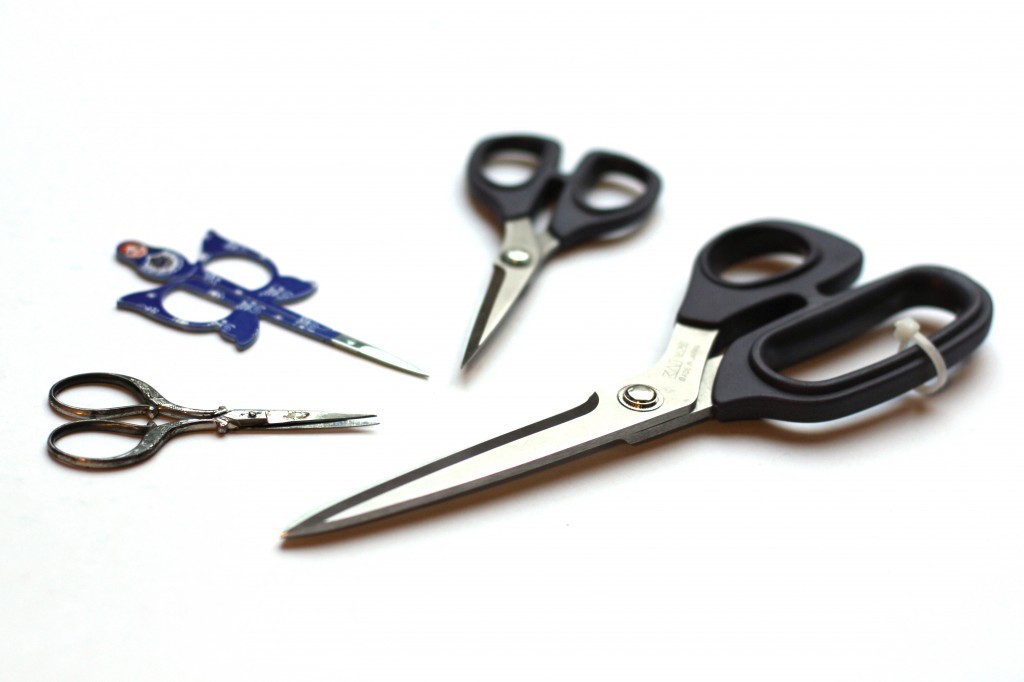
2. Spend money on sharp, high quality fabric & embroidery scissors

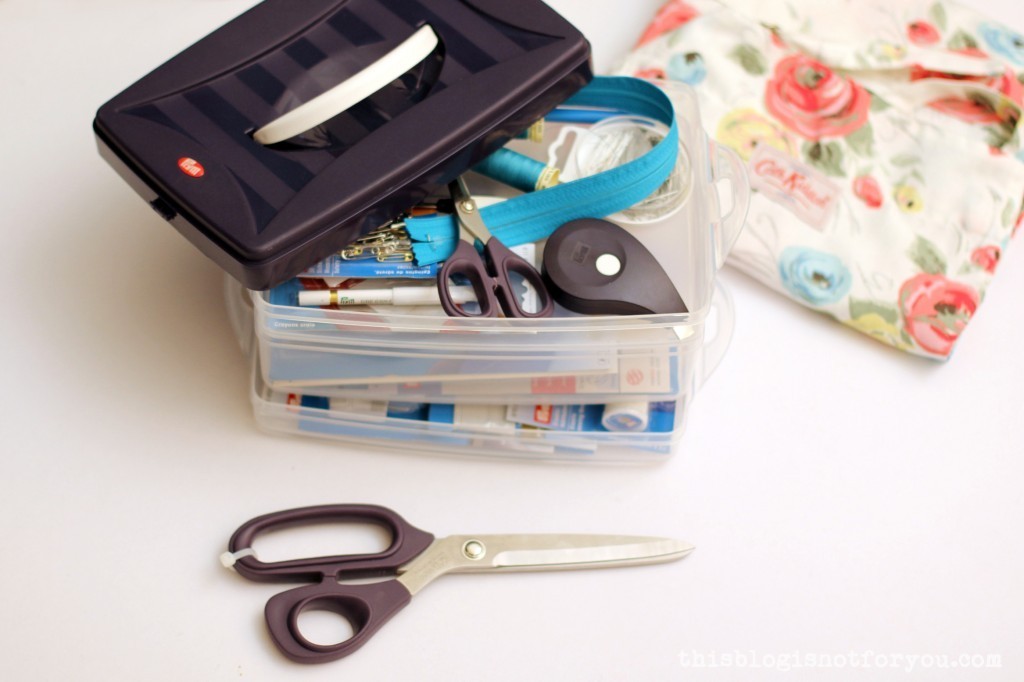
Money spent on sharp, good quality fabric scissors is money well-spent. My first pair of fabric scissors was pretty cheap and bought off the internet. Oh, how I hated cutting fabric back then. After cutting heavyweight fabrics I had blisters on my fingers and my wrist hurt for two days. I tried a rotary cutter (+ cutting board), which was much less painful, but the board wasn’t big enough to cut out large pattern pieces without having to move the board around under the fabric. Also, it’s hard to cut small curves and corners with a rotary cutter. If you’re a quilter, go get one, but if you mainly sew clothes, scissors work much better in the end. When I finally got proper scissors (I was gifted lovely Prym scissors from John Lewis at our Sewing Bee), they felt like cutting through butter with a knife.

Next to large scissors for cutting out pattern pieces, I use small, equally sharp embroidery scissors which are always within reach while I sew. I mostly use them to cut thread ends. They’re also great for marking notches and clipping curved seam allowances. Since they’re much smaller the risk of accidentally cutting too deep into your fabric isn’t as high.
The 11 Most Useful Sewing Tools by thisblogisnotforyou.com

3. Handsewing needles & bees wax

You won’t get by without a little or a lot of handsewing here and there. Have a set of handsewing needles in different strengths and lengths within reach. I only very recently started using bees wax on my handsewing thread and it’s wonderful! Goodbye, constantly knotted threads!

4. Iron & pressing board

Never underestimate the power of a good iron. I tried to ignore this for a long time, but eventually had to admit that pressing is a major part of the sewing process. Get a good steady board, the larger the better.

5. Tailor’s chalk

There are thousands of different marking tools on the market. Fabric pens, chalk pens, tracing paper etc. I’ve tried the powdery chalk tools and they don’t work well on some fabrics and they’re also a bit more expensive. The most effective tool for me is a simple square piece of tailor’s chalk. It draws clean lines easily on any fabric and is quickly removed with a bit of rubbing. You can get it in different colours. I only use the white one. When the edges get blunt, I use a knife to sharpen them. I’m still using two of a set of three I bought when I started sewing five years ago.

6. Seam ripper

I can’t live without my seam ripper. No matter how good a sewer you are, you’ll always mess up at some point, so having a seam ripper near for a quick fix is essential. Some people use embroidery or nail scissors instead which I wouldn’t recommend as you can accidentally cut into the fabric very quickly. When your seam ripper starts to get blunt, go get a new one!

7. Tracing wheel

For me this is the most effective tool for copying patterns. I trace all my patterns and never cut into the original pattern sheet. Tracing paper is too expensive for my taste. This little tracing wheel punches little holes into your pattern paper which are easy enough to see and trace with a pen afterwards. For marking on fabric I use tailor’s chalk.
The 11 Most Useful Sewing Tools by thisblogisnotforyou.com

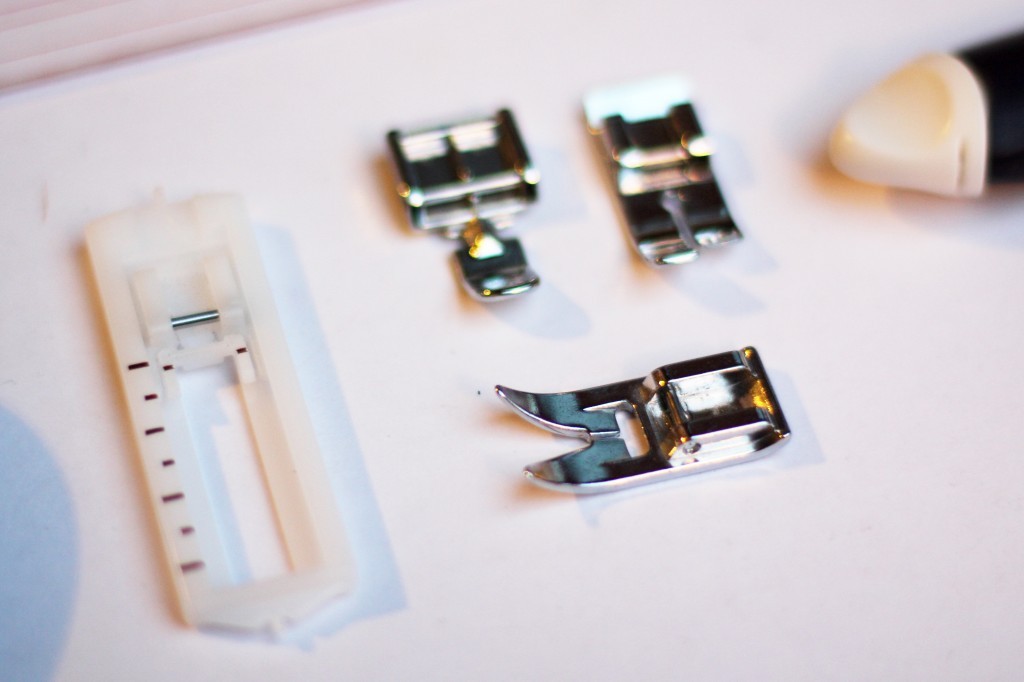
8. Four main sewing machine feet

I have two boxes with two different sets of sewing machine feet (probably around 20 different ones). While some sewing machine feet are great helpers (edgestitch feet, invisible zip feet, blind hem feet, overlock feet, the list goes on…), you don’t have to spend your money on getting them all. I found that these four, which are also the most basic, are absolutely enough if you learn how to use them right.

Zigzag foot: The most basic, standard foot of all sewing machines. You can use it for pretty much all of your machine settings. This is the one you will use most.

Straight stitch foot: Although you can use the zigzag foot for straight stitches, too, this little fellow is great to have when sewing with very delicate, lightweight fabrics. We all hate it when our sewing machine eats our chiffon or silk fabrics, this machine foot really helps to prevent that.

Zipper foot: When dealing with zippers, a normal zigzag foot won’t do. The standard zip foot is for exposed zips. There are different ones for concealed zips, although I still haven’t found one that works perfectly. That’s why I often use my normal zip foot for concealed zips, too. And it works ok.

Buttonhole foot: This one will probably come with your machine, unless you bought it secondhand. If your machine has a four-step buttonhole setting, you’ll need this one. And it works brilliantly once you get used to working with it.

9. A Dressmaker’s Square or Hip Curve

I’ve tried all sorts of different rulers and dressmaker’s curves over the years, that I don’t really use any more since I got the dressmaker’s square. It’s a rectangular ruler with an integrated hip curve, lines to mark 1cm and 1.5cm seam allowances and it’s much longer than the average ruler. Since it has so many different functions all-in-one, it’s a very useful tool to have.

10. High quality (glass head) pins

Don’t try and save money when you buy pins. They’re not expensive anyway. Get good quality pins. A pack of 100-200 will last ages. You can get super cheap ones that are of a horrible quality and will leave holes or rip threads in your fabric while pinning. If you buy them from a sewing brand, such as Prym, you should be ok.

Furthermore, I really love using glasshead pins. They’re a tiny bit more expensive, but the glass heads won’t melt if you accidentally press them with a hot iron!

11. Stock up on different sewing machine needles

Always keep some extra needles. This is something you can really stock up on. Needles break or become blunt after a while and it’s the most annoying thing to be forced into breaktime and having to buy or order new needles. Also, different fabrics require different needles. This applies especially when working with knits or very heavy or lightweight fabrics. Your standard needles are fine and will work with most mediumweight, woven qualities. But once you start working with stretch or knit fabrics you might get problems with skipped or untidy stitches. Have some ballpoint/Jersey, stretch, leather or denim as well as extra fine needles ready when you’re working with these fabrics. Change your needle regularly!
The 11 Most Useful Sewing Tools by thisblogisnotforyou.com

Are there tools that you think are essential, which aren’t included in this list? Or have I listed something that you find unnecessary? Please leave a comment and let me know! I’d love to hear other sewists’ thoughts on this!

xx

Charlie


Happy sewing!

facebook/bloglovin/pinterest
twitter/instagram

Stay in touch!

Donna Karan Dress in Teal Knit Fabric

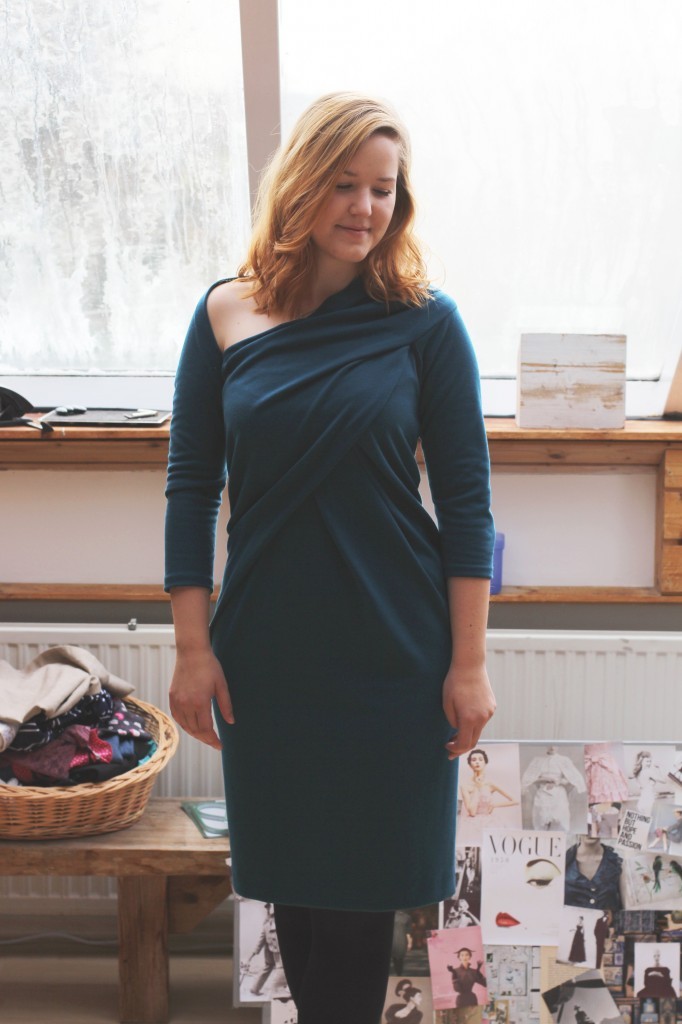
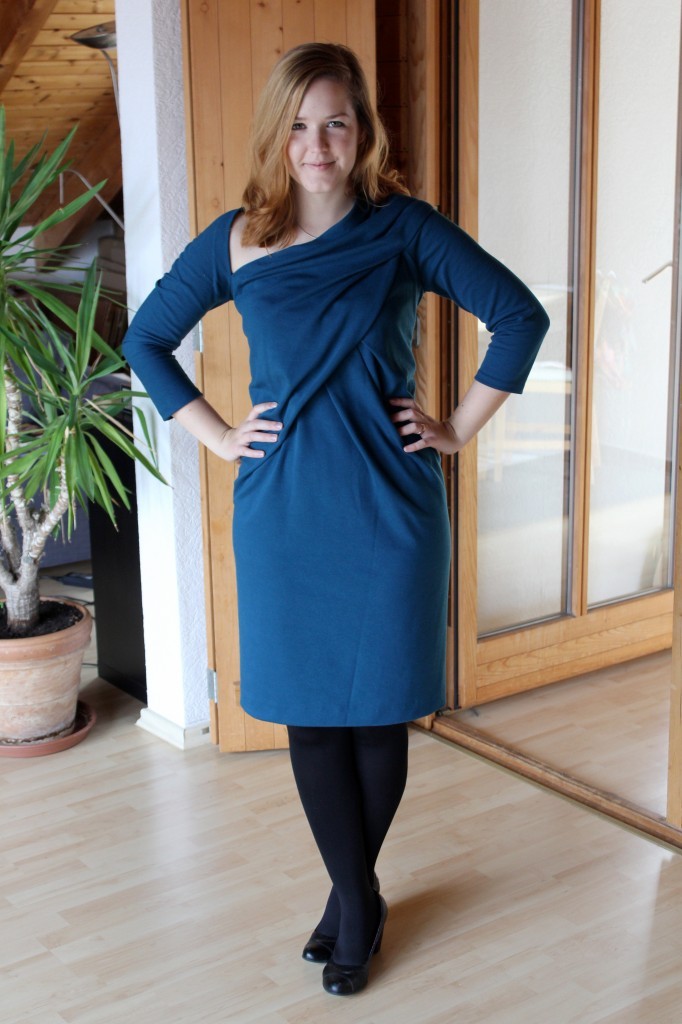
Donna Karan dress by thisblogisnotforyou.comDonna Karan dress by thisblogisnotforyou.comDonna Karan dress by thisblogisnotforyou.com

Donna Karan dress by thisblogisnotforyou.com

If I had to describe my style, I’d struggle. There’s a certain style that I have in mind or how I dress in my head. Garments that I adore and outfits I’d love to wear. And then there’s how I actually dress, which is miles away from the vision in my head. Anyone else have that problem? The seamstress is me promises to work on that.

If I had to sum up the style I have in mind, the style that inspires me, I’d say the ladies of Suits. Anyone else who watches Suits? I’m a pretty big fan – the story is pretty good, Gabriel Macht is pretty hot and I just love the outfits of Rachel, Donna and Jessica. This is how I would dress if I had a job where dressing like this would be appropriate.

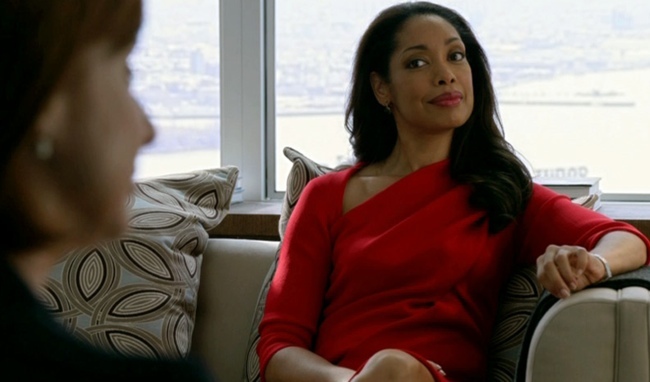
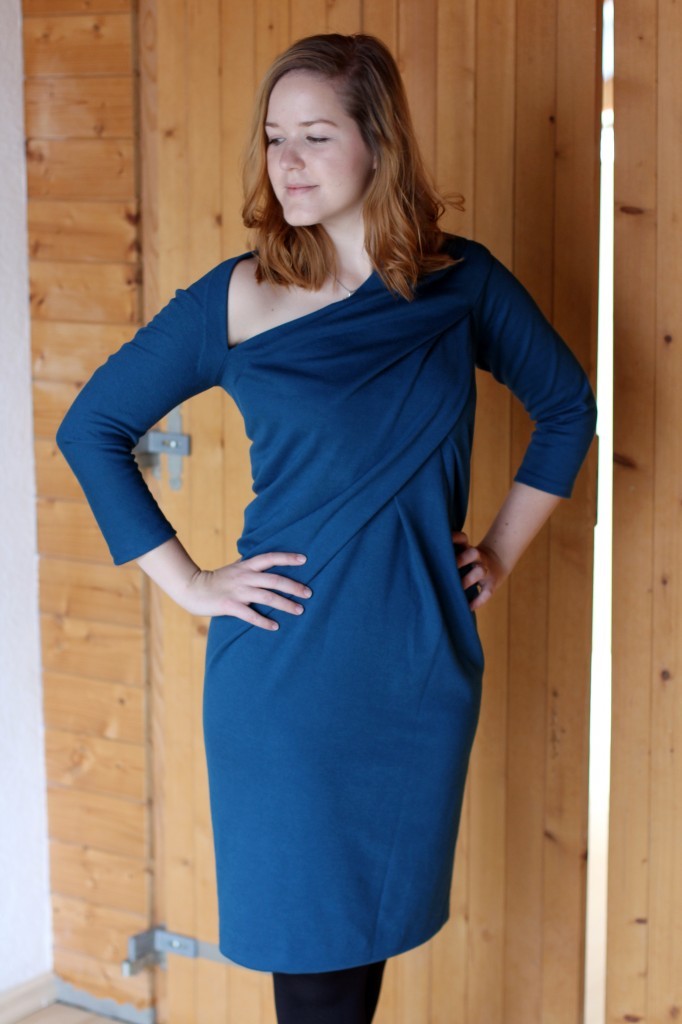
Since I got my hands on the Sew Over It pencil skirt pattern, I slowly started to sew more Suits inspired outfits. Pussy bow blouses and pencil skirts go well together. So when I found this Donna Karan pattern, which is the exact dress that Jessica wears in the series, I needed to try it.

source: cinemazzi.com/

Being part of their blogging team, all the materials needed for this projects are courtesy of the awesome people at White Tree Fabrics.

Donna Karan dress by thisblogisnotforyou.com

THE FABRIC

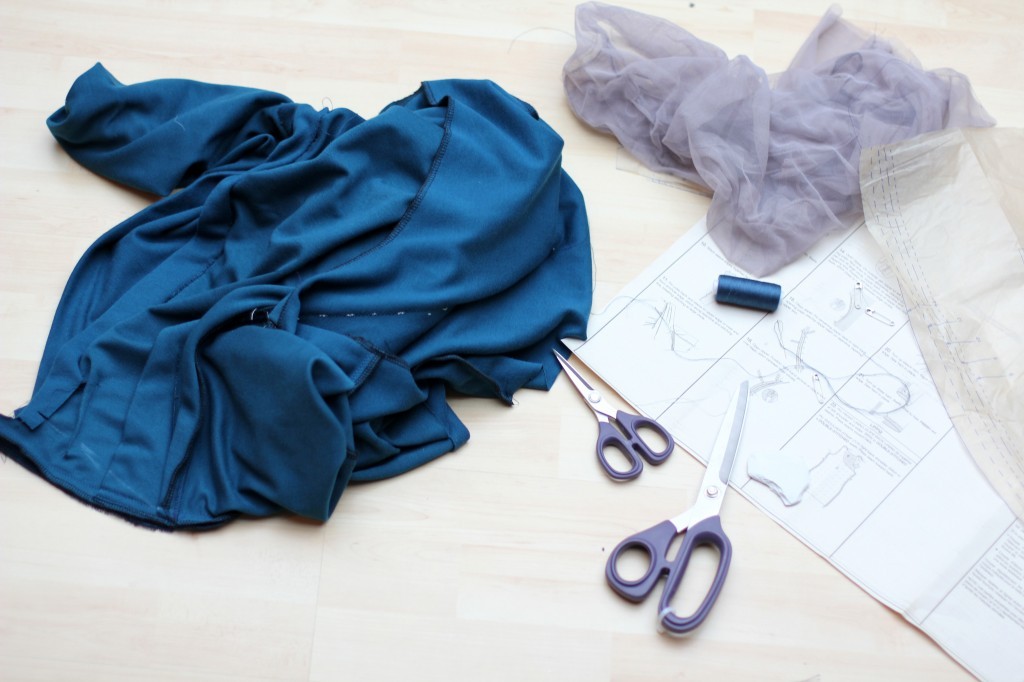
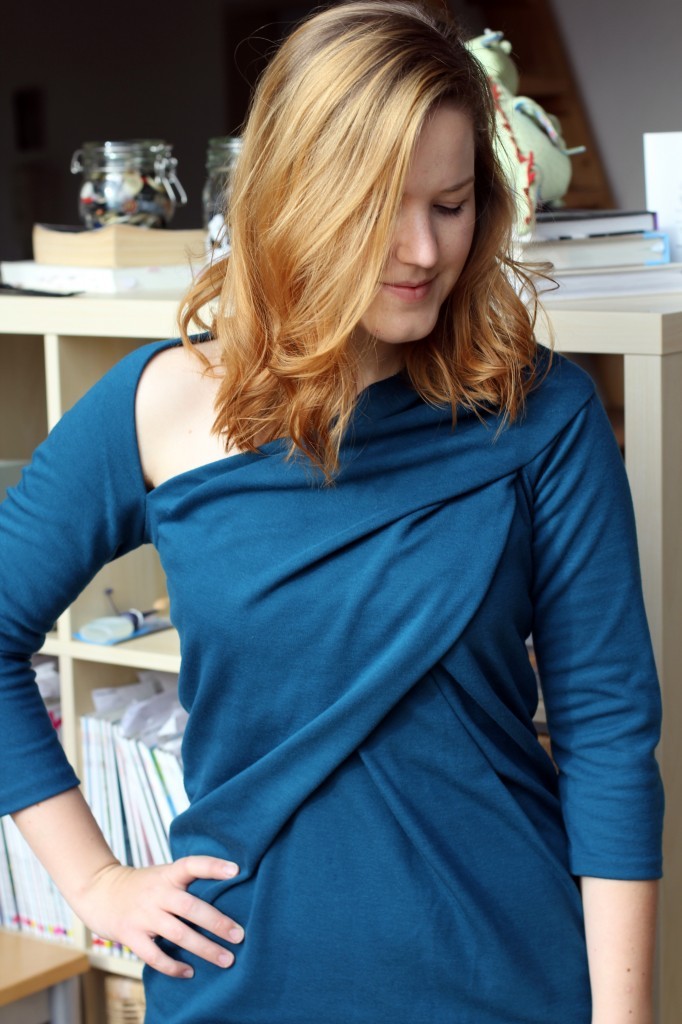
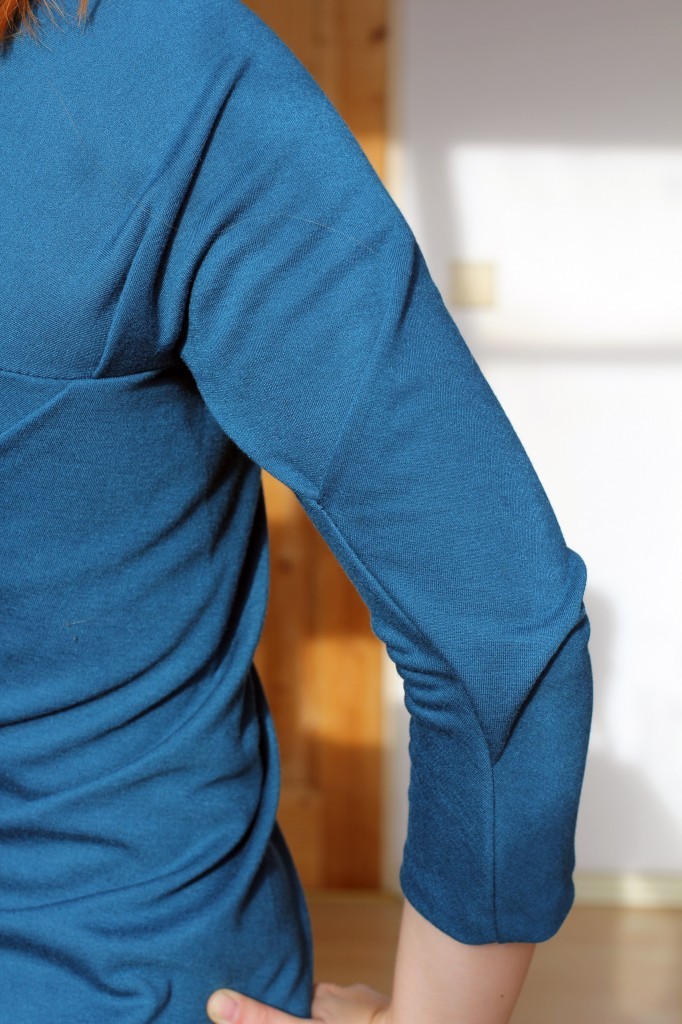
The pattern requires a two-way stretch fabric, such as double knit or wool jersey. I picked a teal ponte roma knit fabric, which has a really lovely quality. It’s looks a bit like royal blue in the pictures since teal always is quite hard to photograph. For the lining I went with the instructions on the back of the pattern and got some grey tricot/mesh fabric. I must have misunderstood the type of fabric which was required. The mesh was great, super stretchy and sewed really well, but was way too lightweight and stretchy to support the heavy knit fabric. I was a bit upset at first, but did a bit of research on tricot fabric. Apparently when I looked it up at first, I found it was similar to mesh and often used in sports wear. Recently I stumbled upon another sort which was more like a stretchy but quite stable jersey, also used to make sports wear. So when you read “tricot” being suggested for lining, go with your guts and pick something that a similar weight to your fashion fabric.

Donna Karan dress by thisblogisnotforyou.comDonna Karan dress by thisblogisnotforyou.comDonna Karan dress by thisblogisnotforyou.com

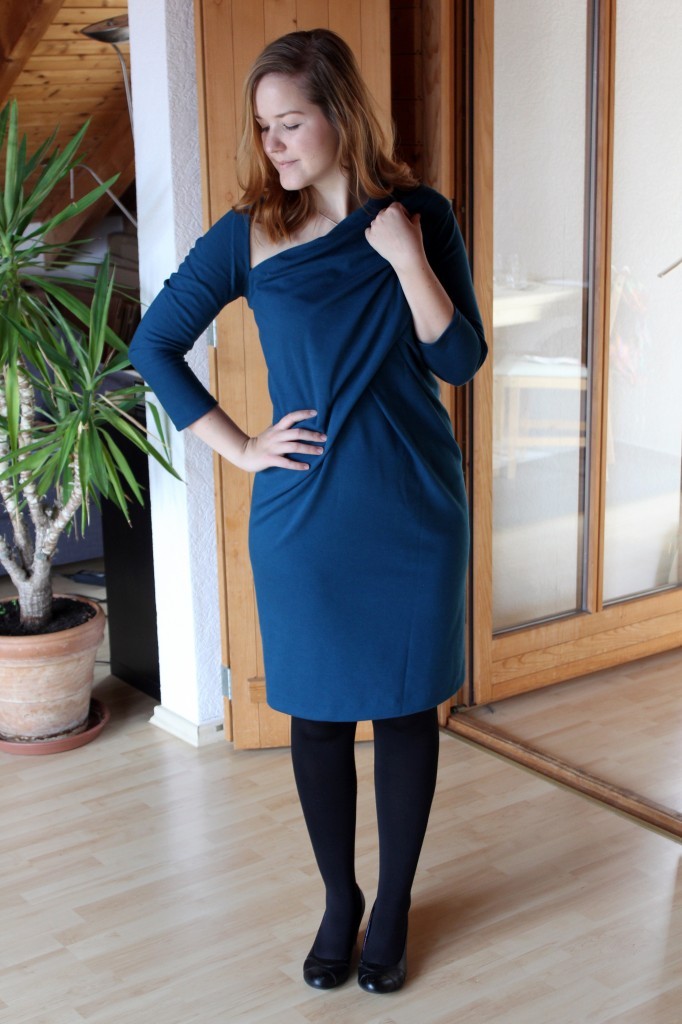
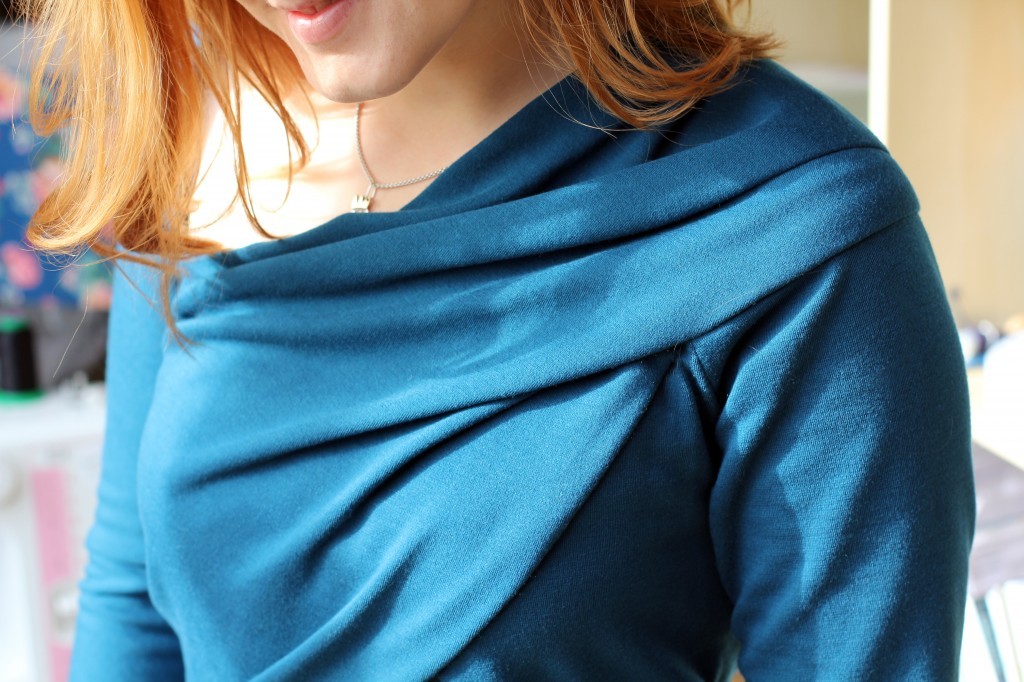
The drape of this dress depends on the lining. The big fold in the front is created by stitching the finished dress to the front lining. This obviously didn’t work with a four-way-stretch fabric, so I decided to use the very last scraps of ponte knit I had left. I only had enough to cut out the bodice, but the knit dress doesn’t really require a full lining anyway. It was Make it work time again.

It turned out alright and really made a difference to the whole fit of the garment. I really recommend sewing in the lining before tackling fit-issues around the bust and below, because you won’t know whether the fit is right before stitching both dresses together.

(I also scrapped the right shoulder strap on the lining and created a single-sleeve top, because however I tweaked it the strap would show through the cut-out.)

Donna Karan dress by thisblogisnotforyou.com

THE PATTERN & CONSTRUCTION

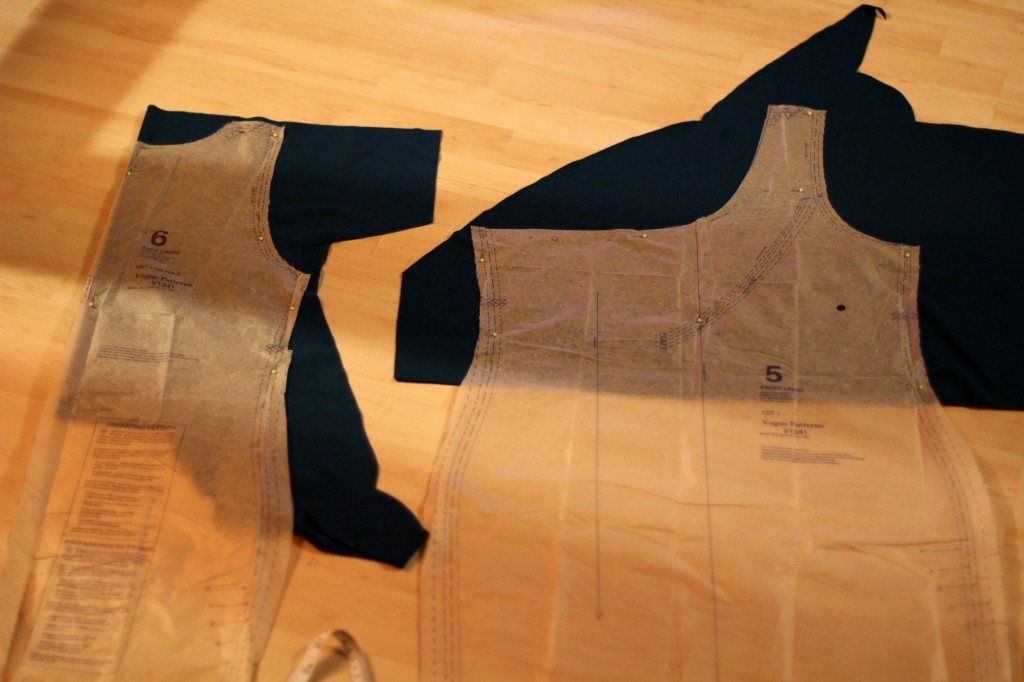
So, let’s talk about the pattern. This is a Donna Karan for Vogue designer pattern (V1341). I thought it would be quite complicated and was mostly concerned about the fit.

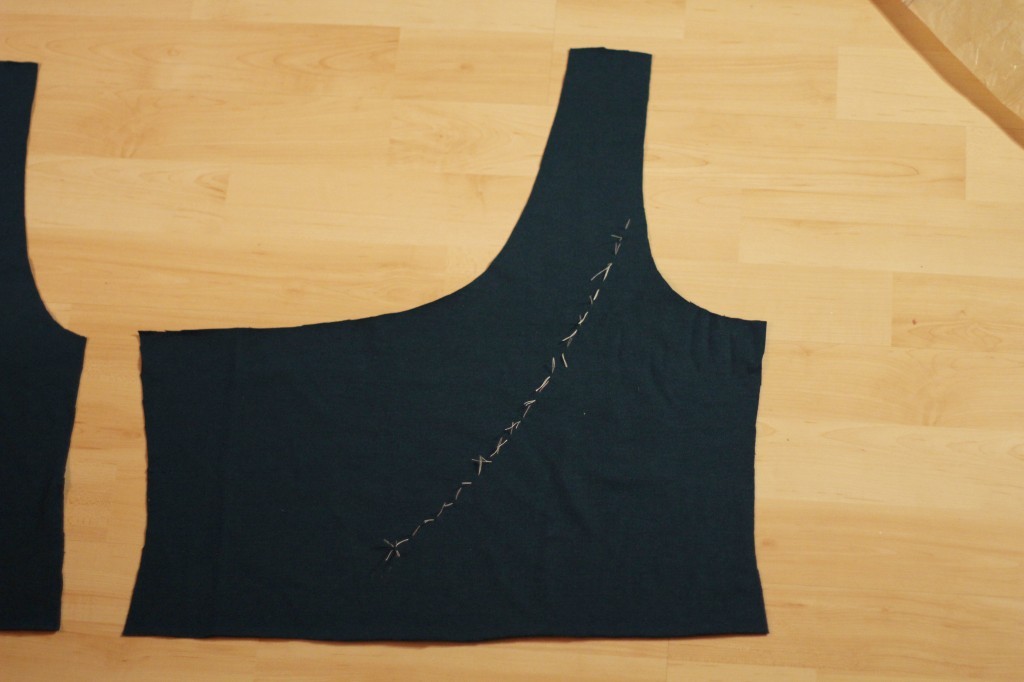
The construction was actually not that hard. Marking the fabric properly (I used tailor tacks) and following the instructions carefully is all it needs. It’s not that hard. There’s pleats, tucks, darts, we all know these. There’s just loads of them. I actually really enjoyed the construction and took time to get all the details right.

Donna Karan dress by thisblogisnotforyou.comDonna Karan dress by thisblogisnotforyou.comDonna Karan dress by thisblogisnotforyou.com

Donna Karan dress by thisblogisnotforyou.com

FITTING ISSUES

The only issue is that the flat pattern is quite hard to understand. With all the pleats and darts and folds is super difficult to see where the waist, hip or bust line run. I therefore couldn’t measure the pattern before I started and had to trust the Vogue measurement chart. Someone once told me that Vogue patterns run quite large, but I took extra care and cut out a size 12 graded to size 14 for the skirt.

Although the fabric has some stretch the dress was a tad tight around the sleeves, but was much too large in the back.

Donna Karan dress by thisblogisnotforyou.com

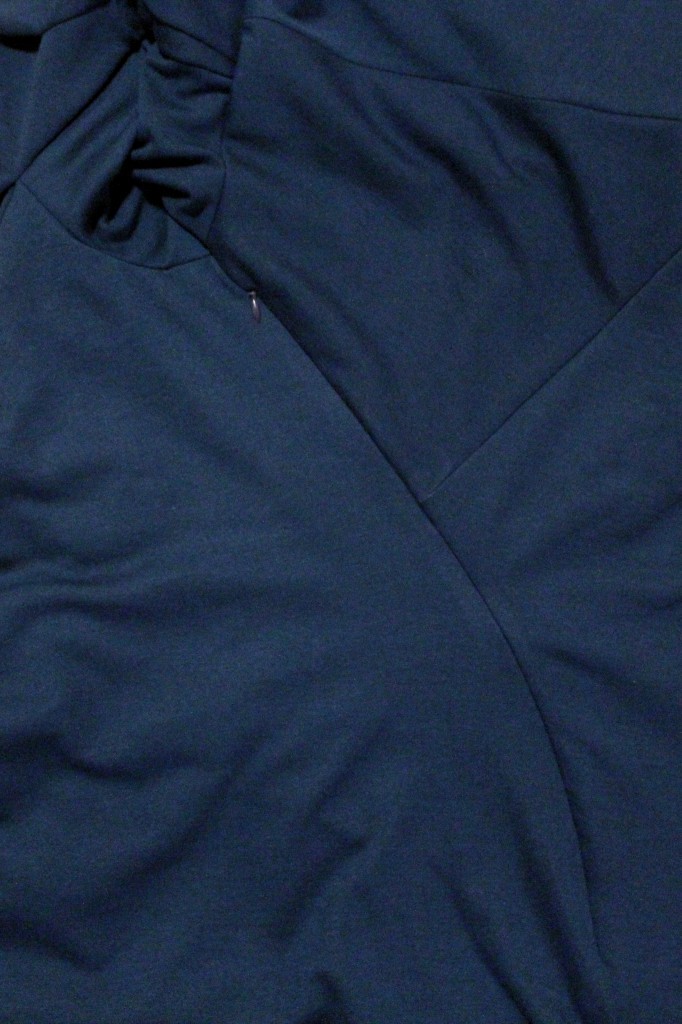
The back seam runs diagonally across the back, so I had to insert an invisible zip in a curved seam. It’s the prettiest, neatest invisible zip I’ve inserted so far, but in the end I cut it out again because there was so much excess fabric in the back. If you’re making this pattern with a knit fabric, try without a zip first, you probably won’t need one.

After taking in the back the fit was much better. I finished the dress and put it on. The neckline wasn’t right. It was way to large and bulking up at my neck. This Vogue model must have massive shoulders for the neckline to sit that straight! Or maybe the fit issue is concealed by the weird pose she is striking.

Anyway, I took a good 5cm out of the left shoulder seams at the neckline both in front and back and this seemed to help a lot. I could have taken it in even more, but I wanted to keep the little dart at the shoulder.

Donna Karan dress by thisblogisnotforyou.comDonna Karan dress by thisblogisnotforyou.comDonna Karan dress by thisblogisnotforyou.comDonna Karan dress by thisblogisnotforyou.com

Although this dress was a bit of a nightmare to fit, I am quite happy with the end result. It was challenging but taught me a lot about tackling fit issues and understanding drape.

The colour of this dress is simply gorgeous and it’s so comfy! The Mr really loves it, which is a bonus.

Will I make it again? I might. It’s quite a fascinating pattern and now that I know what to look out for, it might be a bit easier to make next time. I’ll see how often I get to wear it. If I wear it frequently I might as well make another one in a different colour. Maybe bright red next time?

xx

Charlie


Happy sewing!

facebook/bloglovin/pinterest
twitter/instagram

Stay in touch!
Lottie Blouse for Grandma

Lottie Blouse by thisblogisnotforyou.comLottie Blouse by thisblogisnotforyou.comLottie Blouse by thisblogisnotforyou.com

I’ve done it again! I thought I wouldn’t but then it happened. I made another Lottie Blouse. Gosh, you must think I’m super boring. To my defense, it’s just such a simple and quick sewing project. And, this time it wasn’t for me. I made this blouse for my grandmother.

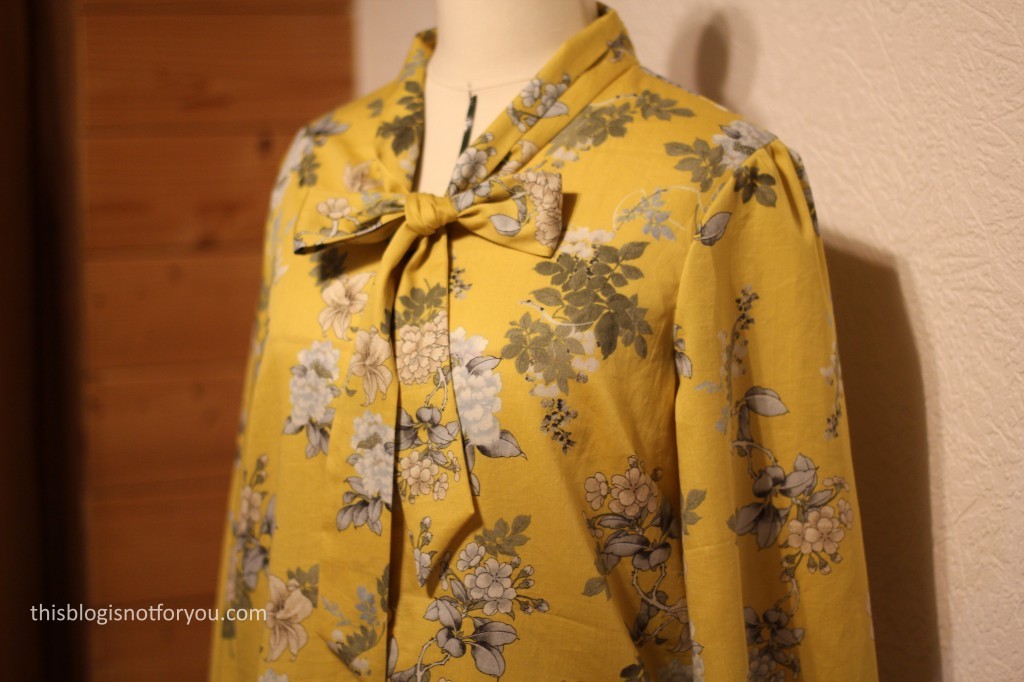
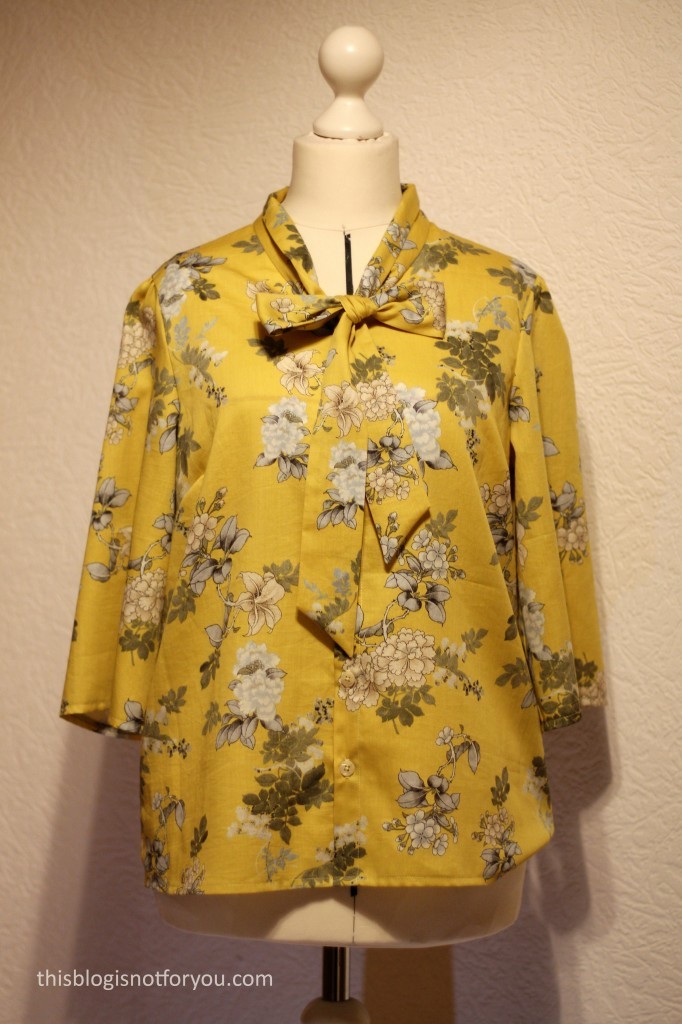
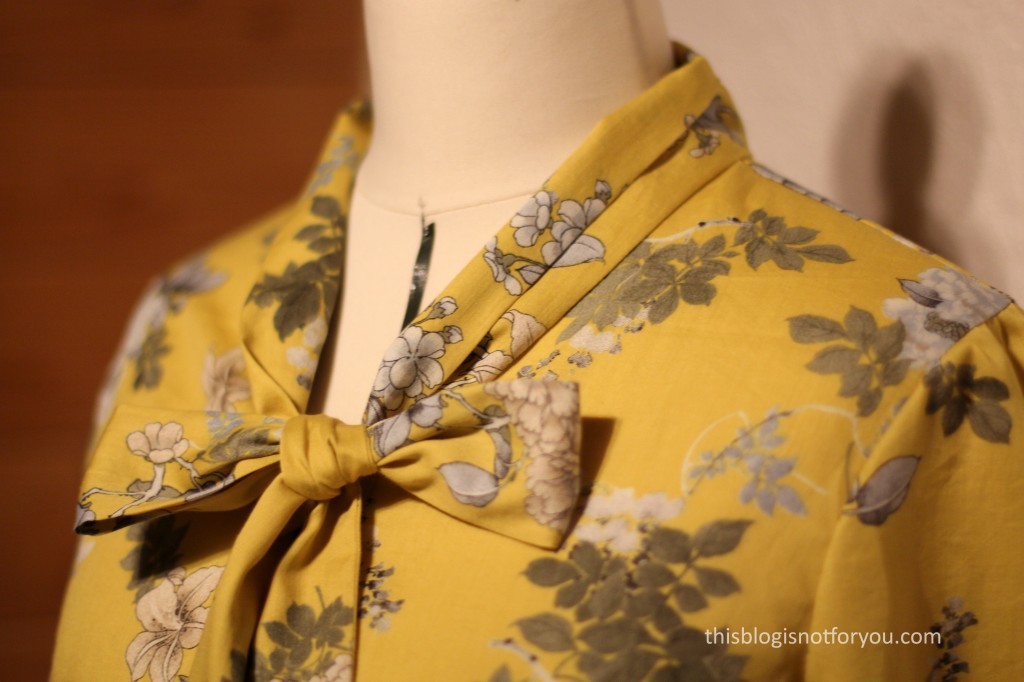
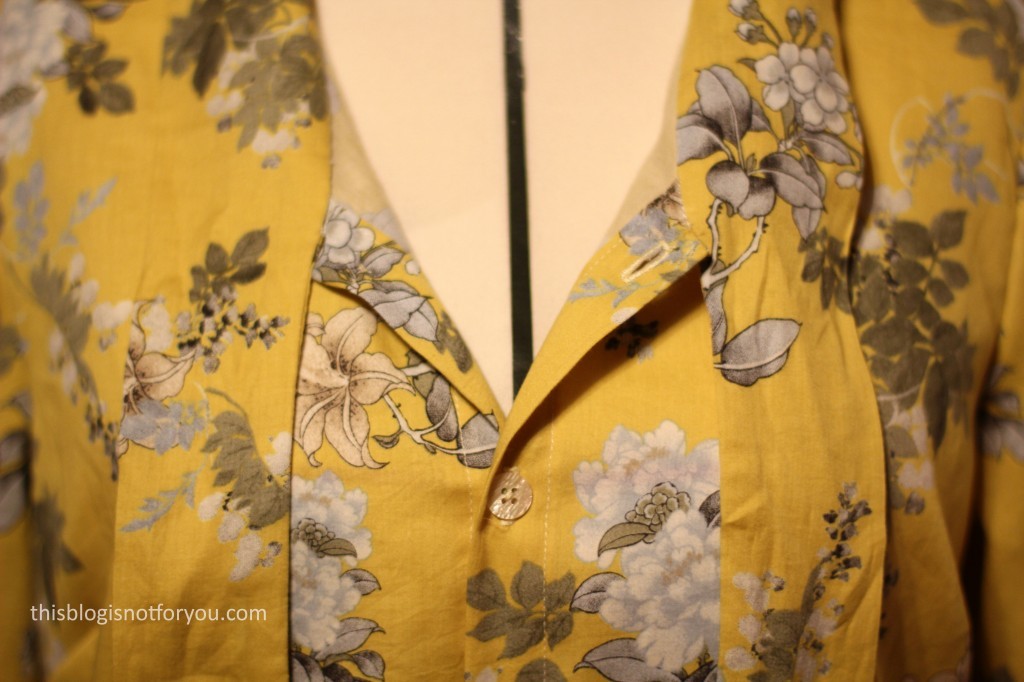
I never made her anything before (makes for family and friends happen, but very rarely) and I think she likes it! I made another version of the button up, which is the hack I created for Love Sewing Magazine. Lottie Blouse by thisblogisnotforyou.comLottie Blouse by thisblogisnotforyou.comLottie Blouse by thisblogisnotforyou.com

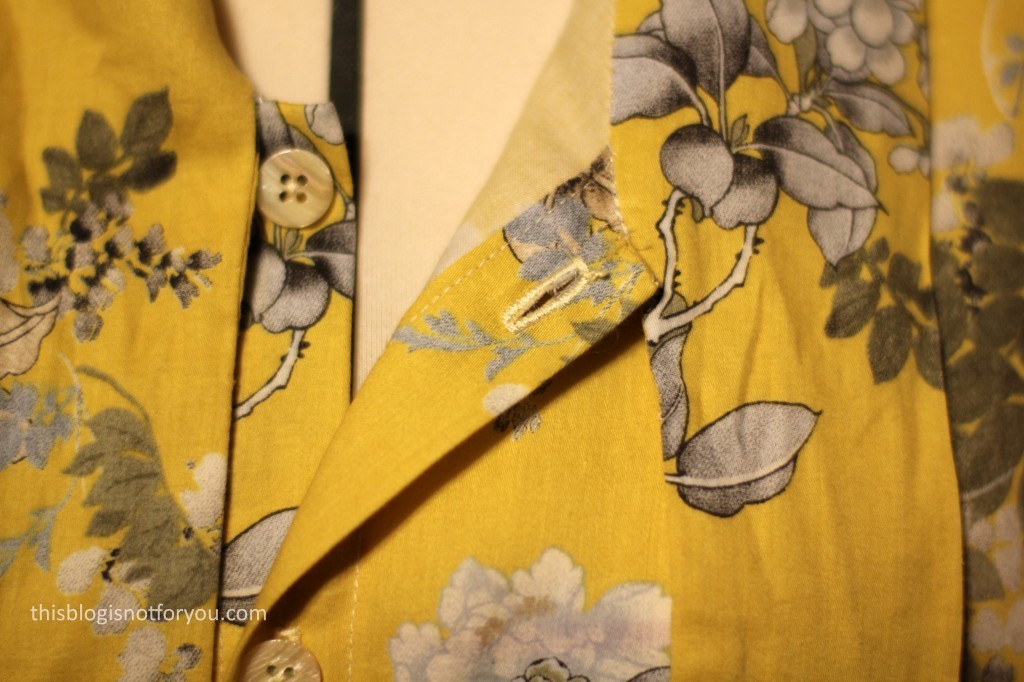
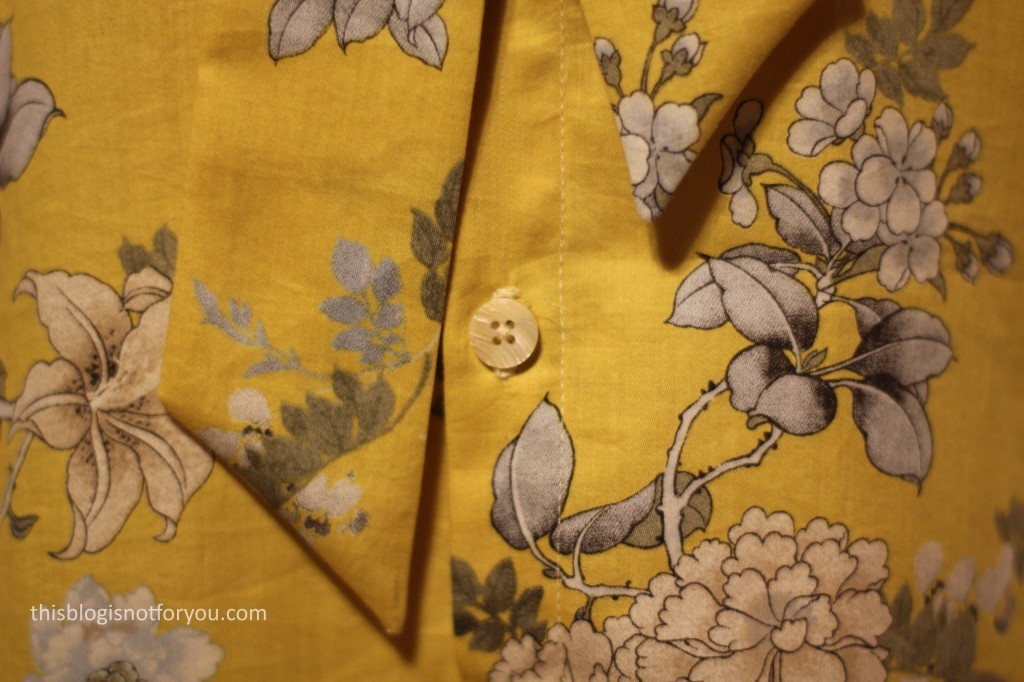
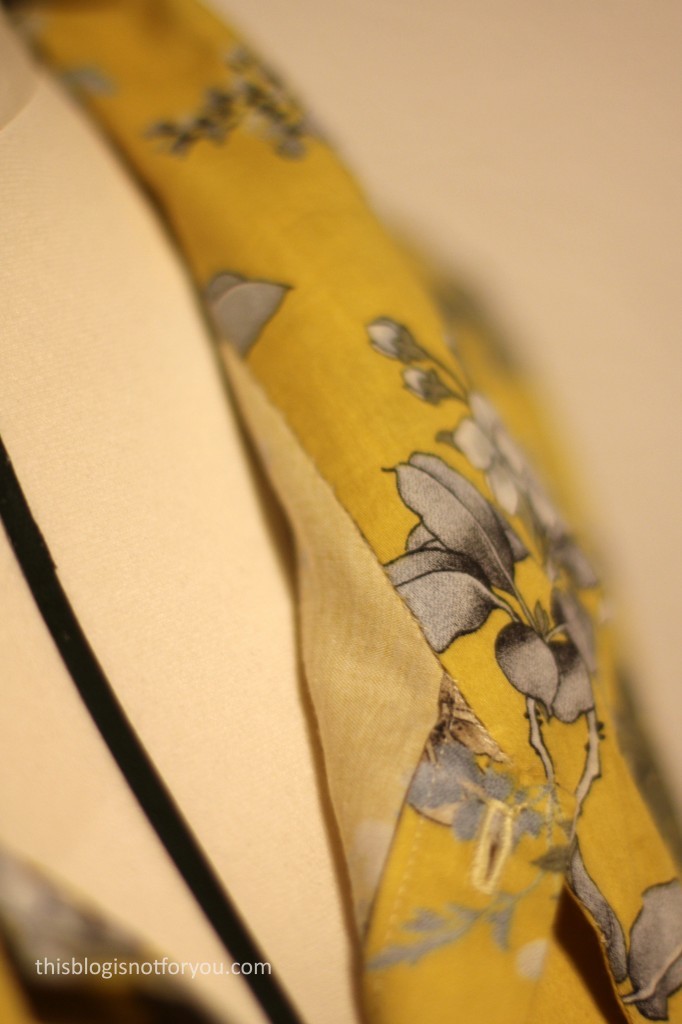
Because the pattern is so simple and easy to fit, I really enjoy taking time to get the details right. The construction involves a tiny bit of handsewing and also the button placket needs a bit of attention if you want it to look flawless.

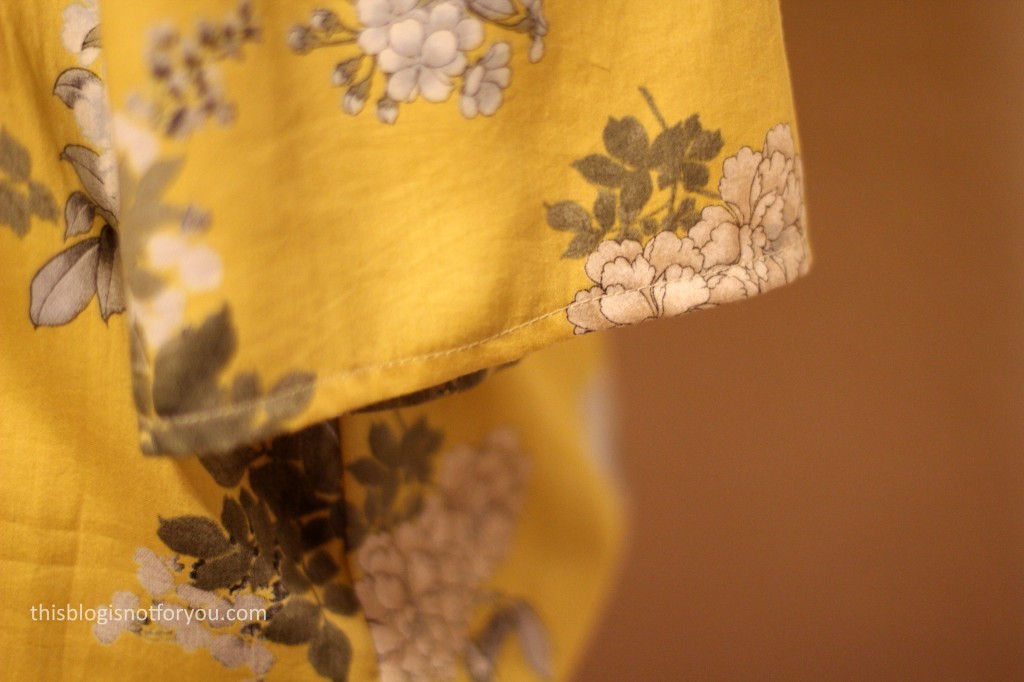
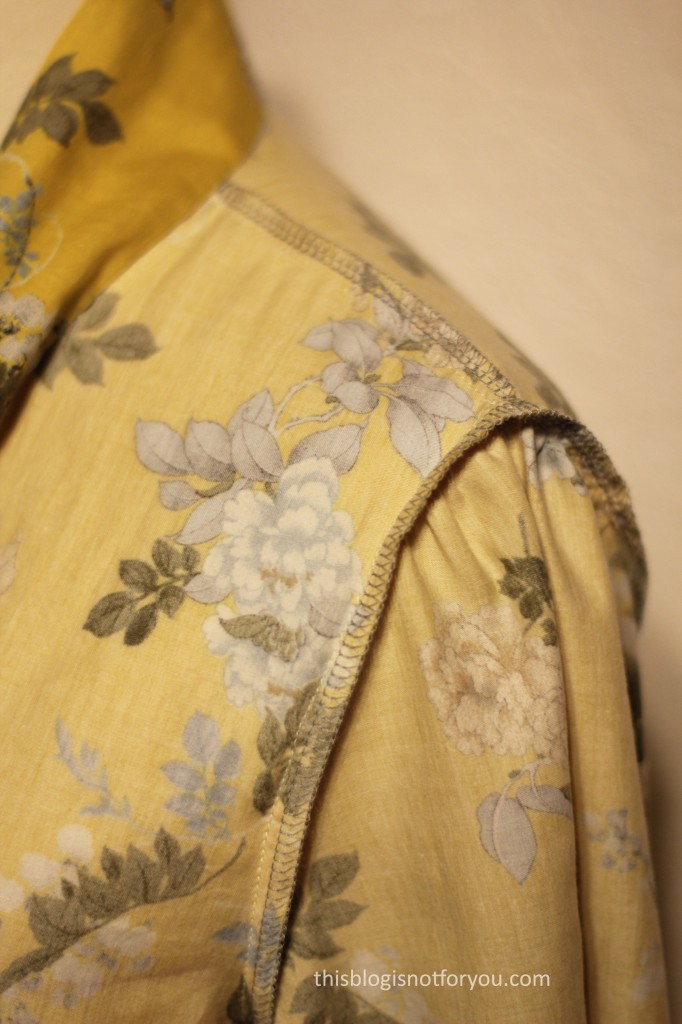
The fabric is a gorgeous cotton lawn, gifted to me by Daniela. I really love it, although I usually don’t wear a lot of yellow. I also would’ve loved to keep this fabric to myself for an Anderson Blouse, but this was the fabric most fitting for my grandma, as she likes flowers and a warm yellow. I’m happy I sacrificed it, the blouse looks fab and I can’t wait to see her wear it. Although I don’t sew a lot for others, it’s always super satisfying to see someone else wear something you made, right?

The buttons are vintage, funnily enough I got them from my grandma a little while ago. So I’ve given them back to her with a blouse attached. Payback time!Lottie Blouse by thisblogisnotforyou.comLottie Blouse by thisblogisnotforyou.comLottie Blouse by thisblogisnotforyou.comLottie Blouse by thisblogisnotforyou.com

I won’t answer the “Will I make it again?” question, because I can’t promise I won’t. I have plenty of Lotties for now, but who knows. I think this might be the 8th Lottie I made. Wow.

Do you have a sewing pattern which you use all the time?

xx

Charlie


Happy sewing!

facebook/bloglovin/pinterest
twitter/instagram

Stay in touch!